
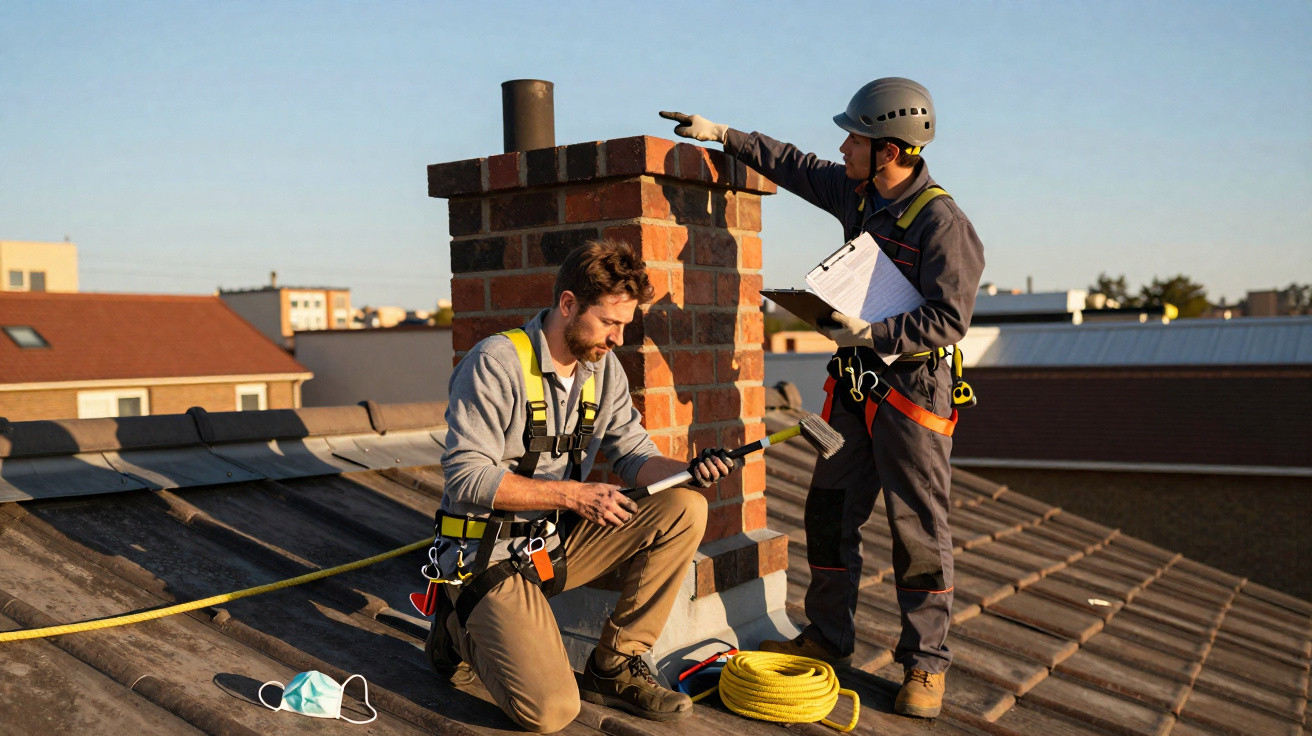
A simple, everyday question sits on top of a knot of safety guidance, insurance requirements and very real household budgets. It’s easy to feel trapped between paying for repeated professional visits and the urge to pick up a brush and do the job yourself.
Why chimney sweeping matters far beyond simple housekeeping
A chimney that’s dirty or restricted does more than leave marks around the fireplace. Over time, soot, creosote and tar build up inside the flue, turning a cosy fire into a hidden risk. Fire brigades across Europe and North America still report thousands of house fires each year connected to chimneys that haven’t been maintained properly.
Those deposits aren’t only flammable; they also interfere with the draft. If smoke can’t rise and exit as it should, carbon monoxide can be pushed back into the home. Because this gas has no smell and no colour, it can be deadly within minutes in a closed room.
A neglected flue turns a simple evening fire into a triple threat: fire, smoke inhalation and carbon monoxide poisoning.
There’s also a less dramatic impact: efficiency. When the flue is clean, the chimney draws more reliably, the wood burns more completely and you get more heat from the same log. People who look after their flues often report three practical changes: fires start more easily, there are fewer sparks, and the room temperature stays steadier.
Why so many people now think about doing it themselves
The price of a professional sweep often lands somewhere between a takeaway and a restaurant meal. In many European cities, a visit ranges from the equivalent of £40 to £90. In the US and UK, figures usually fall between $80 and $200 depending on the region and the type of stove.
With that in mind, a DIY kit can seem oddly tempting. Flexible rods with a wire brush can cost less than two professional appointments. Online videos make it look straightforward: twist the rods together, run the brush down from the roof or up from the fireplace, and you’re finished.
In practice, it’s rarely that tidy. Soot spreads everywhere. Birds’ nests can jam the passage. Some newer flues include bends-sometimes two-before they reach the terminal. And behind the mess sits the more serious question: what if something goes wrong?
What the law actually cares about
The details vary by country, but the principle is consistent: officials want evidence the chimney has been maintained correctly. In France, for example, local orders set minimum sweeping frequencies, often twice a year for wood-burning appliances, with at least one visit during the heating season.
In many areas, homeowners are not explicitly forbidden from cleaning their own chimney. Instead, the requirement is for regular upkeep carried out “according to professional standards”. After an incident, insurers and fire services tend to focus on one thing in particular: paperwork.
No certificate often means no compensation, even if you swear you cleaned the flue yourself the week before the fire.
A licensed sweep will normally provide a certificate or written report after each visit. Insurers may request this after a chimney fire, following a smoke event, or even during a routine policy renewal. Without that documentation, the burden of proof can shift sharply onto the homeowner.
Key risks when you handle the sweep yourself
Legal and insurance risk
From a legal perspective, DIY sweeping becomes most dangerous the moment something major happens. Picture a chimney fire that spreads into the roof space. The loss adjuster arrives, asks for maintenance records, and there’s no certificate covering the last season.
At that point, the insurer may claim negligence. Some policies clearly state that a professional sweep at a specified frequency is a condition of cover. If so, the claim may be reduced or refused entirely. If neighbouring property is affected, the potential financial liability increases again.
Health and safety risk
On a practical level, a non-professional can easily miss warning signs that matter: a cracked flue tile, a distorted metal liner, bistre build-up (a dense, tar-like deposit that ignites easily) or a terminal that’s partly blocked.
A brush that seems to “catch” might actually be hitting a serious obstruction. A homeowner could force it past, open up a small channel and assume the job is complete. Meanwhile, thick deposits may remain in place, ready to ignite the next time the fire is run hot.
Partial cleaning can be more deceptive than no cleaning at all: the chimney looks better, but the hidden fuel for a fire remains.
An in-between strategy: combining pro visits and DIY care
Many safety specialists now recommend a blended approach for wood-burner owners under financial pressure. Rather than choosing between entirely professional care and entirely DIY work, households can combine the two.
- Regular professional sweep: once a year, or in line with local requirements, to obtain the formal certificate and a technical check.
- Light DIY maintenance: quick inspections and minor cleaning during the burning season to prevent heavy build-up.
Done sensibly, this reduces the volume of soot ahead of each professional appointment, keeps the flue’s condition more stable, and still delivers the paperwork insurers and authorities typically expect.
Basic kit for homeowners who still want to help
If you plan to do intermediate clean-ups, the right equipment makes the work safer and far less messy.
| Item | Use |
|---|---|
| Chimney brush (poly or steel) | Scrapes soot and creosote from the flue walls. |
| Flexible or telescopic rods | Reach the entire length of the chimney from top or bottom. |
| Dust mask or respirator | Reduces inhalation of fine soot particles. |
| Gloves and safety glasses | Protects hands and eyes against sharp deposits and falling debris. |
| Ground sheet or old sheet | Covers the hearth area and furniture to catch falling soot. |
Professionals emphasise a key limitation: this kit supports maintenance, not full diagnosis. It doesn’t replace camera inspections, smoke tests or pressure checks that can reveal leaks and structural problems.
What a professional sweep actually does that most people miss
For many households, a sweep’s visit can look like little more than a quick brush-through and a printed receipt. What sits behind that short appointment is a method shaped by building regulations and fire data.
A trained sweep will usually:
- Check how accessible the chimney is and whether the roof ladder or access point is stable.
- Consider the fuel being burned and the visible condition of the appliance.
- Choose the correct brush size and material for the specific flue lining.
- Track soot and creosote build-up and compare levels year after year.
- Inspect for cracks, leakage points or signs of overheating around the flue.
- Give guidance on burning practice, wood storage and ventilation.
Those additional checks often identify issues while they are still inexpensive to fix. Spotting a misaligned flue joint early might mean a small repair, rather than a major rebuild after smoke damage.
For the price of a tank of fuel, a professional visit often buys not just cleaning but a yearly safety audit of the entire heating system.
How this debate affects new wood-burning fans in cities
With gas and electricity prices moving unpredictably, many urban households are returning to wood stoves, including in small flats and terraced houses. Newer installations often use narrow, insulated metal liners instead of older brick flues.
These modern set-ups can respond differently to poor maintenance. They warm up quickly, cool down quickly, and can collect certain deposits faster when the fire is kept low and smoky. They’re also often closer to shared or party walls, increasing the consequences if a fire occurs.
In dense neighbourhoods, local authorities are increasingly keen on documented maintenance. Tenants can also find themselves in a grey area between what they’re expected to do and what a landlord must handle, and contracts or inventories rarely spell out the detail.
Practical ways to reduce risk between sweeps
The choice between DIY and professional chimney sweeping isn’t the only factor; day-to-day habits around the fire can significantly change the risk level. A few straightforward steps can reduce the soot and creosote you generate:
- Use only dry, seasoned wood, stored at least six months and kept indoors or under cover.
- Don’t burn painted, treated or laminated wood, which can release toxic fumes and sticky residues.
- Run fires hot enough to avoid long, smouldering burns with low oxygen.
- From ground level, look up for signs of smoke dropping back down or unusual staining on the outside wall.
- Fit carbon monoxide alarms near bedrooms and living rooms, and test them regularly.
These habits can slow heavy build-up and extend the benefits of each professional clean. They can also provide early warning if the system starts behaving differently.
Beyond chimneys: a wider look at home-heating maintenance
The argument about DIY chimney sweeping sits within a broader question: how much should homeowners do themselves when it comes to heating maintenance? The same tension shows up with gas boilers, heat pumps and pellet stoves.
Gas systems, for example, usually require licensed engineers for safety checks, with both insurers and regulators firmly favouring professional servicing. Wood systems often sit in a more ambiguous space, because access can seem easier and the tools appear simple enough. Yet the consequences of getting it wrong can be serious in both cases.
It can help to think of heating maintenance like car ownership: many people are happy to check the oil or change wiper blades, but still book annual servicing and MOT tests. Small, frequent checks at the fireplace-ash levels, smoke colour, draft strength-fit that approach, while certified inspections cover the legal and technical requirements.
As winters become less predictable and energy markets remain volatile, more households will keep solid-fuel appliances as a back-up. That makes the key issue not only whether you should sweep the chimney yourself, but how to build a routine where savings, comfort and safety remain in sensible balance.




Comments
No comments yet. Be the first to comment!
Leave a Comment