
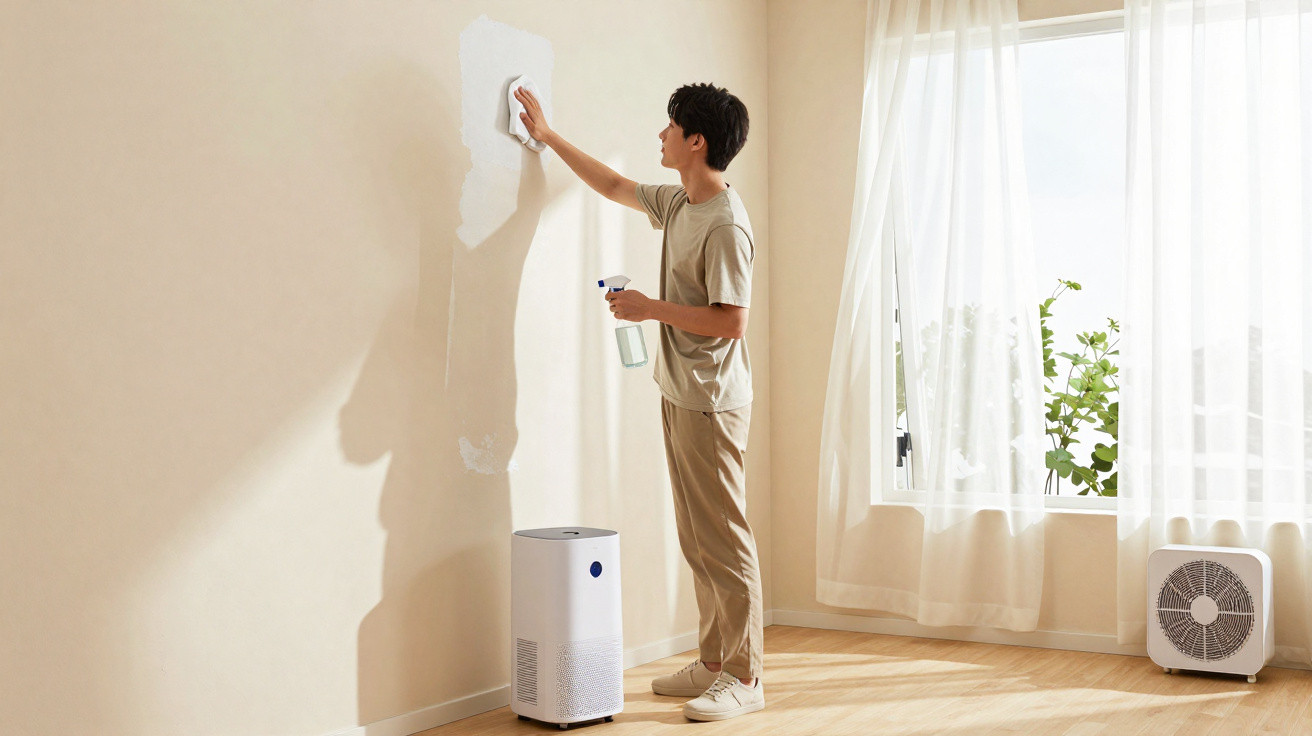
Dark staining on interior surfaces undermines residents’ wellbeing and can also damage the building fabric over time. When black mould keeps returning, it usually points to trapped excess moisture, making effective cleaning methods and continual ventilation essential to restore a healthy home.
Why does black mould appear so often on internal walls?
When moisture builds up in enclosed rooms, it creates the conditions for rapid growth of micro-organisms that can be harmful to people. Areas with little air movement become the perfect environment for visible mould to spread, particularly on delicate finishes such as paint or plaster.
Large items of furniture pushed close to walls also block airflow, encouraging cold spots and condensation. Without the right intervention, the dark marks can expand quickly, reducing indoor air quality and causing persistent unpleasant odours throughout the house.
Is there a chlorine-free home solution to remove mould?
A practical DIY mixture can lift deep stains without the harshness of chlorine, helping to protect the finish while still delivering… Read more
How does the Japanese technique remove mould effectively?
A method developed in Japan focuses on carefully applying specialist products that break down mould without harming the underlying surface. On traditional finishes such as diatomaceous earth, lime walls, or sand-based coatings, removal relies on the product’s chemical action rather than mechanical scrubbing.
Applying the product in successive layers makes it possible to reduce the dark pigmentation gradually and safely during the process. Ensuring the solution reaches the material’s small recesses-without soaking the wall-helps prevent lasting damage to the earth structure or sand finishes.
Below, watch a video from the YouTube channel JUNSENDO (specialist mould removal and prevention contractors) demonstrating the practical mould-elimination process:
Which steps ensure drying and protection against mould?
Once the surface has been cleaned, thorough drying is essential to stop fungal activity. Using fans speeds up evaporation of any remaining moisture, readying the wall for a protective layer to reduce the reappearance of mould stains.
Applying an anti-mould agent creates a preventative chemical barrier in areas prone to water vapour build-up. This extra protection neutralises remaining spores and helps keep the wall clean for longer periods, safeguarding health and the indoor environment.
Anti-mould protection steps
Procedure to prevent mould
See the essential pillars of the method used to protect surfaces in your home:
- 1
Apply a dedicated solution without rubbing delicate materials. - 2
Force drying by keeping air circulating continuously in the room. - 3
Treat with an anti-mould spray to form a protective barrier.
How can you prevent mouldy marks from coming back in the home?
Building daily ventilation habits in bedrooms and living rooms is key to lowering indoor humidity. Opening windows regularly and keeping bulky furniture away from masonry walls helps stop microclimates forming that encourage fungi and mould stains.
Regularly checking problem spots-such as wall corners and the spaces behind wardrobes-supports early detection of damp. Simple environmental control measures reduce the need for complicated interventions later, protecting the appearance of interior spaces and the durability of walls.
Key recommendations to keep your home free from excess moisture:
- Leave a gap of at least 5 cm between furniture and walls.
- Keep windows open during periods of strongest daylight.
- Use dehumidifiers or air circulators in rooms with poor ventilation.
Why does ongoing care transform the upkeep of rooms?
Consistent attention to ventilation conditions and the condition of walls helps prevent the quiet build-up of harmful spores. Carrying out periodic checks in the most at-risk areas supports a healthier home, free from growth that affects health and finishes.
Combining suitable cleaning techniques with active prevention delivers long-lasting results against dark staining. By tackling the root cause through proper drying and air circulation, the home remains protected, maintained in value, and free from mould on walls.


Comments
No comments yet. Be the first to comment!
Leave a Comment