
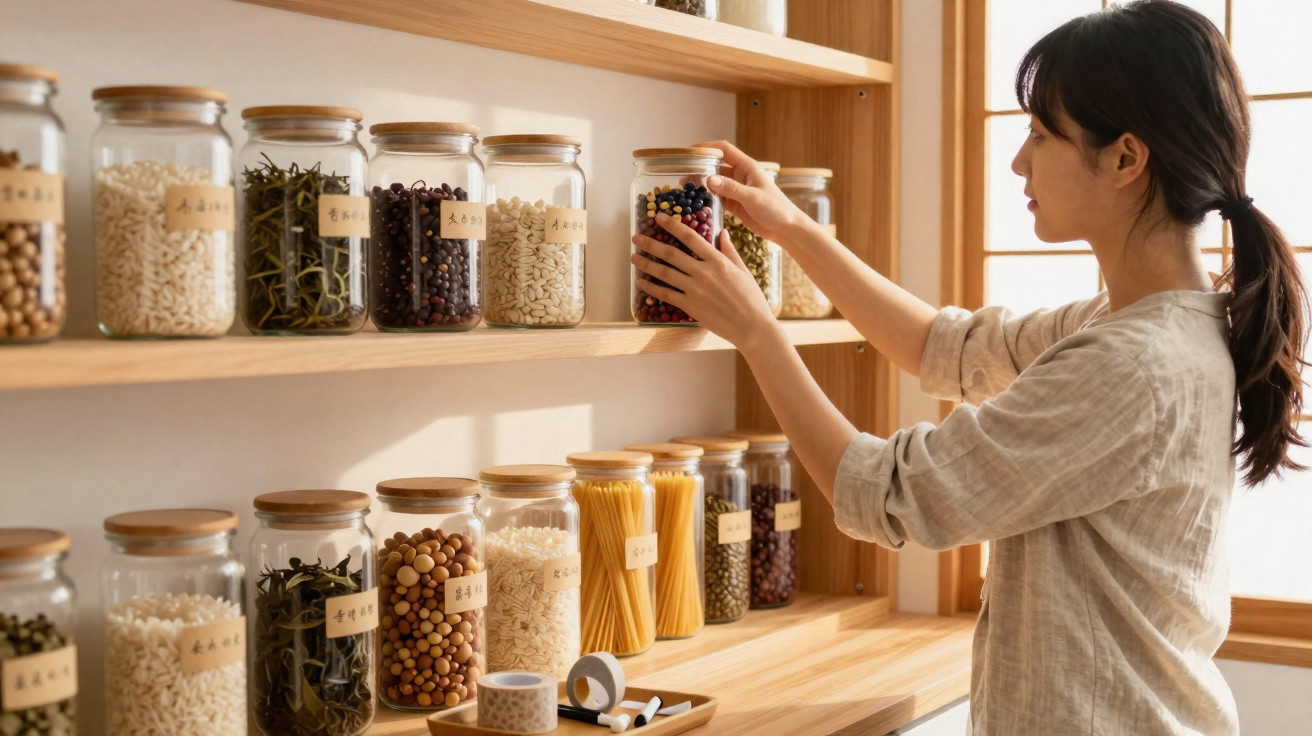
Glass jars that would once have been thrown away can become the foundation of a more practical, tidy and easy-to-maintain pantry. At a time of more mindful consumption, reuse brings together household savings, food storage and kitchen routines with a straightforward benefit: seeing what is on the shelf before food goes to waste.
Why do transparent containers work so well in a kitchen routine?
The principle is simple. Clear containers keep grains, pasta, flour, tea and spices in view without having to open a cupboard, box or packet. This makes shelves easier to scan, simplifies restocking and supports pantry organisation, as every item has a defined volume, colour and place.
For everyday use, glass jars also provide secure lids, modest stacking potential and straightforward cleaning. The advantage is not purely visual. When rice is visibly half used and beans are nearly finished, households can shop more carefully, avoid buying duplicates and prevent supplies being forgotten at the back of a cupboard.
Which 3 Japanese DIY ideas are worth adopting?
Japanese kitchen organisation often prioritises visual order, convenience and intelligent use of space. The same approach can be adapted through DIY using materials already at home, without making the pantry look like an artificial display.
- Arrange one row for each category, using matching glass jars for grains, seeds and flour. Visual repetition creates less clutter and makes items quicker to find.
- Put subtle labels on the lids rather than the jars themselves. The contents remain visible, while the shelf looks clearer.
- Set up a simple rotation system: place the oldest jar at the front and the fullest one behind it. This encourages reuse of household supplies.
How can you embrace visual simplicity without losing practicality?
Many people overdo containers and end up making their own routine more complicated. The most useful Japanese-inspired principle here is to remove excess. Not everything needs to leave its original packaging. A better option is to reserve glass jars for frequently used dry goods: items that move between the worktop, cupboard and saucepan during the week.
In practice, pantry organisation works better with a small number of clear groups: cereals, snacks, quick-preparation ingredients and reserves. This division prevents biscuits from being mixed with pasta, seasonings with flour, and expiry dates from being hidden. DIY is effective when the system fits the household's real rhythm.
What precautions prevent common mistakes when using jars?
Before transferring any food supplies, it is worth setting a basic standard so that disorder is not replaced with confusion. Pantry organisation depends less on the number of containers than on having a consistent system that can be maintained for months.
- Wash and dry glass jars thoroughly before use to prevent moisture affecting sugar, coffee, seasoned cassava flour and flour.
- Keep the expiry-date information from the original packaging on a label or in a simple note.
- Avoid using one jar size for everything, as this wastes room on low shelves.
- Keep smaller jars for spices, nuts and seeds, which need quick access.
How can a pantry become more stable day to day?
The best outcome comes when reuse stops being an improvisation and becomes a method. Well-distributed glass jars, visible categories and restocking in order of use make shelves easy to read. This cuts repeat purchases, speeds up meal preparation and offers greater control over what enters and leaves the cupboard.
In this context, DIY means creating a manageable routine rather than a perfect internet-ready scene. When pantry organisation accounts for expiry dates, portions, accessible lids and the movement of food supplies, the kitchen operates with less waste and greater precision in household storage.



Comments
No comments yet. Be the first to comment!
Leave a Comment