
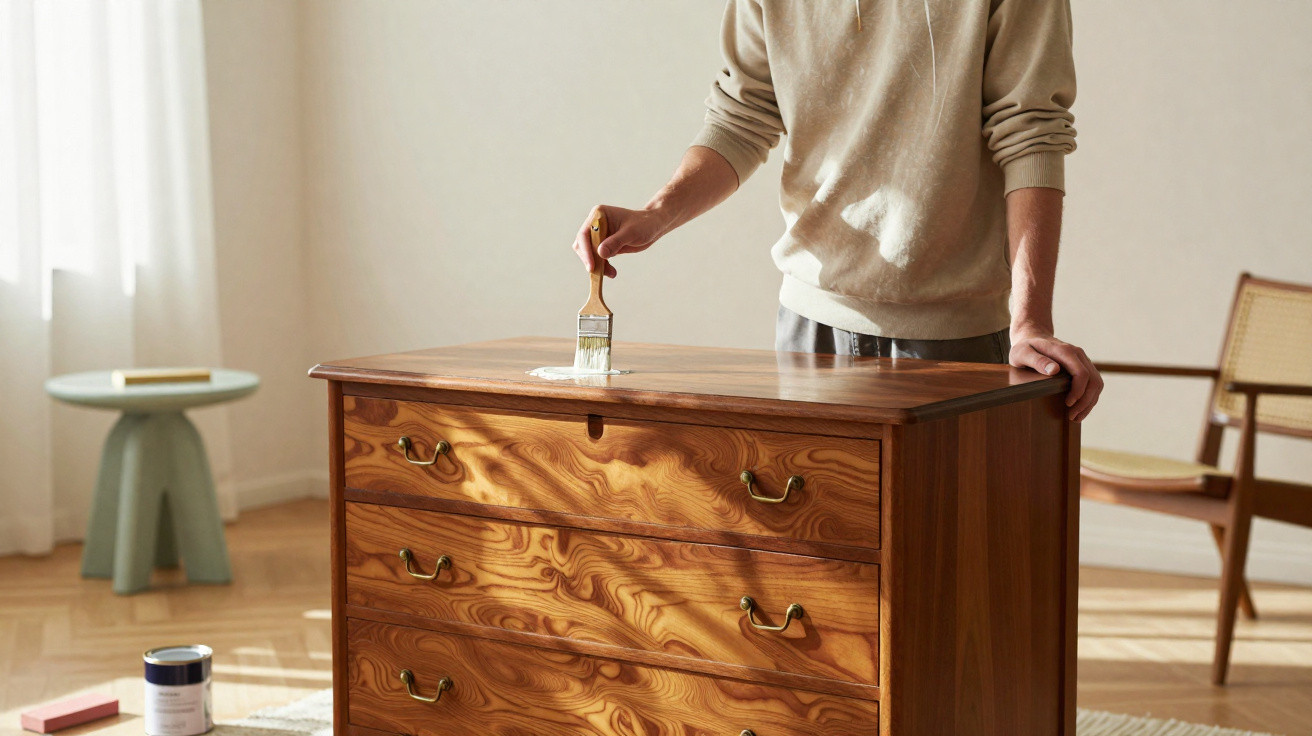
Social media is full of striking before-and-after clips: an old cupboard is painted white, a dark chest of drawers suddenly glows in pastel shades. What looks brilliant on video can prove to be an expensive mistake in real life. Some pieces of furniture lose almost all of their market and sentimental value after being painted – and can scarcely be saved later.
Why paint does not make every chest of drawers more attractive
The big trend for 2025 is genuine wood, tactile grain and visible craftsmanship. Interior experts are once again favouring natural finishes, warm shades and furniture with a story. Those are precisely the qualities that disappear beneath an opaque coat of paint.
Anyone who simply paints over everything risks losses in value of up to 90 per cent – and can quickly turn a collector's piece into something fit for the tip.
Before picking up a brush, it is worth taking a careful look: is it mass-produced furniture from a furniture shop, or a piece that may interest collectors or future generations?
1. Antiques and heirlooms: family history over chalk paint
The most sensitive category is old solid-wood furniture and genuine family heirlooms. These include, for example:
- buffet cabinets from the 19th century
- tall chests, chests of drawers and writing desks with carved details
- old farmhouse cupboards with original fittings
- chests and sideboards made from solid oak or walnut
Furniture like this owes much of its appeal to its patina: minor scratches, darker edges and slightly uneven tones. These are exactly the details that make it interesting to collectors and antiques dealers. Once acrylic or chalk paint is applied, that surface is lost for good.
Even if a cupboard would not command a top price on the market, it often has considerable emotional value. An heirloom that has stood in the family for generations becomes just another “shabby chic cupboard”, one of thousands, after a fashionable paint job.
How to make old furniture work in a home
Anyone wanting to place a dark display cabinet in a bright, modern living room can use a few straightforward measures:
- Clean it gently rather than sanding it down
- Refresh it with beeswax or furniture oil
- Paint the interior a lighter colour or line it with wallpaper
- Install subtle LED lighting
This keeps the original exterior finish intact while making the piece feel much lighter in everyday use.
2. Mid-century design: never paint over teak classics
Furniture from the 1950s to the 1970s is currently in high demand – classic mid-century modern: low sideboards, slim highboards and chairs with organic lines, usually made from teak, walnut or rosewood.
These are often found cheaply on classified-ad sites, then painted white through lack of knowledge to make them look “more Scandinavian”. For design enthusiasts, this is a nightmare. The reason is simple:
Original lacquer, suitable handles and authentic wood grain determine the value of a mid-century piece of furniture – not its shape alone.
A single brushstroke removes a sideboard's authenticity. Anyone hoping to sell it later will find that professional restoration costs more than the resale price could ever recover.
Gentle care instead of a complete makeover
For design pieces of this kind, restorers recommend:
- Thorough but gentle cleaning with a mild soap solution
- Reviving the finish with teak or furniture oil
- Carefully repairing minor veneer damage
- Replacing missing or severely damaged handles with similar models
This modest intervention is often enough to make a sideboard from the 1960s look like a sought-after studio piece again.
3. Fine woods: show the grain, do not hide it
Anyone fortunate enough to own furniture made from high-quality wood should display its surface rather than conceal it. Typical examples include:
- tables and worktops made from old oak
- walnut with lively, dark grain
- restored reclaimed-wood furniture with knot holes and nail marks
These very imperfections create character. They visibly tell the story of craftsmanship and of former use in a workshop, on a farm or in a hospitality setting.
Using opaque paint here may create a “clean” looking piece at first glance, but it removes what makes it so distinctive compared with chipboard. A lighter appearance can often be achieved more easily through gentle stripping, staining in a paler shade or a transparent oil with a mildly brightening effect.
4. Veneer and marquetry: millimetre work no brush can forgive
Furniture fronts with veneer, marquetry or woven inlay work require particular care. Veneer is only an extremely thin layer of real wood fixed to a backing. If that layer is breached during sanding, chipboard or another much less attractive material will appear underneath.
Anyone who mistakes veneer for “real solid wood” and starts using an orbital sander can irreparably ruin the furniture within minutes.
Elaborate marquetry – patterns made from different timbers, sometimes combined with metal, mother-of-pearl or other materials – also loses all purpose beneath paint. What was once painstaking craftsmanship becomes a flat, generic board.
Rather than reaching for a brush and sanding machine, it is worth visiting a specialist restoration workshop. Targeted stabilisation, fresh oil or shellac is often all that is needed to make a faded piece look vibrant again.
5. Delicate materials: when paint simply will not last technically
Some furniture is not particularly valuable, but simply reacts badly to paint from a technical point of view. This applies especially to:
- rattan, bamboo and other woven natural fibres
- metal shelving and workshop furniture with attractive ageing
- seating with leather or textile upholstery
On rattan, paint settles into every groove, forms thick runs and begins to flake after only a short period of use. Metal with an intentional patina loses its raw industrial character as soon as it is covered with an opaque layer. Leather and fabric, meanwhile, become stiff and cracked – leaving the furniture uncomfortable and patchy in appearance.
Clear varnishes, specialist oils or professional reupholstery are much better choices for these pieces than a quick coat of leftover wall paint from the shed.
Modernise intelligently: keeping five furniture types intact
Anyone wishing to protect the five critical groups – antiques, mid-century design, furniture made from fine woods, veneered or decorated pieces, and delicate materials – can focus on the surroundings rather than the surface.
| Furniture type | Keep away from | Better idea |
|---|---|---|
| Antique cupboards | Opaque paint, aggressive sanding | Cleaning, wax, fresh interior paint |
| Mid-century sideboards | White paint, modern high-gloss handles | Oil, subtle handle updates, suitable styling |
| Fine solid-wood tables | Paint rollers, thick coats of varnish | Oil, stain, transparent sealant |
| Veneer & marquetry | Machine sanding, chalk paint | Specialist restoration, targeted repairs |
| Rattan & metal patina | Bright DIY-shop paint | Clear varnish, oil, new upholstery |
When paint can still make sense
Naturally, there are pieces of furniture where painting causes little harm: laminated chipboard shelving, simple MDF chests of drawers and mass-produced kitchen wall units. These items have no historical, craft or collector relevance. In such cases, paint can be a cost-effective way to visually unify a room or follow a short-lived trend.
A tried-and-tested approach used by many interior designers is to keep around 80 per cent of the furnishings modern, calm and light, while using roughly 20 per cent untreated vintage pieces as eye-catching accents. This makes a room feel fresh without sacrificing treasures from the past.
How non-experts can identify valuable furniture
Anyone unsure whether a piece of furniture is “at risk from the paintbrush” should look for a few signs:
- Continuous wood grain along the edges and across the front
- Old fittings that may be slightly irregular
- Mortise-and-tenon joints and dovetails on drawers
- Maker's labels from well-known manufacturers or designers
- A clear scent of waxed or oiled wood rather than chipboard
If these features are present, it is better to put the brush aside and seek advice – from an antiques dealer, a joiner or relevant online communities, where specialists often share their assessments free of charge.
That turns a spontaneous “I'll just paint it quickly” into an informed decision. And the supposedly old-fashioned lump in the room may prove to be the very piece that becomes the highlight of the entire home in a few years' time.





Comments
No comments yet. Be the first to comment!
Leave a Comment