
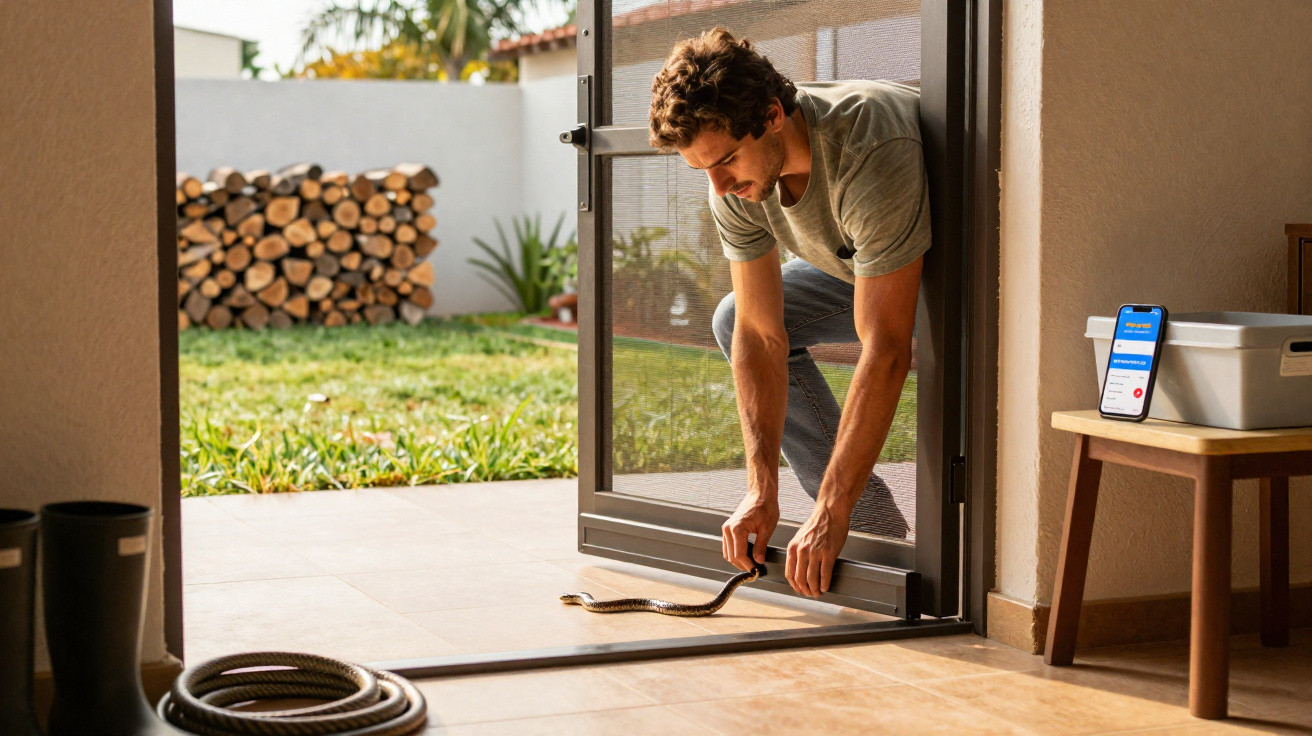
Snakes inside the home usually gain access through gaps, poorly sealed doors, open windows, overgrown gardens or the presence of rodents. Experts’ warning does not mean that these animals are “hunting people”; rather, they may be looking for shelter, water, warmth or food in areas close to homes. Prevention starts with properly sealing the property and maintaining the surrounding land.
Why can snakes enter homes unnoticed?
Snakes have flexible bodies, allowing them to squeeze through smaller gaps than many people expect. Spaces beneath doors, openings in gates, unprotected drains, low windows and holes near boundary walls can all provide entry routes, particularly in single-storey homes and properties close to vacant plots.
During hot spells, droughts, heavy rain or flooding, these animals may move around in search of safer places. Garages, utility rooms, storage spaces, outside passageways and areas with stacked boxes can offer shade and temporary cover. Carefully securing doors and windows is therefore a practical household safety measure.
How should doors and windows be protected?
Closing doors and windows “firmly” does not mean slamming them. It means ensuring that they are fully shut, properly fitted and free from open gaps or loose catches. A door that has merely been pulled to may leave enough space for small animals to get through, especially at night.
- Fit draught excluders along the bottom of external doors.
- Install mesh screens on low windows, hopper windows and ventilation openings.
- Shut gates and garage doors at dusk.
- Cover outside drains with securely fitted grilles.
- Repair gaps in boundary walls, skirting boards, thresholds and walls.
Inspections should focus especially on parts of the house that are rarely used. Box rooms, outdoor utility areas and spaces behind furniture often collect belongings and may conceal openings that go unnoticed during day-to-day routines.
What attracts snakes to gardens near the home?
The garden acts as the first line of protection. Where there is rubble, dry leaves, stacked timber, organic waste and long grass, the area becomes favourable for rodents, insects and other small animals. As some snakes feed on these prey species, the property can become indirectly more appealing.
Keeping outdoor areas tidy limits hiding places and makes it harder for snakes to approach. Cleaning must be carried out regularly, as even a single stack of tiles, boxes or branches beside a wall can become a shelter. On larger plots, maintaining the edges along boundary walls is just as important as looking after the middle of the garden.
- Cut the grass and remove vegetation growing against boundary walls.
- Do not allow rubble, bricks, tiles or building waste to accumulate.
- Store pet food in sealed containers.
- Keep bins covered so they do not attract rodents.
- Position woodpiles away from doors and windows.
What should you do if you find a snake inside the home?
If you come across a snake, the first rule is to keep away from it. Do not try to touch, kill, catch or identify the species yourself. Even snakes that look small or still may react if they feel cornered. Children and pets should be moved away immediately.
If you can do so without going near the animal, close the room door to restrict its movement. Then contact the Fire and Rescue Service, Civil Defence or the local municipal zoonosis-control service. Attempting to deal with it alone increases the risk of an accident, particularly in confined spaces with furniture or poor lighting.
Prevention is safer than improvisation
The most effective protection against snakes inside the home combines good sealing, outdoor cleanliness and reducing food sources for rodents. Well-fitted doors, screened windows, protected drains and an orderly garden make a home both less accessible and less attractive to animals seeking shelter.
Once a snake has entered, the priority changes: no one should turn the situation into an attempt at home capture. Moving people and pets away, maintaining distance and calling a trained team is the safest way to protect the home without putting residents, neighbours or the animal itself at risk.


Comments
No comments yet. Be the first to comment!
Leave a Comment