
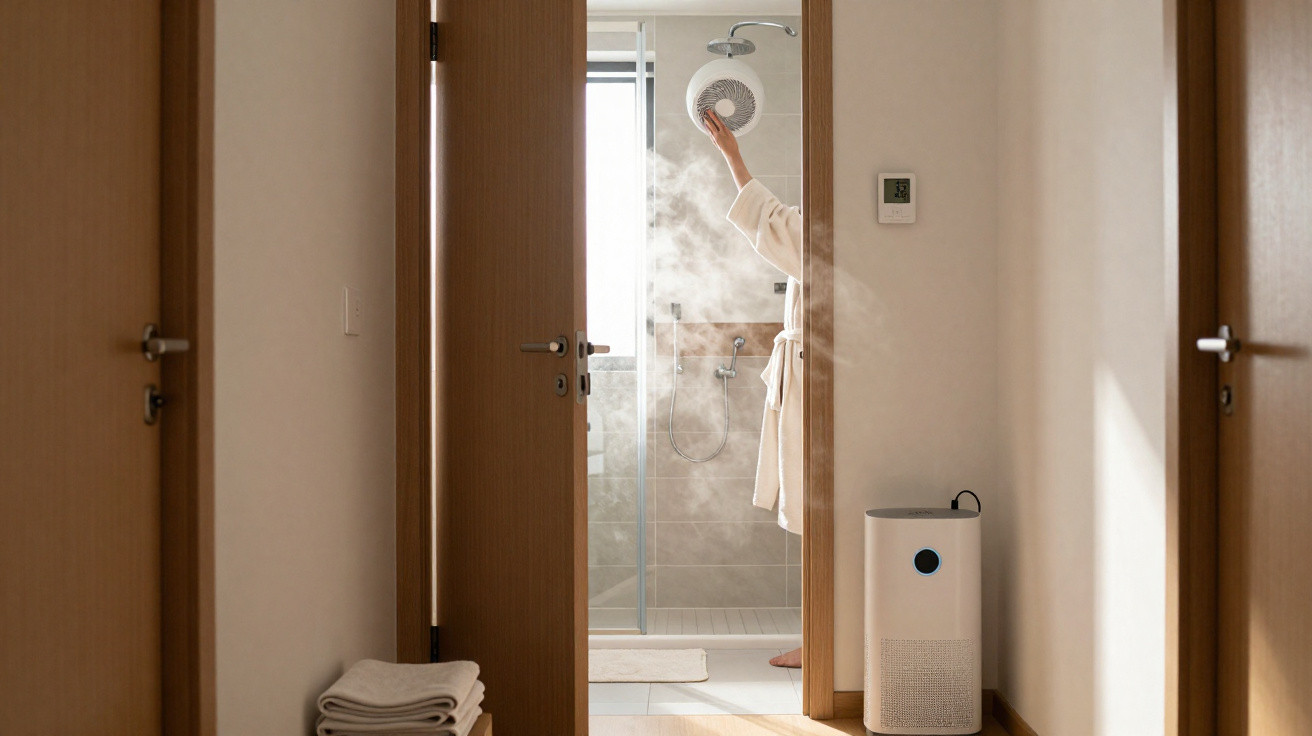
After a shower, hot steam often fills the room and, out of habit, many people leave the bathroom door wide open because they believe it will help the space dry out. Although this may initially seem sensible, home ventilation specialists warn that the approach can have the opposite effect elsewhere in the house, distributing moisture, changing thermal comfort and increasing the likelihood of mould and odours in several rooms.
How does bathroom steam spread through the home?
The warm, moisture-laden air produced by a shower naturally moves towards cooler parts of the property, following the route of lower temperatures. Opening the bathroom door immediately after showering gives this air an unobstructed route into hallways, bedrooms and wardrobes, carrying moisture into places that have never been directly exposed to water.
Once it reaches these cooler spaces, the steam condenses into tiny droplets on surfaces including external walls, glass, mirrors and wardrobe doors. When this happens every day, mould marks, peeling paint and a damp smell may develop in seemingly dry areas. Fabrics, mattresses, curtains and stored clothes may also be affected.
Is it best to leave the bathroom door open or closed after a shower?
In smaller houses and flats, people often wonder what to do with the bathroom door, but the key recommendation is to direct moisture outside the property. Immediately after showering, keep the door closed or only slightly ajar, focusing ventilation towards the outdoors and preventing steam from spreading into bedrooms.
If the bathroom has a window, opening it straight after a shower provides a direct escape route for humid air. Where there is an extractor fan, it should run during the shower and remain on for a few minutes afterwards. Once the amount of moisture has visibly fallen - with the mirror less steamed up and no droplets running down the walls - the door can be opened fully, allowing fresh air to circulate without “exporting” excess moisture to other rooms.
What daily habits help reduce bathroom humidity?
Managing humidity in the bathroom involves more than the door position: small routines can also limit the amount of water available to evaporate. These everyday measures are straightforward, build up over time and help preserve the property while preventing odours and respiratory allergies.
Here are some recommended ways to keep the bathroom drier and more comfortable:
- Drying surfaces: Using a squeegee or cloth on the shower walls and floor immediately after washing significantly reduces the water that would otherwise evaporate.
- Hanging towels properly: Leave them spread out on suitable rails, ideally in a ventilated place, so they do not act as permanent moisture “sponges”.
- Avoiding piles of wet clothing: Damp items left in the bathroom keep the relative humidity higher for longer.
- Using the extractor fan correctly: Running the unit while showering and for several minutes afterwards improves air exchange.
- Opening the window strategically: If there is a window, opening it immediately after a shower creates airflow towards the outside.
Watch a video on the PLANARQ CAMPOS / Ralph Dias YouTube channel about the hidden effects of moisture in rooms around the home and the correct management of internal ventilation during low-cost refurbishments:
How can bathroom humidity affect other rooms in the house?
When hot steam can leave the bathroom freely and enter other areas, the earliest signs usually emerge in cold or poorly ventilated places. Walls next to external façades, furniture positioned very close to cold surfaces and full wardrobes are typical moisture-collection points, where subtle dark marks, a musty smell and even detached finishes can appear.
Additional precautions can help prevent this, including leaving a small gap between furniture and cold walls, opening wardrobe doors from time to time, and checking corners behind headboards and curtains. Reducing shower duration and water temperature also limits the amount of steam produced, keeping humidity concentrated closer to its source and making it easier to remove gradually outdoors. This supports a healthier home with fewer respiratory problems associated with fungi and odours.

Comments
No comments yet. Be the first to comment!
Leave a Comment