
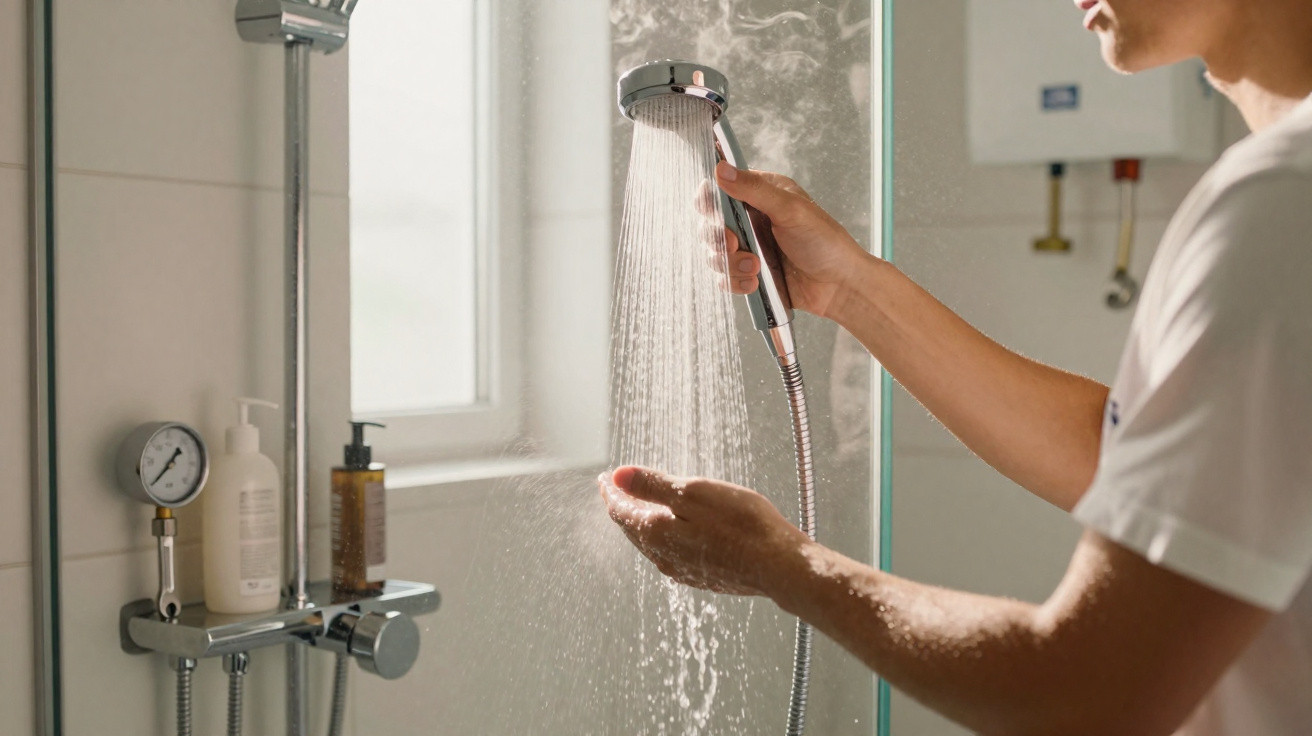
Fluctuating pressure during a shower typically shows up when someone opens a tap, flushes the toilet or uses another water outlet. The outcome is an uneven spray, a sudden shift in temperature, and an uncomfortable shower experience.
Why does water pressure fluctuate during a shower?
In many homes, the plumbing system cannot make up for the drop in available water when two outlets run at the same time. The shower receives less flow, the mixer becomes unbalanced, and the pressure changes within a few seconds.
The cause can also be ageing valves, worn stopcocks, a dirty water heater, or pipework that is simply too narrow for the household’s demand. As an installation gets older, small losses start to affect everyday showering, overall comfort and routine safety.
The most common signs tend to look like this:
- Spray: it weakens when another water outlet is opened.
- Temperature: it swings from hot to cold suddenly.
- Valve: it may be missing, stuck or worn out.
- Pipework: older or narrower runs are more affected by simultaneous use.
- Plumber: should assess the system if the issue keeps happening.
What does pressure tell us about these sudden changes?
Pressure is a physical measure linked to the force applied per unit area. In domestic plumbing, that principle helps explain why changes in flow can alter the water outlet at the shower and the stability of your shower.
When the toilet or basin draws on the available supply, the shower line can lose its balance between hot and cold. Without proper compensation, the shower can switch abruptly between cold, hot and weak.
What solutions do plumbers usually recommend?
A pressure-balancing valve is designed to compensate for sudden differences between the hot and cold lines, keeping the mix far steadier. If it is missing, seized or worn, the system loses control and produces uncomfortable fluctuations.
A stable shower depends on balance.
The right fix depends on the installation. In some situations, replacing the mixer valve stops the fluctuation immediately during a shower. In others, the underlying issue is pipe sizing or the water heater.
Another option is a thermostatic mixer valve, which controls temperature more precisely and reduces unpleasant surprises while showering. It will not solve every plumbing issue, but it can help a great deal when the root cause sits with an old mixer or an ageing valve.
The most common remedies include:
- fitting a pressure-balancing valve into the system;
- using a thermostatic mixer in bathrooms with hot water;
- cleaning pipework, stopcocks and the water heater periodically;
- checking stopcocks that are partly closed or worn;
- assessing whether the pipework meets the household’s demand.
Which habits help reduce shower fluctuations?
Sediment in pipes, heaters that are not maintained, and stopcocks left partly closed can all restrict steady flow. Routine cleaning and upkeep improves circulation, reduces flow-rate losses and helps prevent blockages over the years.
Even with good equipment, running multiple outlets at once can still reduce pressure in older houses. For that reason, avoiding toilet flushing, using the washing machine, or running a basin tap during a shower can help maintain comfort and consistency.
To avoid sudden temperature shocks, follow these precautions:
- avoid flushing the toilet while someone is in the shower;
- do not run the washing machine and the shower at the same time;
- keep the water heater and stopcocks properly maintained;
- note whether the fluctuation always happens at the same time of day;
- call a plumber if the issue suddenly gets worse.
When does unstable pressure require a professional assessment?
If you notice the pipework misbehaves every time you get into the shower, pay attention to whether the fluctuation occurs at specific times or only when other outlets are running. That pattern points to overload and a possible imbalance during normal household use.
When pressure changes across several bathrooms, taps and showers, the problem may involve the cold-water storage tank, branch lines, pipe diameters, or a poorly sized water heater. In these situations, a professional inspection identifies the correct source and helps avoid unnecessary costs.



Comments
No comments yet. Be the first to comment!
Leave a Comment