
In a nutshell
- Close the bathroom door to keep steam contained, help the extractor fan (or window) work efficiently, and reduce the spread of damp and mould into bedrooms, halls and cupboards.
- Physics in brief: stopping moisture escaping helps avoid sudden jumps in relative humidity and dew point condensation elsewhere, while creating a clear pressure route towards the extractor fan or an open window.
- UK homes behave differently: stairwells, door undercuts and leaky gaps move moisture fast; one Leeds example saw an 8–12% RH reduction in a box room after better door discipline and fan overrun, consistent with Part F thinking.
- Pros and cons: door shut + fan is usually the best combination; if ventilation is weak, keep the door shut while showering, then purge afterwards-because “more open” doesn’t automatically mean better moisture control.
- Easy wins: use a humidity-sensing fan with a 15–30 minute overrun, squeegee wet surfaces, use trickle vents and a hygrometer-treat the door like a moisture valve.
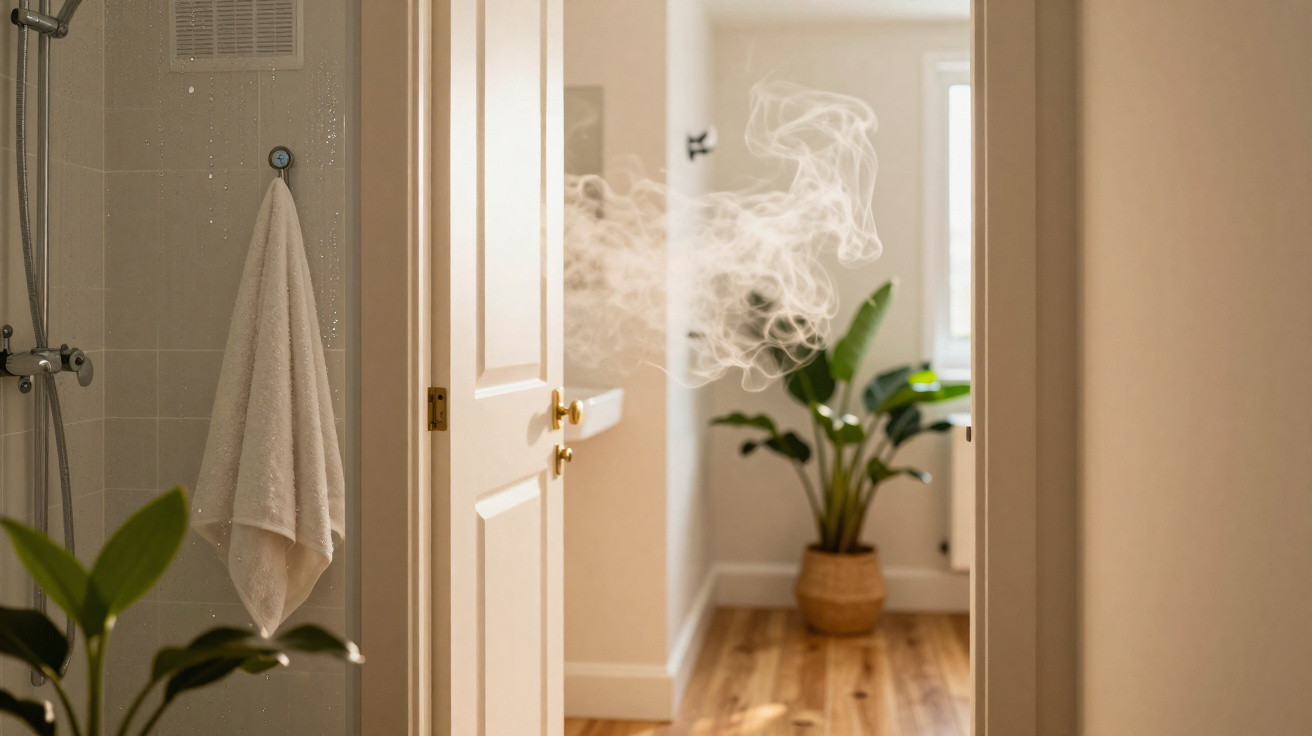
Close the bathroom door after a hot shower and one thing becomes obvious: the steam stays where it belongs. That small, repeatable habit can stop moist air drifting into landings, bedrooms and wardrobes, where it cools, condenses and helps mould take hold. With the UK’s mix of housing ages and changeable weather, it’s a cheap behaviour tweak with outsized payback. Keeping moisture contained shrinks the “risk zone”, gives extraction time to catch up, and limits how far damp can travel. Think of it as routing water vapour like traffic-towards a vent, rather than letting it wander through the house. Below is the practical case for it: the physics, the typical UK pathways, the trade-offs, and what to do in real homes with real constraints.
The Physics of Contained Steam
A shower releases warm, water-laden air into a relatively small space. If that air spills into cooler rooms, relative humidity (RH) can rise quickly and tip above the dew point, so water drops out onto windows, paint, tile edges and cold corners. Closing the door effectively “caps” the moisture plume, keeps extraction concentrated, and reduces the amount of floor area exposed. The result is simple: less spread and a quicker clear-down.
This is basic psychrometrics (how much water air can hold at a given temperature) combined with common UK realities-thermal bridging, uneven insulation and rooms that heat up and cool down at different rates. When steam hits a cold surface, it turns back into liquid water; that dampness then supports mould spores that are already present in household dust in many properties.
With the door shut, an extractor fan or cracked window tends to establish a more reliable pressure-driven route out of the room: moisture is encouraged to leave the building rather than drift sideways into carpets, cupboards and soft furnishings. Leaving the door open may “dilute” the steam into the home, but dilution is not the same as removal-cooler rooms push RH closer to saturation and can trigger condensation away from the bathroom. Containment turns a whole-house humidity surge into a one-room ventilation job-which is usually faster, cheaper and easier to manage.
Moisture Pathways in UK Homes
Many UK houses and flats combine older heating systems with inconsistent insulation and varying airtightness between rooms. That makes shower steam surprisingly mobile. Typical escape routes include door undercuts, gaps around frames, stairwells that act like a chimney, and even loft hatches that leak air. With doors left open, warm buoyant air tends to rise and migrate into cold bedrooms, where external walls, window reveals and corners may sit below the dew point. That’s where the familiar black speckling, peeling paint and musty smells often appear. Closing the bathroom door breaks these routes and keeps the bulk of the moisture where the ventilation is meant to deal with it.
In a 1930s semi I visited in Leeds, a family couldn’t work out why mould kept returning behind a chest of drawers in a box room. The problem wasn’t a roof leak-it was the post-shower plume travelling up the landing and settling in the coldest spots. Once they consistently shut the bathroom door and ran the fan for 20 minutes after showering (plus opened the trickle vents slightly), their hygrometer recorded 8–12 percentage points lower RH in that bedroom over a fortnight. The change cost nothing, yet the room improved noticeably-along with a child’s recurring cough. Part F ventilation is built around controlled airflows, and internal doors play a real role in that control.
Pros vs. Cons: Door Shut vs. Door Ajar
Buildings rarely have one-size-fits-all answers, so it’s worth balancing the upsides and the limitations. Most of the time, a shut door paired with extraction is the best set-up because it keeps moisture local and helps the fan clear it more effectively. It also cuts the risk of secondary condensation on colder glazing in other rooms.
The main drawback is practical: if the extractor is weak (or missing) and there’s no openable window, keeping the door closed can leave steam lingering for too long. In that situation, contain first-keep the door shut while showering-then switch to purging once you’re done: open the window and run any available fan, or open the door slightly to let the moisture escape once the worst of the steam has stopped. This nuance matters particularly in rentals and older properties where ventilation performance is inconsistent.
A simple comparison from a small London flat (winter, 10-minute shower), using two calibrated hygrometers, illustrates the point:
| Scenario | Bathroom Peak RH | Adjacent Room RH Rise (20 min) | Notes |
|---|---|---|---|
| Door Closed + Fan On | 85% | +5% (to 55%) | RH back to 60% in bath after 20–25 minutes |
| Door Open, No Fan | 78% | +15% (to 65%) | Bedroom window fogged; slow whole-flat recovery |
With the door closed, moisture stays mostly in the bathroom and bedrooms are better protected, even though the bathroom RH briefly peaks higher. That higher peak is tolerable because controlled removal is already happening.
Why Leaving the Door Open Isn’t Always Better
It’s easy to assume that “more open equals more ventilation”. In reality, ventilation is not just about having an opening-it’s about pressure-driven flow paths and temperature differences between spaces. When the door is left open, you effectively enlarge the moisture reservoir from one room to the entire dwelling. Condensation then appears on the coldest surfaces, not necessarily near the loudest fan. That’s why wardrobes, north-facing rooms and window corners are often the first to show trouble when shower steam is allowed to roam. Open-door dilution spreads the risk; closed-door extraction focuses the remedy.
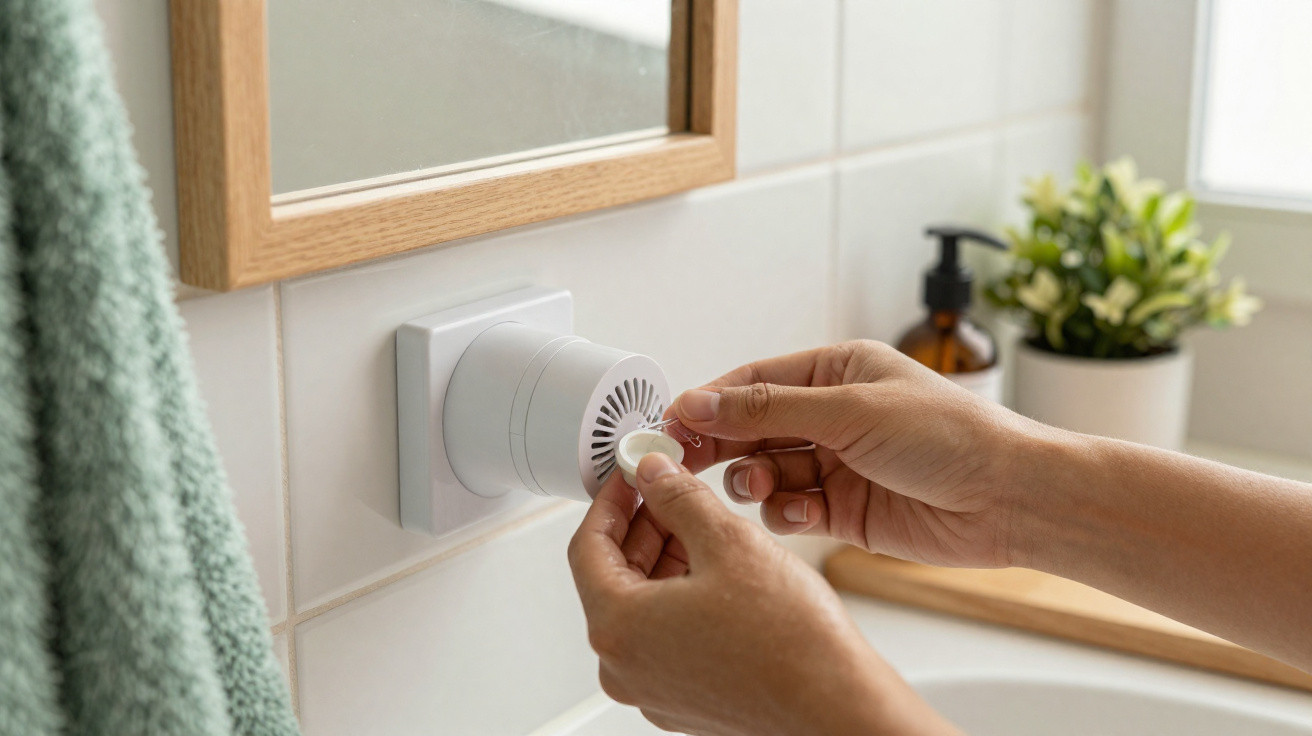
There are genuine exceptions. If there’s no fan and no bathroom window (common with internal bathrooms), a fully sealed door can slow clearance. In that case: keep the door closed during the shower to reduce spread, then open it slightly afterwards while running whatever mechanical extract you do have elsewhere and keeping the hallway warm. (A kitchen hood on recirculation, for example, is far less helpful.) Over the longer term, the most practical upgrade is a quiet, humidity-sensing fan with a 15–30 minute overrun, so privacy and moisture control work together every day.
Practical Ventilation Strategies and Real-World Cases
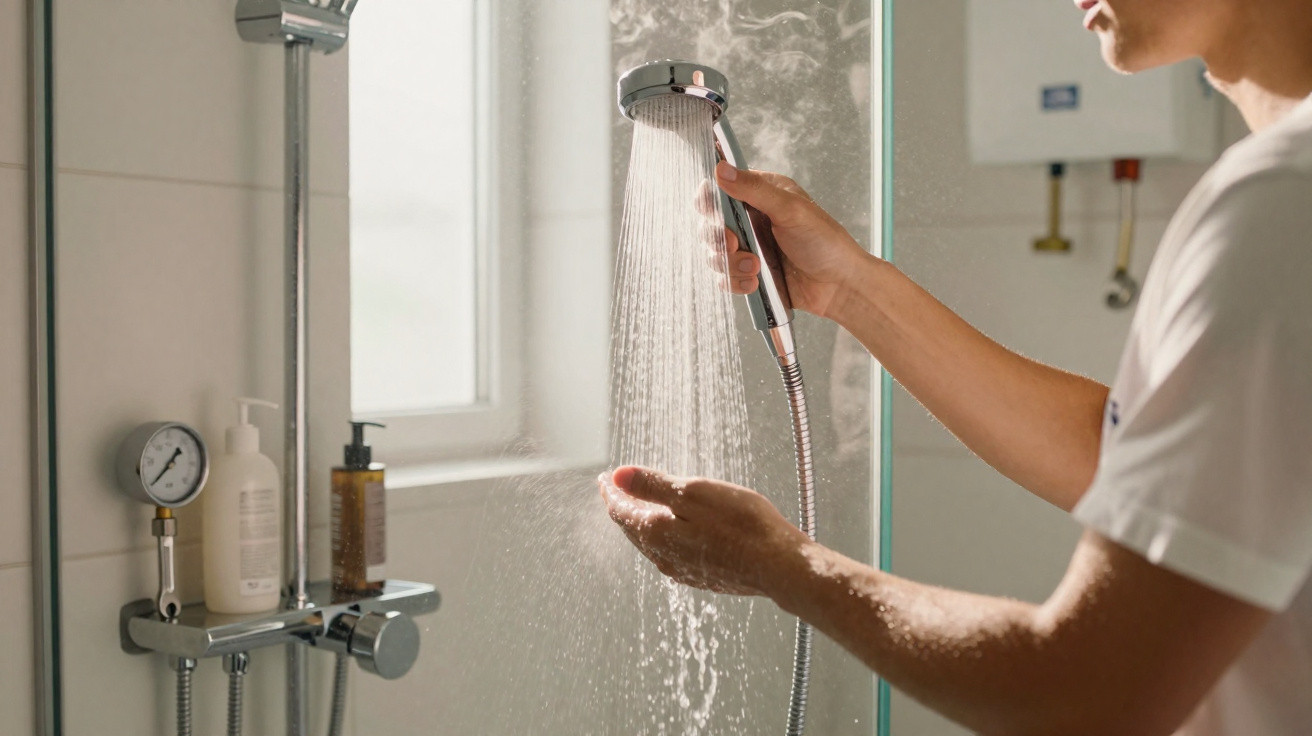
Turn it into a routine. Before turning on the tap, shut the door. While showering, run the fan and/or crack the bathroom window a small amount so there’s a definite draw. Once finished, squeegee tiles and screens, wipe any flat ledges where water pools, and leave the fan running for 15–30 minutes. By reducing the moisture load at source, you shorten drying time dramatically. If you’re in a rented property, it’s worth asking the landlord about upgrading the fan; many newer units are very quiet but still move enough air to improve comfort and support compliance.
In Bristol, a tenant’s mould behind a headboard improved within a month after they switched to closed-door showers, set a 20-minute fan overrun and used the trickle vents more consistently. The energy impact was negligible-fans use very little electricity-while the savings (less repainting and reduced reliance on a dehumidifier) were immediate. A small hygrometer in the hall can help you track the bigger picture: aim for roughly 40–60% whole-home RH (WHO guidance for comfort and health). If RH climbs in winter, review day-to-day sources: shower habits, drying laundry indoors and how evenly the home is heated. Treat the bathroom door as a valve in your home’s moisture system: close it to control, and open it deliberately to purge.
Shutting the bathroom door after showering isn’t fussiness-it’s a functional moisture-control habit. It keeps water vapour corralled, allows extraction to do its job, and helps protect bedrooms, wardrobes and window frames from preventable damp. Combine that habit with a capable fan, use of trickle vents and quick wipe-downs, and you’ll often notice clearer mirrors and fresher-feeling air. As the UK’s housing stock changes and energy costs shift, these small routines matter more, not less-so next time steam starts billowing, will you treat the bathroom door as a proper moisture-control tool, and what change could you trial this week to see the difference?




Comments
No comments yet. Be the first to comment!
Leave a Comment