
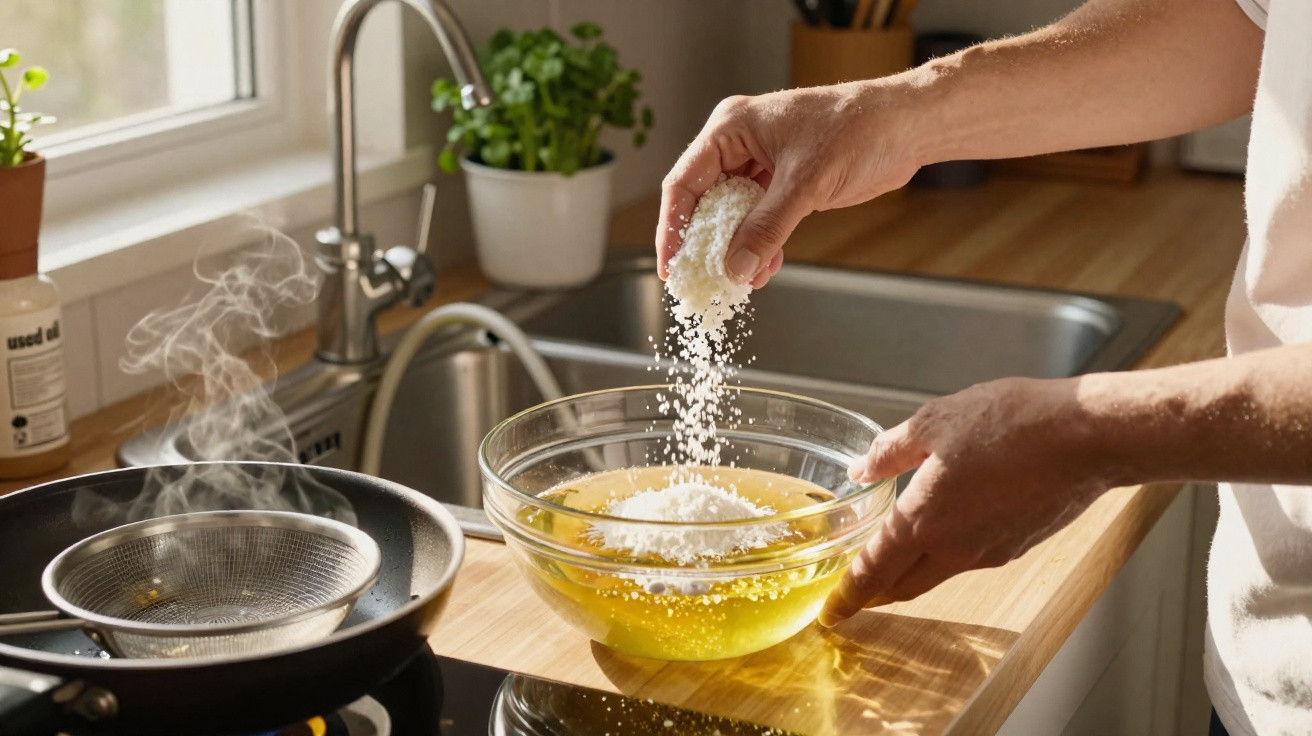
Many households will recognise the pattern: first the drain gurgles, then water starts draining more slowly, and eventually the basin fills up. People often unscrew the trap or call an emergency plumber straight away. One plumber explained to a customer why old frying oil is so often the cause - and how a little cornflour and a simple routine can almost completely prevent the issue.
How frying oil quietly damages your drain
It may seem harmless in the kitchen: let the pan cool briefly after frying, pour the oil down the sink and follow it with hot water. Yet this exact routine can create serious problems in flats and houses.
Inside the pipework, events unfold differently from what many people expect. The oil begins as a liquid, but then meets cooler water and colder pipe material. It gradually starts to solidify there.
“What starts as only a thin layer of fat clinging to the pipe wall becomes, with every fresh amount of oil, a fatty plug that narrows the pipe more and more.”
Typical warning signs at home include:
- Water draining noticeably more slowly.
- Gurgling noises from the sink or trap.
- A rancid, greasy smell rising from the drain.
- The dishwasher or washing machine pumping out less effectively.
Ignoring these signs can eventually result in a complete blockage. At that point, only a professional using a drain auger or high-pressure equipment may be able to help, and the bill can quickly run into the high hundreds of pounds, particularly if the plug is deeper in the pipe system.
What really happens inside the pipes
Technicians refer to fat deposits, or even “fatbergs”, in the sewer network. The process begins invisibly in household pipes:
Warm frying oil travels into the drain, spreads across the cooler pipe walls and gradually hardens. Much like candle wax sticking to a cold surface, the oil forms thick layers.
Food scraps, flour, rice, coffee grounds and even hair then stick to this tacky fat layer. The lump grows with every wash-up while the pipe diameter gets smaller - until the mass eventually blocks the passage entirely.
“A single litre of frying oil can not only bring your own kitchen to a standstill, but also place a significant burden on sewage treatment works and waterways.”
Sewage treatment works must remove large quantities of fat with considerable effort; otherwise, it can enter rivers and lakes. This is why many local authorities regularly urge residents never to dispose of cooking oil through the sink or toilet.
Why cornflour is the secret helper against fat plugs
The plumber’s tip tackles the problem at its source: rather than sending liquid oil into the pipes, bind it first. This can be done with a simple cupboard staple: maize cornflour, which is often sold under familiar brand names.
Its benefit is that it consists of fine starch granules which absorb and retain fat effectively. When combined correctly, the two create a solid, mouldable block instead of a greasy liquid.
Step-by-step guide: how to dispose of frying oil correctly
For the method to be safe and practical for everyday use, follow a clear process:
- Allow the oil to cool: Leave the oil in the pan or deep-fat fryer for a while after frying. It should be merely lukewarm rather than hot, so that it does not splash and the cornflour does not clump.
- Pour it into a container: Transfer the oil to a heatproof bowl or an old kitchen container.
- Measure the cornflour: Add around 1 to 2 tablespoons of cornflour for every 500 millilitres of oil. Increase the amount accordingly for larger quantities.
- Mix thoroughly: Stir well with a spoon or whisk until no dry powder remains visible.
- Leave it to stand: Keep the container at room temperature for at least several hours, ideally overnight.
- Dispose of it: Put the now thick, semi-solid mixture into a tear-resistant rubbish bag, seal it securely and place it in the general waste.
After roughly 24 hours, the liquid oil will have turned into a compact, dough-like block. It will not leak or drip, and it will no longer end up in the drain.
Large quantities of frying oil? Take them to a recycling centre instead
Private households generally produce only small amounts, such as a few panfuls or the contents of a deep-fat fryer after a party. For these quantities, the cornflour method is usually entirely sufficient.
Anyone who fries regularly or needs to dispose of several litres should choose a different route. Many household waste recycling centres accept cooking oil free of charge. It is often processed further there, for example into:
- biofuel for vehicles or heating systems;
- raw material for industrial products;
- an additive for certain technical applications.
A call to the local waste service will establish whether cooking oil can be handed in and which containers are accepted. In most cases, a tightly sealed canister or sturdy bottle is sufficient.
The most common mistakes when disposing of oil in the kitchen
The plumber repeatedly encounters the same misunderstandings in homes. Three are especially common:
| Mistake | Why it is a problem |
|---|---|
| “Rinsing away” oil with hot water | The oil may remain liquid briefly, but it simply solidifies farther along in the pipework. |
| Emulsifying oil with washing-up liquid | This creates a mixture that appears runnier but settles deeper within the network. |
| Pouring oil into the garden or a roadside drain | It contaminates soil, groundwater and the sewer network, and may even be illegal. |
Many people underestimate how thick frying fat becomes in cold conditions. Leaving a small amount of oil in a glass in the fridge demonstrates clearly just how quickly a solid layer develops.
Why this small kitchen trick makes financial sense
A packet of cornflour costs only a few pounds at the supermarket and is enough for numerous uses. This compares with the potential cost of a plumber’s call-out fee, travel and labour.
“A handful of kitchen powder can save several hundred pounds in drain-cleaning costs over a year - not to mention stress and time.”
There are indirect advantages too: looking after the pipework reduces the need for chemical drain cleaners. These products put strain on the material and can damage seals. Over time, drains, traps and pipes last longer.
Practical additions: keeping pipes clear for the long term
Dealing with frying oil is only one part of the solution. A few straightforward habits provide extra protection for the kitchen:
- Scrape food residues from plates into the bin before washing them.
- Use sink strainers to catch crumbs and pasta.
- Several times a month, run through a litre of hot, but not boiling, water to loosen light grease films.
- Never pour coffee grounds, flour or rice into the drain; dispose of them in the general waste instead.
Combining these measures with the cornflour method substantially reduces the risk of a blockage. Pipes stay clearer, odours lessen and drain noises remain unobtrusive - exactly as they should be.
What terms such as “fatberg” really mean
The term “fatberg” may sound exaggerated, but it describes a real phenomenon. In major cities, workers have found multi-tonne lumps of fat, wet wipes and rubbish in the sewers. These formations block entire collector sewers and must be milled out through painstaking manual work.
The same thing happens on a smaller scale in the home: months of many small amounts that seem insignificant can create a substantial mass. Consistently binding frying oil and disposing of it through general waste or at a recycling centre prevents these deposits from forming at all.
Ultimately, much depends on one kitchen ritual. When used oil goes directly into the sink, gradual damage begins. If cornflour instead helps send it to the rubbish bag or collection point, pipes stay clear, bills stay lower and sewage treatment works face less strain.




Comments
No comments yet. Be the first to comment!
Leave a Comment