
Standfirst.
The neglected area beneath the sink is discreetly becoming one of 2026’s most discussed storage transformations.
Once a gloomy recess crammed with carrier bags and partly used bottles, it is receiving a nostalgic but highly noticeable refresh. Designers, influencers and everyday households are embracing an unexpectedly traditional solution that conceals clutter, keeps cleaning supplies close at hand and brings personality to the kitchen in a single step.
Why under-sink clutter is finally being improved
In many homes, the cupboard beneath the sink is where organisational plans fall apart. Spray bottles topple over, pipework obstructs the space, and few people enjoy crouching down to search around in the dark.
This area is an inconvenient shape, frequently humid and seldom properly considered. Even so, it is valuable storage space in a compact house or small flat. Higher food costs, smaller kitchens and the rise of home working mean people are noticing their untidy sink areas much more than they once did.
Under-sink storage has shifted from “shut the door and forget it” to “visible, styled and working hard every day”.
That change has revived a solution that grandparents probably recognised immediately: the sink skirt.
The 2026 return of the classic sink skirt
A particularly straightforward idea is appearing repeatedly in interior magazines and across social media: swap weighty cupboard doors for fabric. Once common in country kitchens, the sink skirt is returning to newly built homes and urban flats alike.
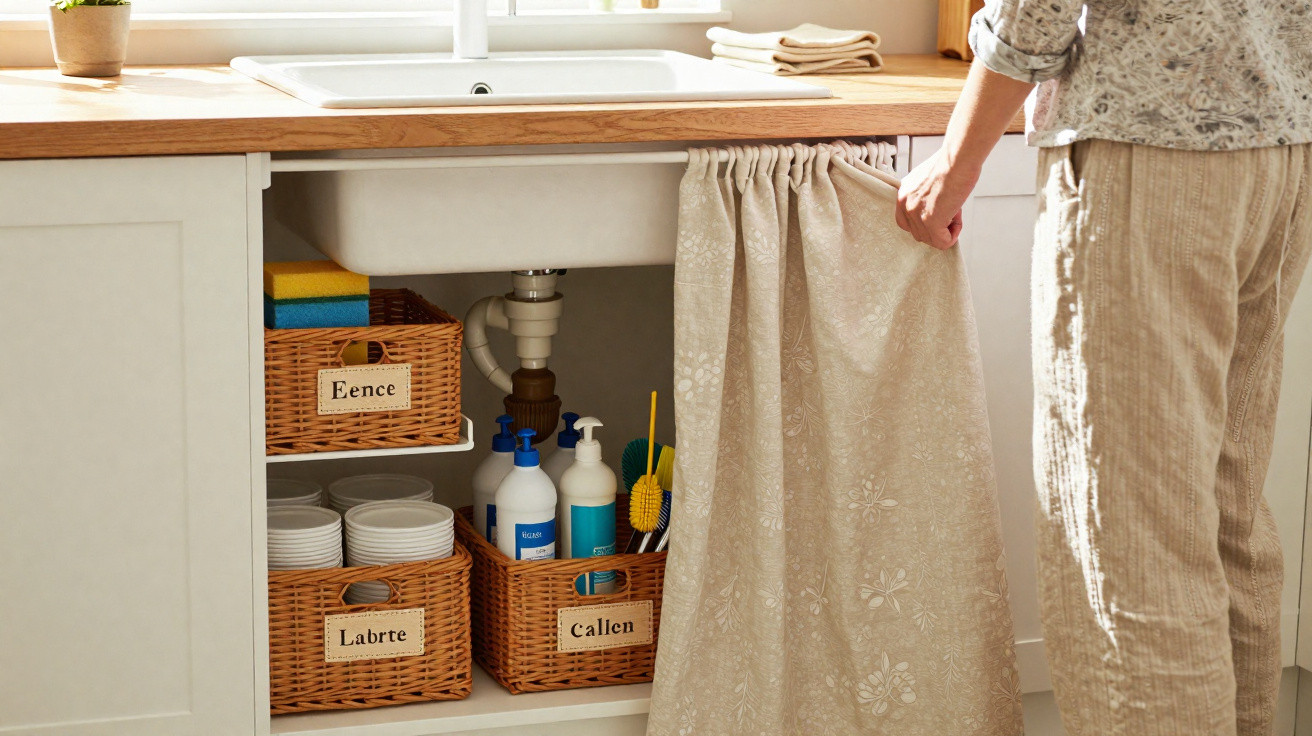
Simply put, a sink skirt is a curtain attached beneath the worktop, falling to the floor to conceal everything kept below the basin. It may replace cabinet doors entirely or sit in front of open shelving.
The sink skirt turns a cluttered cavity into a soft, textured surface that hides the mess and adds warmth.
This revival is not driven by nostalgia alone. Updating fabric costs less than changing joinery, it is simpler to take down for washing, and it accommodates awkward pipes and bins far better.
Why fabric is replacing cupboard doors
Three developments are driving the return of skirted sinks in 2026:
- Cost-of-living pressures: fabric and a tension rod cost considerably less than replacement cabinetry.
- Cottagecore and vintage styling: homeowners want interiors that feel warmer and less clinical.
- Flexibility: tenants can fit a skirt without drilling into a landlord’s cupboards.
Rather than commissioning made-to-measure doors, many households are buying one or two metres of cotton, linen or even oilcloth, then altering the whole feel of their kitchen in an afternoon.
How a sink skirt makes storage more practical
Initially, fabric may seem like a decorative solution only. However, it can alter how the area is used every day.
Quicker access with less effort
A cupboard door requires space to open. It can become awkward when you are holding a wet pan or a full bin bag. With a skirt, simply move the material to one side, take what you need and allow it to fall back into position.
That modest saving in time matters when dealing with a spill or tidying up late at night. It can also make people more likely to return items, as reaching the storage area requires much less effort.
No hinges, no handles, just a quick lift of fabric to reach the right spray, sponge or bin liner.
A layout you can tailor behind the curtain
As a skirt does not dictate the internal arrangement, you can organise the space as you prefer. Storage organisers are especially useful. Rather than placing bottles directly on the cabinet base, people are using:
- Wire baskets for spray bottles and glass cleaner
- Stackable boxes for dishwasher tablets and spare sponges
- Slim trays for bin liners and food-waste bags
- Hooks or a rod for hanging rubber gloves and drying cloths
Whole baskets can be pulled out like drawers, allowing you to wipe the cupboard floor before sliding them back. Because the skirt conceals the arrangement, inexpensive plastic boxes and more attractive baskets can be combined without concern for how they look.
Creating the ideal sink skirt in 2026
Selecting suitable fabric
The space below a sink may become damp, making fabric selection more important than it first appears.
| Fabric type | Best for | Pros | Cons |
|---|---|---|---|
| Cotton | Most standard kitchens | Inexpensive, easy to wash, widely available prints | May shrink and crease easily |
| Linen blend | A warm, rustic appearance | Textured, elegant, drapes well | More expensive and may require ironing |
| Polyester | Rental flats and family homes | Moisture- and stain-resistant, low maintenance | Can appear slightly shiny and is less breathable |
| Oilcloth or coated fabric | Very busy kitchens | Wipe-clean finish, excellent around splashes | Stiffer drape and fewer pattern choices |
Patterns can alter the mood of a room. Gingham and stripes reference farmhouse kitchens, whereas solid colours create a more contemporary, hotel-inspired effect. Small-scale prints conceal marks more effectively than plain white material.
Attaching the skirt without major renovation
There is no need to hire a carpenter. Usually, one of the following options will do the job:
- A tension rod secured between the sides of the cabinet
- A slim rail screwed beneath the worktop, for homeowners
- Self-adhesive hook-and-loop tape applied to the underside of the counter
For tenants, adhesive tape and clip rings are generally sufficient, and they can be removed without causing damage. Some people even reuse an old curtain or tablecloth, shortening it with iron-on hemming tape rather than sewing.
A functional sink skirt can be a one-evening project using a tension rod, pre-made curtain and a pair of scissors.
Making the under-sink space into a smart storage zone
The skirt represents only one part of the change. The real improvement lies in how the concealed area is divided.
Working around pipes and traps
Plumbing naturally takes up space in the middle of the cabinet. Adjustable shelving and U-shaped organisers designed to fit around pipes can make this difficult gap useful.
Many under-sink shelving units now feature removable parts, allowing them to be built around the trap. Taller bottles can then stand on one side, while smaller products sit on stepped platforms above.
Building zones around everyday routines
Instead of allowing items to form a random pile, create distinct “stations”. For instance:
- Daily cleaning kit: multi-surface spray, washing-up liquid, a sponge and a cloth in one easy-to-reach caddy.
- Waste station: bin liners, compost bags and spare recycling bags kept together in a low box.
- Occasional products: oven cleaner, descaler and silver polish positioned at the back and clearly labelled.
- Light items: gloves, microfibre cloths and dusters stored in pockets sewn into the inner side of the skirt.
Some sink skirts sold in 2026 include integrated pockets or loops sewn into the hem. Acting like a fabric tool belt, these keep smaller items off the floor and within easy reach, without having to search through boxes.
Safety, hygiene and products not to keep under the sink
The area under the sink often contains chemicals and other potentially hazardous products, particularly in homes with pets or children. Here, the softness of a fabric skirt may create a risk when it takes the place of a lockable door.
Homes designed with child safety in mind are fitting internal catches or using high shelves behind the skirt for dangerous products, while leaving only mild items at floor level. Others prefer to keep strong chemicals elsewhere entirely, such as in a locked utility cupboard.
Any under-sink makeover should include a clear decision about which products stay there and which are moved to safer storage.
Hygiene is important too. A fabric skirt can occasionally collect sink splashes and crumbs from the worktop. Washing it regularly with tea towels reduces odours and helps prevent mould.
Real-life examples of a sink skirt changing the space
Imagine a small city flat with a galley kitchen and no room for a tall cleaning cupboard. The tenant takes off dated laminate doors, fits a navy cotton skirt and installs two wire pull-out baskets below. One contains every cleaning spray, while the other holds bin liners and dishwasher tablets. A narrow rod mounted inside supports gloves and a drying cloth. The kitchen appears softer, and the tenant can carry a basket directly to the bathroom when cleaning.
In a family home, the cupboard below the sink was previously a disorganised mess. The parents fit a patterned linen-blend skirt and separate the contents: harmless items, including cloths and spare sponges, are stored in low baskets, while corrosive products are moved to a high shelf in the utility room. Children can reach beneath the skirt for their chores basket without coming into contact with bleach or drain cleaner.
Extra ideas and combinations that work effectively
The sink skirt trend is rarely used in isolation. People are combining it with wall-mounted peg rails for brushes, magnetic hooks on the fridge side for oven gloves, and narrow pull-out recycling bins beside the sink.
In open-plan rooms, choosing the same material for the sink skirt, window curtain and table runner creates a cohesive appearance. Repeating the fabric helps a small kitchen seem deliberately designed rather than improvised.
For anyone unfamiliar with the terminology, a “skirted cabinet” is simply a base unit where fabric is used in place of doors. The approach can also be used for bathroom vanities, bedroom dressing tables and laundry cupboards. The same ideas of straightforward access, concealed storage and soft texture work in each of these locations, not solely beneath the kitchen sink.
Overall, the 2026 method of organising the area under the sink combines practicality with a gentle, mildly nostalgic design choice. The goal is not flawless organisation, but a space that can genuinely be used without wincing whenever you lift the curtain.



Comments
No comments yet. Be the first to comment!
Leave a Comment