
The smell arrived on a Tuesday, somewhere between cleaning my teeth and acting as though I was not running late for work.
I leaned over the basin and caught it: a slight sour scent rising from the drain, as if something had been decaying out of sight. The tiles were spotless, the shower gleamed and the mirror was almost smug in its cleanliness. To look at it, the bathroom could have featured in a letting advert.
But the odour shattered any sense that I had everything under control.
I ran the tap, splashed water around as though it might perform a miracle, and waited for the problem to disappear by itself.
It did not.
When your “clean” bathroom betrays you
You barely give your drains a thought until they start working against you.
For one day, they are harmless background fixtures, taking away water and soap suds without protest. Then, suddenly, they communicate through gurgling noises, sluggish whirlpools and that unmistakable unpleasant note that greets you when you step into the shower.
That is the trouble with smells.
They are honest, and they do not wait until your diary has space. A damp, egg-like, “something-died-in-here” odour drifting from the basin or shower is your home quietly telling you that something is wrong beneath the surface.
Leave it alone and the bathroom no longer feels calm or secure. Instead, it begins to feel like a warning sign.
When the smell first became overwhelming, it was 6 a.m., and I honestly wondered whether something had entered the pipework and failed to survive.
I turned on the shower, flushed the toilet and sprayed nearly half a bottle of floral bathroom freshener. For ten minutes, artificial lavender seemed to be fighting a sewer smell.
By the third day, the situation had deteriorated.
The basin burbled whenever the washing machine emptied. Water in the shower tray took just a little too long to drain away. A friend visited and, with the careful politeness of someone avoiding an argument, asked, “Is that… coming from the bathroom?”
That was the moment I accepted it was not simply an unusually bad day. The drains were demanding attention I had neglected for years.
What accumulates in drains is, in effect, your everyday life in liquid form: hair, soap residue, dead skin, toothpaste, food fragments and the occasional unidentified sludge.
It all travels down the plughole, sticks to the pipework and gradually forms a sticky lining that bacteria love. Add warm water and enough time, and there is a busy miniature city thriving beneath your feet.
An odour is often the earliest clue.
Before a complete blockage or a dramatic overflow, the smell arrives to show that something is no longer in balance. It may be a dried P-trap allowing sewer gas to rise back into the room. It may be grease and dirt slowly decomposing.
We often put faith in what we can see, but when it comes to drains, the smell tells the real story.
The unglamorous routine that actually saves your drains
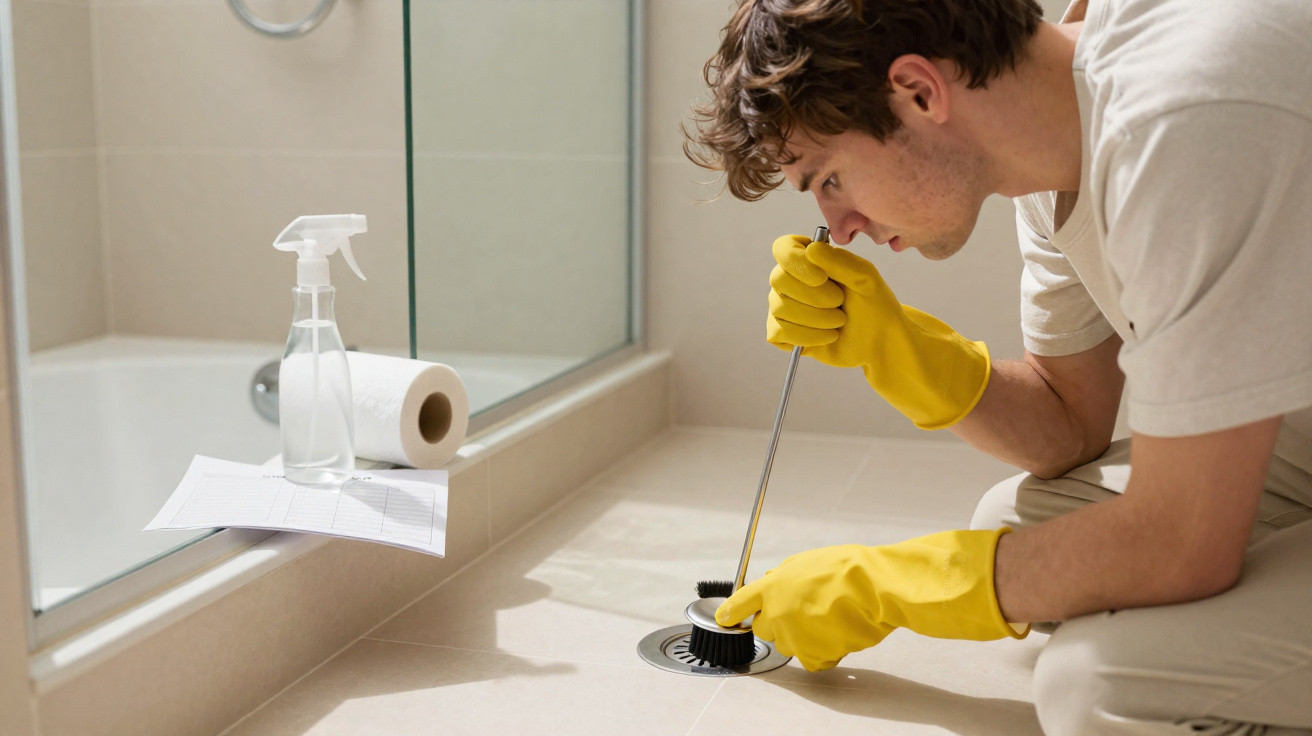
Eventually, I did the decidedly unglamorous job: I pushed up my sleeves and opened the basin trap.
Nothing prepares you for the first lump of black, jelly-like grime that slides out, carrying the remnants of years of shampoo and hurried mornings. It is revolting, certainly, but also strangely satisfying. You scrape it away, rinse the trap, fit it back in place, and the bathroom seems to breathe more easily.
Next came the shower.
I lifted the drain cover, pulled out a miserable tangled mass of hair and soap, then rinsed the pipes with very hot water, baking soda and vinegar. The small home-science eruption fizzed in brief objection before settling.
For the first time in weeks, the bathroom air felt neutral. Still. Almost pleased with itself.
This is the point at which tidy household guides insist, “Just do this every week!”
In reality, hardly anyone manages that every single day. Between travelling to work, emails, children, meals and the pile of washing silently judging you from the corner, life does not often allow for planned drain maintenance.
The most useful approach is to make the task feel less demanding.
Once a month, pour boiling water down the shower and basin drains. Add a handful of baking soda and a splash of vinegar, leave it to work, then rinse. Every so often, use an inexpensive drain snake to remove the hair monster before it turns into something worthy of a horror film.
And avoid pouring leftover greasy pasta water or gravy down the bathroom basin “just this one time”. That single occasion stays with the pipes far longer than you might expect.
Sometimes, the person who finally fixes their drains isn’t the one with the shiniest home. It’s just the one who got tired of pretending the smell was “not that bad.”
- Run very hot water weekly
Allow it to run for 30–60 seconds in basins and the shower, helping to move fresh residue along before it can settle. - Use a straightforward baking soda + vinegar flush
Add half a cup of baking soda, followed by half a cup of vinegar. Leave it for 15–20 minutes, then flush through with hot water. - Clean the physical filters
Remove drain covers and clear away hair and debris. It is unpleasant, but two minutes of work could save you a plumber’s bill. - Keep an eye on “dry” drains
Infrequently used guest bathrooms can have dry traps. Run water for one minute every couple of weeks to prevent sewer gas from rising back up. - Call a professional when the smell remains after cleaning
Ongoing odours, gurgling or repeatedly slow drains may indicate deeper blockages or pipe ventilation issues.
When a bad smell becomes a quiet wake-up call
Once the immediate problem has passed and the bathroom is no longer attacking your nose, your perspective changes.
You begin to notice little details: the time water takes to vanish, the faint sound made by the pipes and the distinction between genuinely fresh air and something slightly wrong. This is not about becoming anxious. It is about finally paying attention to the parts of your home that remain hidden.
That smell-the one that made you wrinkle your nose and grab the nearest spray-often represents more than an embarrassing inconvenience.
It is a prompt to stop living only on the surface. To look beyond polished tiles and freshly washed towels. To recognise that some problems do not disappear when you shut the door and light a candle.
Everyone has some version of a smelly drain in their life, quietly asking to be dealt with rather than covered up.
| Key point | Detail | Value for the reader |
|---|---|---|
| Odour as an early warning | Smells commonly occur before visible blockages or overflows | Identify trouble early and avoid costly plumbing emergencies |
| Simple monthly routine | Hot water, baking soda + vinegar, and quick hair removal | Keep drains clear with little time or effort |
| Know when to call a professional | Persistent smells, repeated slow drains, unusual gurgling noises | Spot deeper problems and safeguard your home’s plumbing |
FAQ:
- Question 1 Why does my bathroom smell bad even when it looks clean?
- Answer 1 The issue is usually inside the pipes rather than on visible surfaces. Bacteria, hair, soap scum and trapped gases can collect beneath the drain, producing odours even when your tiles and basin are immaculate.
- Question 2 Can I use bleach to clean smelly drains?
- Answer 2 Bleach may mask odours for a short time and kill certain bacteria, but it does not always remove the physical grime responsible for the smell. It works best alongside mechanical cleaning, such as removing hair and cleaning the trap, as well as gentler options including hot water and baking soda.
- Question 3 How often should I clean my bathroom drains?
- Answer 3 For most households, a basic routine once a month is normally sufficient. Weekly hot-water flushes are useful, while more thorough cleaning-opening traps or using a drain snake-can be carried out a few times annually or whenever you notice slow drainage or odours.
- Question 4 Is a bad drain smell dangerous for my health?
- Answer 4 An occasional mild odour is generally just unpleasant, but strong and ongoing sewer smells can mean gases are escaping from the system. If the smell is severe, constant or comes with headaches or nausea, have it inspected by a professional.
- Question 5 When should I stop DIY and call a plumber?
- Answer 5 If you have cleaned the traps, flushed with hot water and baking soda, removed visible debris, and the smell or slow drainage continues to return, it is time to contact a plumber. You should also call a professional if several drains are affected at once or if loud gurgling comes from the pipes.




Comments
No comments yet. Be the first to comment!
Leave a Comment