
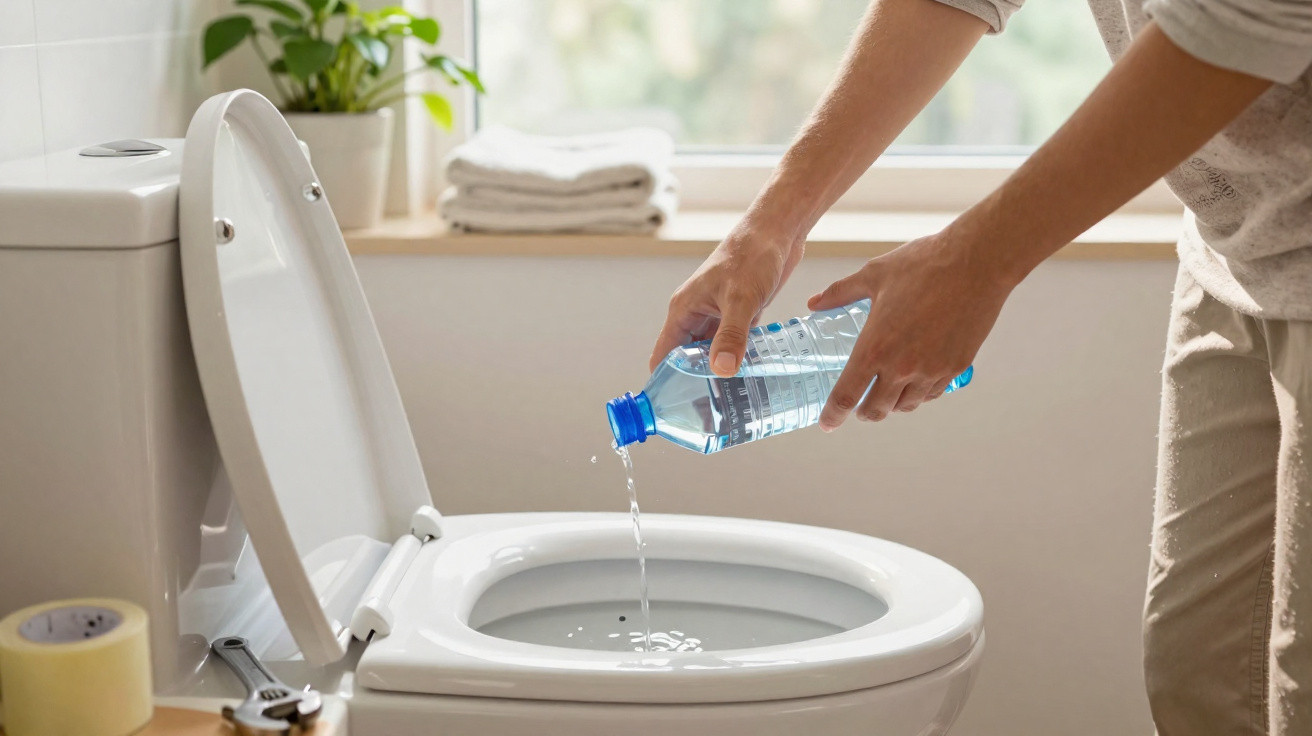
Placing a bottle in the toilet cistern can reduce the amount of water used with every flush, particularly in older close-coupled toilets. Once filled and securely sealed, the bottle takes up room in the tank, meaning less water refills it after flushing. It is a straightforward trick, although it works only if the bottle stays clear of the flushing mechanisms and does not weaken the flow.
How does a bottle save water when flushing?
This method relies on displacement. A bottle filled with water, sand or small stones occupies part of the cistern's capacity that would otherwise be filled with water. As a result, the cistern reaches its normal level using fewer litres.
With a 500 ml bottle, the saving is generally close to that amount per flush. In frequently used bathrooms, this can make a difference to monthly water consumption, especially with older toilets that use more water than water-saving models.
Where should the bottle be placed?
The bottle belongs inside the cistern, rather than in the toilet bowl. It should sit in a corner of the tank, well away from the float, chain, outlet valve and any component that moves when the toilet is flushed.
The main priority is ensuring that it does not obstruct the internal mechanism:
- Choose a small plastic bottle holding 500 ml to 1 litre.
- Fill it with water and tighten the cap properly.
- Position it upright or on its side, depending on the space available in the cistern.
- Keep it away from both the float and the flush valve.
- Flush several times to check that every part can move freely.
When is this toilet cistern bottle trick worthwhile?
This approach is most useful for older toilets without a dual-flush system or effective volume control. Their cisterns often release more water than is needed for an ordinary flush.
For modern toilets with a dual-flush button or a cistern already set for low water use, adding a bottle may not be necessary. If the flush becomes too weak after fitting it, the toilet may need flushing twice, eliminating any water saving.
What mistakes can cause flushing problems?
The biggest mistake is putting a heavy, loose or fragile object inside the cistern. Bricks, unprotected stones and improvised items can shed debris, jam the valve or damage internal parts.
It is equally important not to overdo the reduction:
- Do not put oversized bottles in the cistern.
- Do not allow the bottle to touch the float.
- Do not use a container that leaks or has a poorly secured cap.
- Do not reduce the water volume if the toilet already flushes unreliably.
- Do not overlook cistern leaks, as they waste more water than a normal flush.
How can you tell whether the tip has worked?
The method has worked if the cistern refills as normal, the flush remains sufficiently powerful and the toilet clears the bowl without a second flush. After testing it, check that the float shuts off correctly and that water is not continuously running into the bowl.
A bottle in the cistern is a simple way to cut waste, but it must be used sensibly. If it remains stable, clear of the internal fittings and is fitted in a toilet that can operate with a lower flush volume, an ordinary bottle becomes an inexpensive water limiter that is easy to remove.


Comments
No comments yet. Be the first to comment!
Leave a Comment