
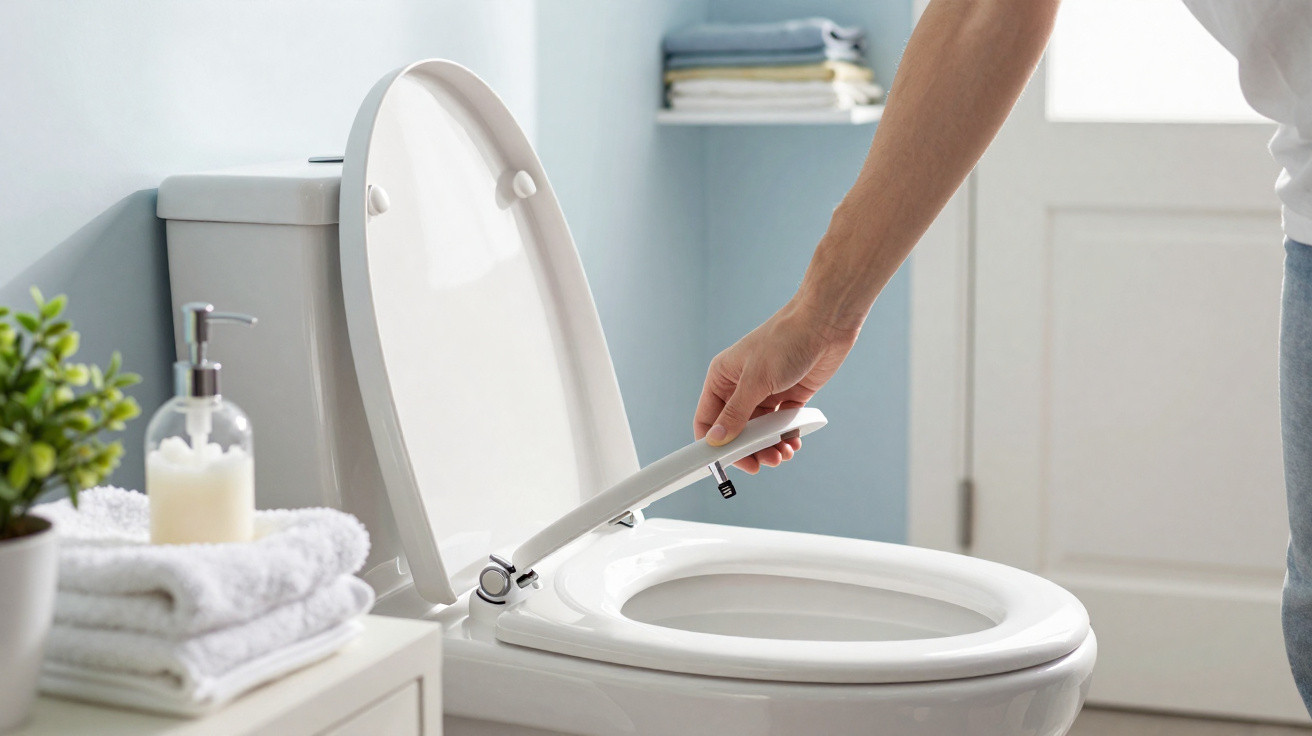
Closing the toilet lid before flushing is a straightforward habit that helps limit the spread of droplets, splashes and invisible particles around the bathroom. As the toilet flushes, the water moves forcefully and may propel aerosols into the air, reaching the seat, floor, walls, towels and nearby belongings. The lid does not solve the entire problem on its own, but it provides a useful barrier as part of a cleaning and hygiene routine.
What happens when the toilet is flushed?
Once the flush is activated, the swirling water breaks up some of the bowl's contents into tiny droplets. These particles may rise above the rim, remain airborne briefly and then settle on bathroom surfaces.
This effect is known as the toilet plume. Although it cannot be seen during normal use, it helps explain why small, poorly ventilated bathrooms, particularly those with items close to the toilet, face a greater risk of contamination from splashes and aerosols.
Why does closing the lid improve hygiene?
The lid cuts down the direct spread of larger droplets and restricts some of the spray that would otherwise disperse freely into the room. While finer particles may still pass through gaps, closing it reduces the flush's direct exposure to the bathroom air.
In practical terms, the lid acts as an initial barrier for items and areas near the toilet:
- Toothbrushes and cups by the sink.
- Face towels hanging nearby.
- Bath mats, bins and low shelves.
- The seat, outer lid and flush button.
- Walls and floors surrounding the toilet bowl.
Does closing the lid remove all micro-organisms?
No. Recent studies suggest that a lid does not entirely prevent contamination, as fine aerosols can still escape through the spaces between the seat and the ceramic bowl. Closing the lid should therefore be regarded as a risk-reduction measure rather than a complete solution.
The safest approach is to pair this habit with regular cleaning of the toilet bowl, lid, flush button and nearby surfaces. This routine is even more important in shared bathrooms, where several flushes throughout the day increase the movement of particles in the room.
What steps make the bathroom safer?
As well as closing the lid before flushing, it is worth arranging the bathroom so that hygiene items are kept away from the toilet bowl. Toothbrushes, razors, creams and towels should be protected from direct splashes.
A few simple measures can reduce the issue:
- Store toothbrushes in a cupboard or in a closed, ventilated holder.
- Wash your hands after flushing and touching the lid.
- Clean the flush button, seat and lid regularly.
- Keep the bathroom ventilated after use.
- Avoid leaving towels too close to the toilet.
When does closing the toilet lid matter most?
Closing the lid is particularly useful in small bathrooms, cloakrooms without ventilation, homes with children or unwell people, and bathrooms used by many people. In these situations, every reduction in particle spread helps keep surfaces less exposed between cleaning sessions.
The takeaway is simple: flushing does not remove everything cleanly and silently. Some of what is in the toilet bowl can return to the room as droplets and aerosols; closing the lid, washing hands and cleaning nearby surfaces makes the bathroom a more controlled space, particularly when toothbrushes, towels and personal items are kept away from the splash zone.



Comments
No comments yet. Be the first to comment!
Leave a Comment