
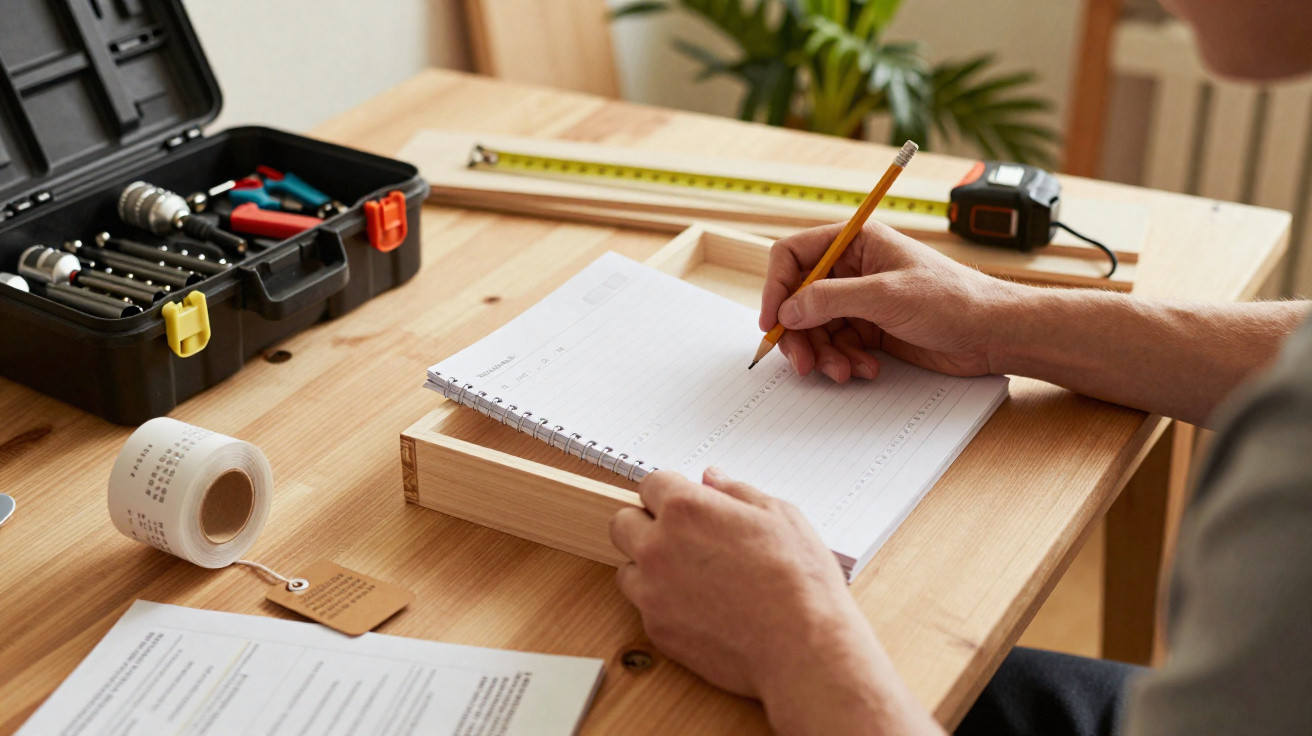
Rising costs and Instagram-worthy DIY projects make plenty of people reach for a drill instead of heading to the furniture shops.
With inflation, lookalike flats and endless TikTok guides, making your own furniture can seem like the natural choice. Picture a made-to-measure oak dining table, shelving that follows a sloping wall, or a TV unit tailored to the room down to the millimetre. It is an appealing prospect. Yet the financial reality behind it is frequently misunderstood, which is where costly errors begin.
The hidden calculation most DIY fans get wrong
Most people measure a homemade item against the ticket price of a comparable product from Ikea or another large furniture retailer. They add up the timber, fixings and a tin of varnish, then congratulate themselves on the apparent saving. However, that leaves out a substantial part of the cost.
Building your own furniture rarely costs just “the price of materials” – your time, tools and learning curve carry a real value.
The usual calculation goes something like this: a person spends £120 on timber and hardware, then sets that against a £280 Ikea table. On the face of it, they have “saved” £160. What they overlook is the £90 circular saw bought “for next time”, broken drill bits, sandpaper, clamps, finishing products, delivery fees for cut-to-size boards - and the two weekends consumed by the job.
Economists call this “opportunity cost”: the value of what you forgo by selecting one choice over another. It is highly relevant here. Making a wardrobe from scratch is not simply an exchange of money for timber. It also uses up three Saturdays, several evenings and energy that could have gone elsewhere.
If you never count your time, DIY can look like a bargain. Start assigning it a value, and the picture changes quickly.
When DIY furniture really makes financial sense
For all the enthusiasm around it, self-built furniture generally cannot compete on price with the very cheapest entry-level options. If tools and labour are included, it is almost impossible to beat a £39 flat-pack side table produced in huge volumes.
The balance changes when you move beyond the cheapest products into mid-range, premium or truly bespoke furniture. A solid timber bookcase shaped around a sloping ceiling, or drawers fitted precisely beneath a staircase, could cost a great deal when commissioned from a carpenter. In these cases, thoughtful DIY furniture can cost less than retail alternatives while delivering better quality.
Three situations where DIY can pay off
- You prefer solid materials, such as oak or birch plywood, rather than chipboard.
- You require unusual dimensions that shops do not provide.
- You regard woodworking as a hobby rather than a task taking time away from other paid work.
Shared workspaces can alter the sums once more. Many towns and cities now have maker spaces and community woodwork workshops. For a membership fee, users can access professional machinery and advice, avoiding the need to buy costly equipment for a single build. The fee still counts, but it can be spread across multiple projects rather than landing on one job alone.
| Scenario | DIY vs Ikea | Main risk |
|---|---|---|
| Cheap bedside table | Ikea usually cheaper | Tools cost more than the piece itself |
| Large solid-wood bookcase | DIY can win | Underestimating hours and wood waste |
| Made-to-measure under-stairs storage | DIY often cheaper | Precision errors that ruin doors and drawers |
The emotional payoff you can’t put on a spreadsheet
Although money may open the discussion, emotion often decides it. People who make their own furniture regularly describe a changed connection with their home. They recall the night they eventually got a shelf level, the spot where the first measurement was wrong, or the scent of oil finish lingering in the hallway.
That attachment affects how they judge “value”. A £200 DIY bench containing many hours of work and a few minor flaws may feel more valuable than a perfect £200 bench in a showroom. Its imperfections hold a story, and that story subtly increases the perceived return on investment.
DIY furniture shifts you from buyer to maker, from “does this fit my space?” to “how do I shape this space?”.
There is a learning benefit as well. Every build teaches something new: how to read grain direction, select screws that will not split timber, and create joints that genuinely stay together. The first table may be expensive in terms of time, but by the third, the work is usually quicker, neater and less costly.
Why the first project should be smaller than your ambition
TikTok encourages many newcomers to begin with vast oak tables or floor-to-ceiling wardrobes. That jump commonly results in warped timber, incorrect measurements and an understated trip back to the shop.
Choosing a simpler first project offers much better value per lesson. A slim hallway bench, straightforward floating shelf or basic coffee table lets you find out how you cope with tools, noise, dust and frustration. There are still risks, but errors are less damaging to both your budget and your confidence.
How to test if DIY suits you before spending a fortune
Before investing in a complete workshop, try this straightforward three-part test:
- Rent or share tools: visit a community workshop or borrow equipment for a weekend.
- Set a time budget: establish beforehand how many hours you are willing to spend on the project.
- Track every expense: include screws, glue, sandpaper and finishes in the spreadsheet as well.
Once finished, compare the full cost and time spent with a realistic shop-bought equivalent. If you come away feeling proud and energised, the figures may be less important. If you are tired and irritated, it is a useful warning before taking on a larger project.
Shared workshops, classes and safer learning curves
Fear is one unspoken obstacle that stops many people attempting DIY furniture. There may be worries about cutting a finger, ruining timber or simply appearing inexperienced. Community workshops and short courses can make that barrier easier to overcome.
These places commonly provide introductory sessions covering the essentials: holding a circular saw correctly, knowing when to wear masks, understanding why a blunt blade is dangerous, and clamping workpieces to prevent kickback. With guidance, beginners can attempt a bathroom cabinet or storage cube without reducing their living room to a pit of sawdust.
The smartest first investment is often not a tool, but instruction: a few hours with someone who knows where mistakes usually happen.
This kind of support also affects the budget. A properly guided plan means less wasted timber and fewer failed attempts. Clean cuts and precise measurements reduce recutting and avoid the “emergency” visits to the DIY shop that push a project beyond budget.
A simple way to simulate the real cost of a DIY piece
Before committing to a substantial build, use a rough worksheet to model the cost. Choose the item you want, record its shop price, then note everything the DIY version will require. Include:
- Timber or sheet materials, allowing an extra 10–20% for errors.
- Hardware, including screws, brackets, drawer runners and hinges.
- Finishes, such as primer, paint, oil or varnish, plus brushes or rollers.
- Tool costs, either as the purchase price or a portion of workshop membership.
- Your own time, using an hourly figure that honestly reflects your circumstances.
Create two versions: an “optimistic” scenario in which nearly everything goes to plan, and a “messy” one where a panel is cut incorrectly or you change direction halfway through. The difference between them reveals how vulnerable the project is to mistakes. If the sensitivity is high, either reduce the scale or seek more support before you begin.
Beyond money: other gains and risks to weigh
DIY furniture also involves sustainability and longer-term household choices. Home makers can choose certified timber, avoid particular adhesives and design furniture for repair rather than disposal. Even a basic decision, such as using mechanical fixings instead of permanent glue, may make later repairs less expensive and less wasteful.
There are practical pressures as well. Power tools create noise for neighbours, dust in compact flats and a need for secure storage to keep children away from saws. Offcuts and finishing products also need to be stored or recycled responsibly. Social media rarely shows these realities, but they influence life with a workbench much more than any viral video does.
For people who become enthusiastic about making, another route often emerges: combining shop-bought and homemade furniture. Many begin by adapting standard Ikea frames with bespoke doors, timber worktops or side panels made from higher-quality materials. This hybrid method keeps spending manageable, retains existing hardware and hinges, and still creates a fitted look. It also reduces the familiar miscalculation: you do not have to replace every item with DIY, only those where the balance of time, money and enjoyment genuinely works in your favour.





Comments
No comments yet. Be the first to comment!
Leave a Comment