
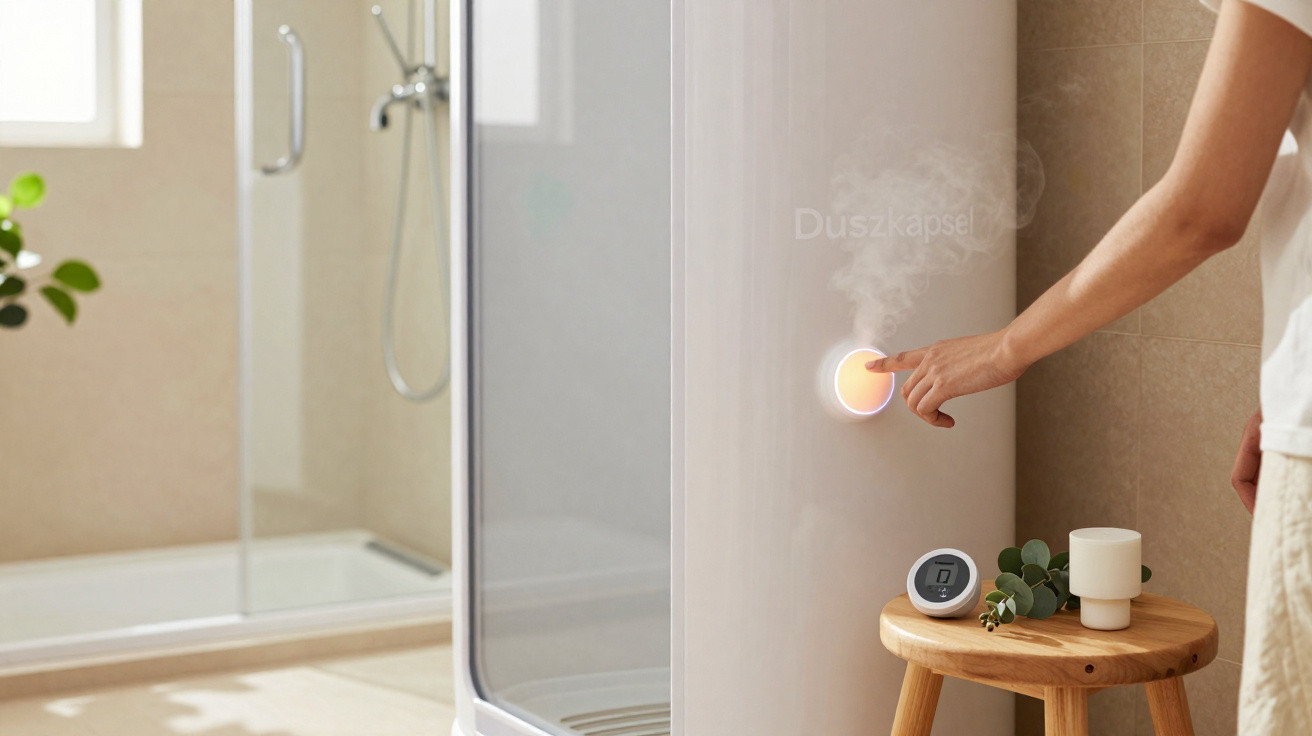
For ten years, the walk-in shower has dominated Instagram-ready bathrooms and premium refurbishments. A new wave of high-tech shower “pods” is now beginning to displace it, changing expectations of washing, unwinding and resetting at home.
The end of an era: why the walk-in shower is losing its shine
Architects previously regarded the level-access walk-in shower as the benchmark: a flush tray, broad glass panels, no step and hotel-style comfort at home. It appeared spacious and pared-back, while estate agents valued the photographs it created.
Over time, however, its practical shortcomings became clearer. Big open showers may look elegant, but homeowners repeatedly mention three frustrations: chilly air, water splashing across the room and unexpectedly demanding upkeep. A large exposed shower zone brings extra grout, glass and joints for limescale and soap residue to collect on.
Efficiency is another concern. Open showers are poor at retaining warmth. Heated air drifts away, prompting users either to increase the temperature or remain beneath the water for longer, which raises water consumption. In smaller urban flats, a generous open shower can also take up room that might otherwise provide storage, laundry facilities or even a second toilet.
In a world of rising energy prices and shrinking floor plans, the open walk-in shower starts to look wasteful rather than chic.
Designers are increasingly meeting clients who ask about consumption, lasting comfort and household bills before discussing tile shades. This change has created the conditions for the next development: a shower operating more like a smart sensory capsule than an open wet room.
The rise of the shower capsule: the immersive 2026 bathroom trend
European manufacturers have made the “shower capsule”, or “shower pod”, the latest focal point. This is not the plastic shower cabin associated with the 1990s. Instead, it is a compact enclosed mini-spa combining integrated technology, carefully planned lighting and close management of air and water.
Rather than shaping an entire bathroom corner around one sheet of glass, the capsule forms a distinct enclosed unit: framed, sealed and fitted with features. The emphasis shifts away from “open plan” towards a “private cocoon” – a small environment where users can control temperature, lighting and sound together.
Technology built around personal wellbeing
Most modern capsules are centred on a straightforward digital control panel. It allows users to select water temperature to the precise degree, alter the pressure, choose between spray settings and activate lighting scenes.
Some models feature speakers that connect to a phone, allowing a morning news update or playlist to play within the pod. Others provide pre-set “modes”, including energising cool mist with bright white light, or a warm low-pressure shower paired with amber lighting before bed.
The shower stops being “a place to get clean” and turns into a short, repeatable ritual that you can script for yourself.
More expensive versions introduce a steam feature. At the press of a button, warm vapour fills the capsule to create a compact hammam-style experience without the need to construct a complete steam room. For those in compact city flats, this can make the shower the home’s only genuine wellness area.
Such personalisation extends well beyond what a typical walk-in shower can deliver through a standard mixer and rainfall head. The pod becomes a standalone product rather than simply an empty tiled-and-glazed area.
Space and sustainability: why the capsule fits 2026 homes
The move towards shower capsules is driven by more than comfort. It reflects two major housing pressures across the UK, Europe and North America: reduced floor space and increased concern about resource use.
Smaller footprint, more usable bathroom
A thoughtfully designed capsule can, somewhat surprisingly, make a small bathroom seem bigger. Its transparent or softly frosted framing clearly establishes its footprint while allowing daylight and artificial light to pass through. A washing machine and storage can be positioned immediately beside it without ongoing concerns about spray.
Containing both water and steam within the pod reduces the need for extensive extraction and limits condensation on mirrors and walls. This helps preserve painted surfaces and joinery, an issue that is frequently overlooked when homeowners choose an open shower in an effort to “save space”.
- Walk-in showers are most effective in large bathrooms with strong heating and ventilation.
- Capsules work in both compact and spacious rooms because spray and heat are contained.
- Enclosures limit airflow over the body, reducing temperature loss.
- Clear panels preserve a bright, minimal appearance while retaining enclosure.
The new logic: a smaller, closed shower can make the whole room feel calmer and more practical.
Water and energy savings at the core
Shower capsules also align with the growing drive to reduce water consumption. Many incorporate flow controls and aerated shower heads, lowering use by a third or more when compared with a continuously running overhead shower.
Because the enclosed interior keeps warm air near the user, people are generally comfortable with slightly cooler water and shorter showers. Lower heat loss means boilers or electric heaters use less energy.
Manufacturers commonly claim savings of up to 40% in water use against conventional showers. The outcome varies with individual habits, but for a family household, the difference may amount to thousands of litres each year and clearly lower utility bills.
By turning the shower into a controlled micro-environment, the capsule links wellbeing with clear, measurable resource savings.
Extreme customisation: from uniform walk-ins to tailored pods
The walk-in period created a recognisable uniformity: oversized tiles, a glass screen, black fittings and perhaps a recessed wall niche. The capsule movement takes the reverse approach, using modular systems to provide greater choice.
Manufacturers now supply pods in multiple base shapes, heights and door layouts. Interior wall panels are available in materials extending beyond ceramic, including reconstituted stone, compact laminate, treated wood veneer and recycled composites produced from post-consumer plastics.
| Aspect | Walk-in shower | Shower capsule (2026 trend) |
|---|---|---|
| Space use | Requires a generous footprint and unobstructed area | Uses tight spaces and corners efficiently |
| Technology | Basic mixer and shower head | Digital control, lighting, sound, optional steam |
| Water and heat | Greater heat loss, higher flow rates | Controlled flow, stronger heat retention |
| Design scope | Tiles, glass, fixtures only | Panels, textures, colours, integrated features |
| User experience | Visually open, function-led | Immersive, ritual-driven, more private |
Certain brands favour serene, spa-inspired schemes featuring warm timber tones and subdued lighting. Others pursue a futuristic look through glossy white shells and colour-changing LEDs. This variety of visual identities makes the shower resemble furniture more than a permanent architectural feature.
For designers, the change also affects bathroom planning. Rather than drawing a standard wet zone before selecting fittings, they choose a specific capsule model early in the process and plan storage, lighting and heating around it. The pod becomes the room’s central organising element.
What this means if you plan a renovation from 2025 onwards
Homeowners now weighing up a walk-in shower face a straightforward decision: choose the visual openness that defined the previous decade, or select an enclosed, feature-filled pod likely to fit better with 2026 expectations for comfort and sustainability.
Fitting costs differ. A capsule can initially appear dearer, particularly when extra technology is included, but the comparison changes after accounting for the waterproofing and tiling required by a full walk-in installation. A pod includes its own tray, walls and doors, potentially simplifying labour and reducing leak risks from badly constructed wet rooms.
In many small bathrooms, a mid-range capsule can rival the price of a fully tiled walk-in while beating it on heat and water performance.
Capsules can also benefit households planning to age in place. Low-threshold access, fold-down seats and secure grab rails can be installed or changed later without removing walls. This modular approach offers greater adaptability than a large open shower fixed in one arrangement.
How to stress-test a shower capsule before buying
As the capsule concentrates a daily routine into a more confined area, a brief showroom visit may be insufficient. Several practical checks can reduce the chance of disappointment:
- Stand inside and shut the door to assess actual shoulder space.
- Rehearse your normal routine: where would you place soap, a razor and a towel?
- Enquire about sound levels, as certain pumps and fans hum more than others.
- Check how the panels open for cleaning and whether replacement seals are available.
- Examine the control interface; overly complicated menus do not age well.
These points may appear obvious, but many purchasers concentrate solely on visualisations and lighting displays. Day-to-day usability determines whether a capsule becomes a valued ritual space or an irritating gadget once the novelty wears off.
Potential risks and trade-offs to keep in mind
Every trend has disadvantages. With shower capsules, the principal concerns involve technology, repairs and changing tastes. Digital controls may malfunction, while spare parts can leave owners dependent on a single manufacturer. If a maker closes down or ends support for a model, servicing can become more difficult than with a basic mechanical mixer.
There is a visual risk too. A particularly distinctive pod shape or colour may feel current now but appear dated after ten years. Neutral shells with replaceable accessories and upgradeable lighting can provide a more secure long-term choice than bold fixed statements.
The sustainability picture is also not entirely straightforward. Pods may reduce water use and help protect the building fabric, but they require more factory-manufactured parts. When selecting one, it is useful to consider panel recyclability and the degree of repairability the manufacturer commits to.
For the moment, one point appears evident: the walk-in shower is unlikely to disappear immediately, but the cultural focus has shifted. The 2026 bathroom looks less like a silent, cold glazed corner and more like a compact, controlled personal capsule of warmth, sound and light.




Comments
No comments yet. Be the first to comment!
Leave a Comment