
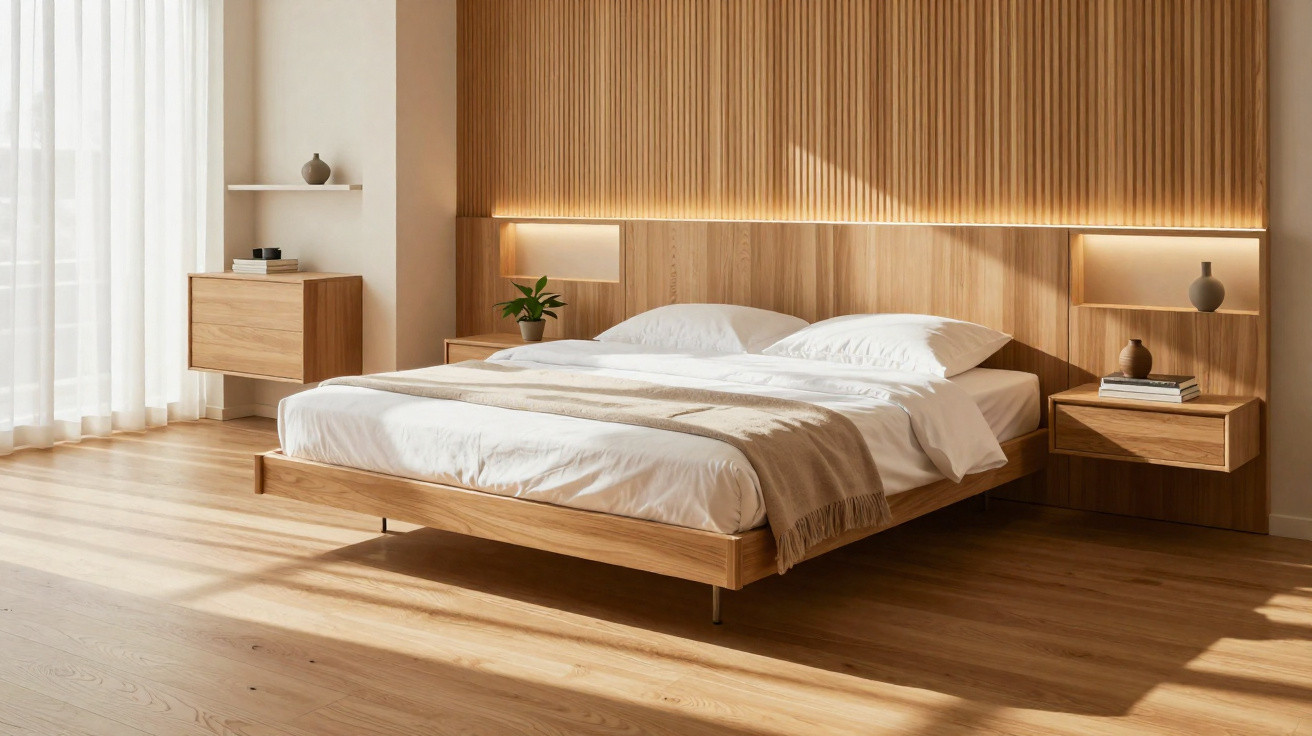
Modern bedrooms are moving away from bulky headboards and heavy bedside tables, as urban flats call for lightweight, easy-clean solutions. Floating panels, built-in niches and indirect lighting provide comfort without taking away space from the rest area.
What is replacing upholstered headboards and heavy furniture?
This emerging trend brings together a slatted panel, floating support and built-in niches in one arrangement. Rather than using several separate pieces, the bedroom gains a functional wall that can keep items organised, enhance the bed and preserve freer circulation.
Interior design arranges internal spaces by considering the aesthetic and functional relationships between furniture, objects and lighting. In bedrooms, this approach supports integrated solutions that balance beauty, practicality and comfort within a simpler routine.
The elements most commonly seen in this shift include:
- Slatted panel: creates a visual headboard without excessive bulk.
- Built-in niches: store books, glasses and small items.
- Indirect lighting: adds cosiness without taking up space on the bedside table.
- Floating furniture: keeps the floor clear and makes cleaning easier.
- Multifunctionality: one piece provides support, lighting and decoration.
Why has floating furniture become so popular?
Floating furniture leaves the floor visible, minimises visual barriers and makes it easier to sweep or vacuum. In small bedrooms, this lightness changes how the room is perceived, because an unobstructed floor creates a greater feeling of spaciousness and order.
There is also a practical advantage, as the bedside support can be smaller, without a deep drawer unit or a heavy table. When niches and shelves take on part of the storage, the bedroom becomes easier to use, clean and organise every day without excess.
How does a slatted panel transform the headboard?
A slatted panel acts as both a visual headboard and a decorative backdrop while requiring very little depth. It can incorporate built-in lighting, sockets and small niches, creating a discreet support area in keeping with a minimalist style and comfort.
A lighter headboard
Less bulk, more function
The panel arranges the wall behind the bed without requiring a thick headboard or heavy furniture. With indirect lighting and niches, it provides visual support, functionality and a sense of cosiness.
When planned properly, the panel replaces several pieces at once. The wall behind the bed can combine lighting, a place for a mobile phone, a reading point and an aesthetic composition, avoiding large bedside tables and fabric headboards that are difficult to maintain.
This feature commonly performs the following functions:
- Acting as a visual headboard without taking up much depth.
- Concealing cables, sockets and lighting points.
- Creating niches for small items used at night.
- Enhancing the main wall without making the room feel cluttered.
Why does this trend suit small bedrooms?
Small bedrooms need proportionate furniture, as any substantial piece can obstruct walkways, door opening and the sense of restfulness. Floating solutions make use of the wall, leave the base clear and make the room more functional without sacrificing cosiness.
Indirect lighting helps as well, reducing the need for lamps on bedside tables. As a result, the bedside support can be narrow or built in, while the lighting creates a calm atmosphere suited to resting and reading before sleep.
The main benefits can be seen in these areas:
- More free space for moving around the bed.
- Faster cleaning beneath floating furniture.
- Fewer items building up on bedside tables.
- A lighter look in compact flats.
How can you adopt the style without losing practicality?
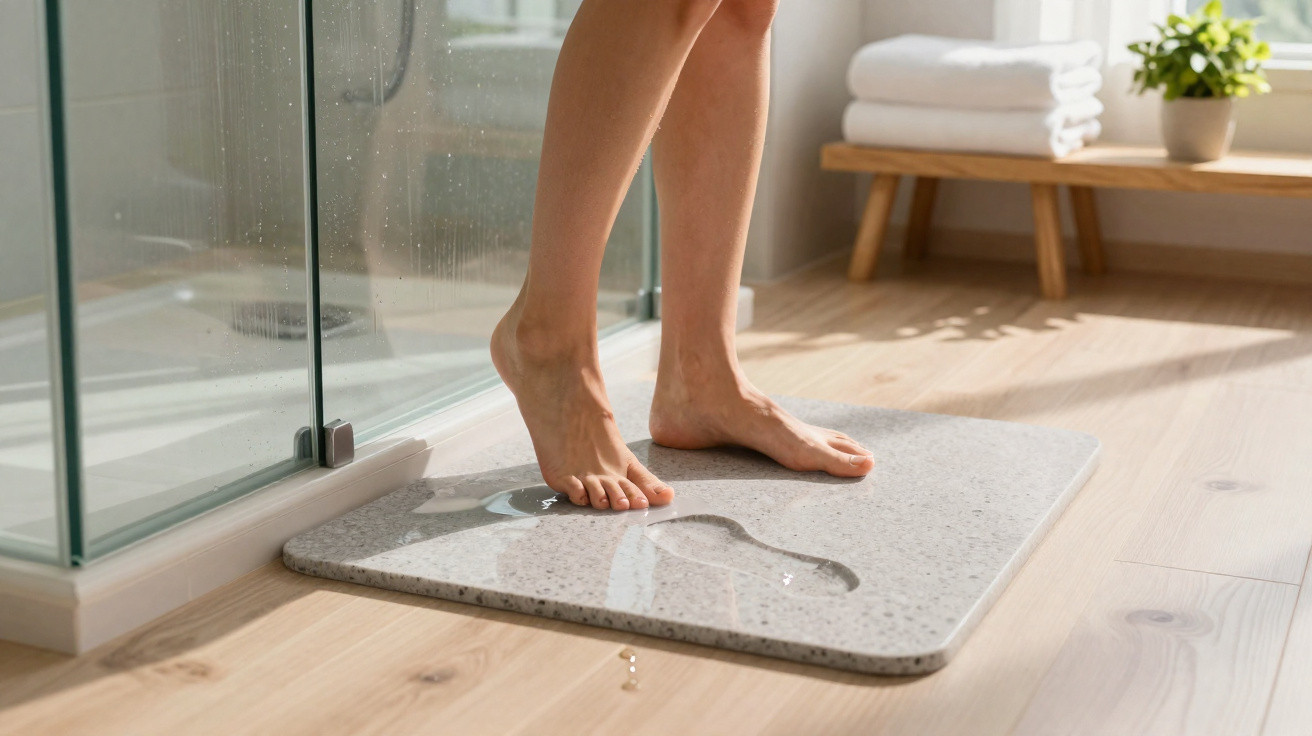
The change follows the same principle as trends that replace excessive shine with more understated finishes, as seen in modern bathrooms. In the bedroom, the key is to bring together beauty and everyday use through planning and functional choices.
Before renovating, measure the wall behind the bed, decide what needs to remain within reach and choose materials that are easy to clean. The best design is not the one with the most features, but the one that provides practicality with lightness.



Comments
No comments yet. Be the first to comment!
Leave a Comment