
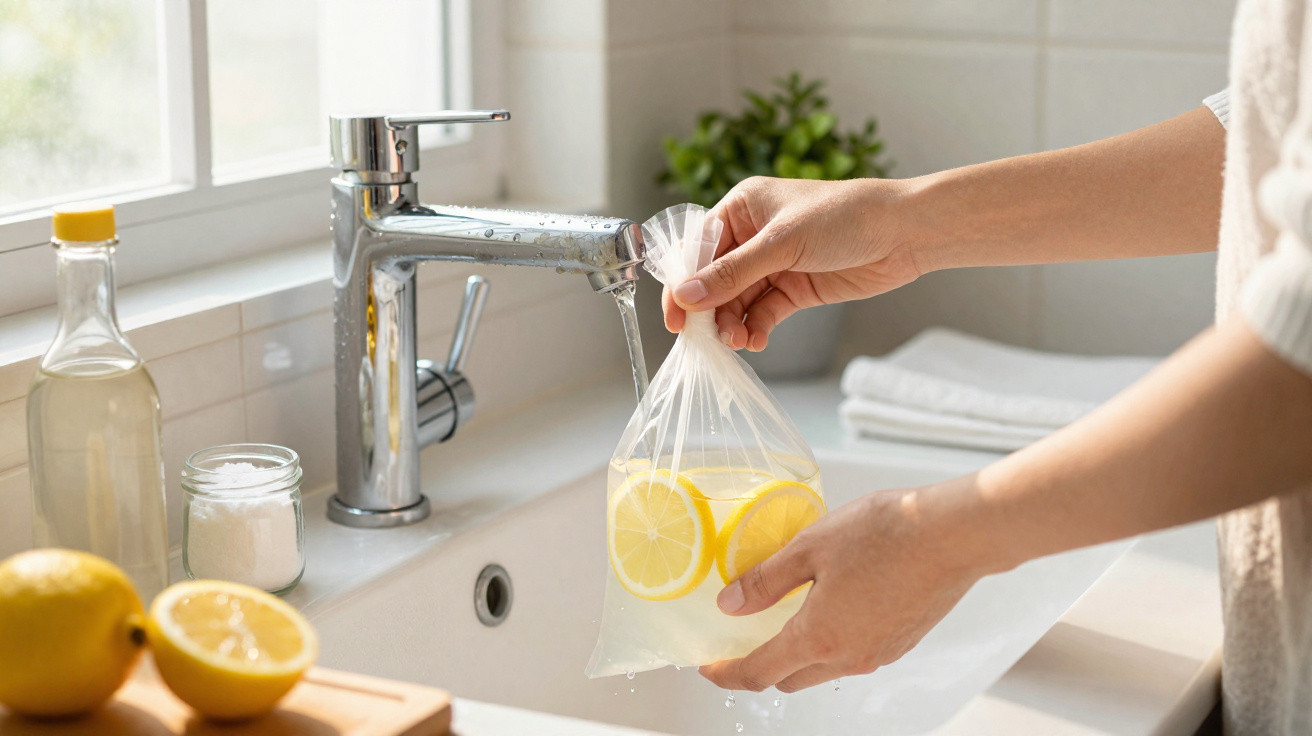
Limescale marks around the tap, white crusts along the sink edge and dull stainless-steel surfaces are everyday sights in areas with hard water. Rather than reaching for costly specialist cleaners, earlier generations relied on a mixture that has largely been forgotten today. Yet it is remarkably powerful, requires no strenuous scrubbing and avoids harsh chemicals.
Why limescale clings so stubbornly to sinks and taps
The cause lies in the water itself. In many areas, tap water contains high levels of calcium and magnesium. While these minerals are harmless in themselves, they leave visible traces on surfaces.
Whenever water runs over metal or ceramic, a thin film remains behind. As the water evaporates, the minerals are left on the surface, crystallise and adhere to it. This creates the familiar white, crusty deposits around:
- taps and fittings
- the sink rim and overflow
- the drain and seals
Each time the sink is used, another extremely thin layer is added. Hot water speeds up the process in particular, because changes in temperature encourage crystal formation. This is why kitchen sinks often look worse than bathroom basins.
In places where water collects, such as small grooves, around the base of the tap or on the sink edge, it evaporates more slowly. These are precisely the areas where limescale marks build up fastest and can eventually become very difficult to remove with ordinary cleaner.
Harsh chemicals or household remedies – what is really involved?
Many households use aggressive bottled descalers. Although these products remove limescale effectively, they also come with several drawbacks:
- a strong smell that is often only bearable with the window open
- the need to wear gloves because the acids can irritate the skin
- a risk to sensitive finishes, such as copper or brushed metals
- chemical residues that enter the environment through wastewater
Gentler alternatives based on natural acids are kinder to both fittings and health. Rather than putting strain on the surface material, they target the minerals directly.
This is exactly where the old household recipe using vinegar and lemon comes in: simple, inexpensive, powerful against limescale – and far more tolerable than most specialist cleaners.
The traditional vinegar and lemon mixture with one simple trick
The basic idea is straightforward: acid dissolves limescale. Here, two acids work together – acetic acid from household vinegar and citric acid from fresh lemon. They act slightly differently and enhance one another.
How to prepare the mixture properly
You need just three ingredients and half a minute to make one bottle of limescale remover:
- Pour 250 ml of white household vinegar and 250 ml of water into a heatproof container.
- Squeeze the juice from one medium lemon and add it.
- Stir briefly so that the ingredients combine.
- Warm the mixture in the microwave for around 30 seconds.
- Pour it into a spray bottle – and it is ready to use.
The small additional heating step makes a real difference: at a higher temperature, the acid molecules move faster and penetrate the limescale layer more effectively. This extra effort is especially worthwhile for older, thicker deposits.
Preparation: remove surface dirt first
Before applying the mixture, the sink should be free from food residues, grease and crumbs. Otherwise, the cleaner ends up on organic dirt rather than directly on the limescale, making it considerably less effective.
Wipe the surface once with a damp cloth, remove any larger debris and dry it briefly. The acidic solution can then work exactly where it is needed.
How to use the household remedy correctly
Once the sink and taps are prepared, it is time for the actual treatment.
Spray, leave to work, then wipe
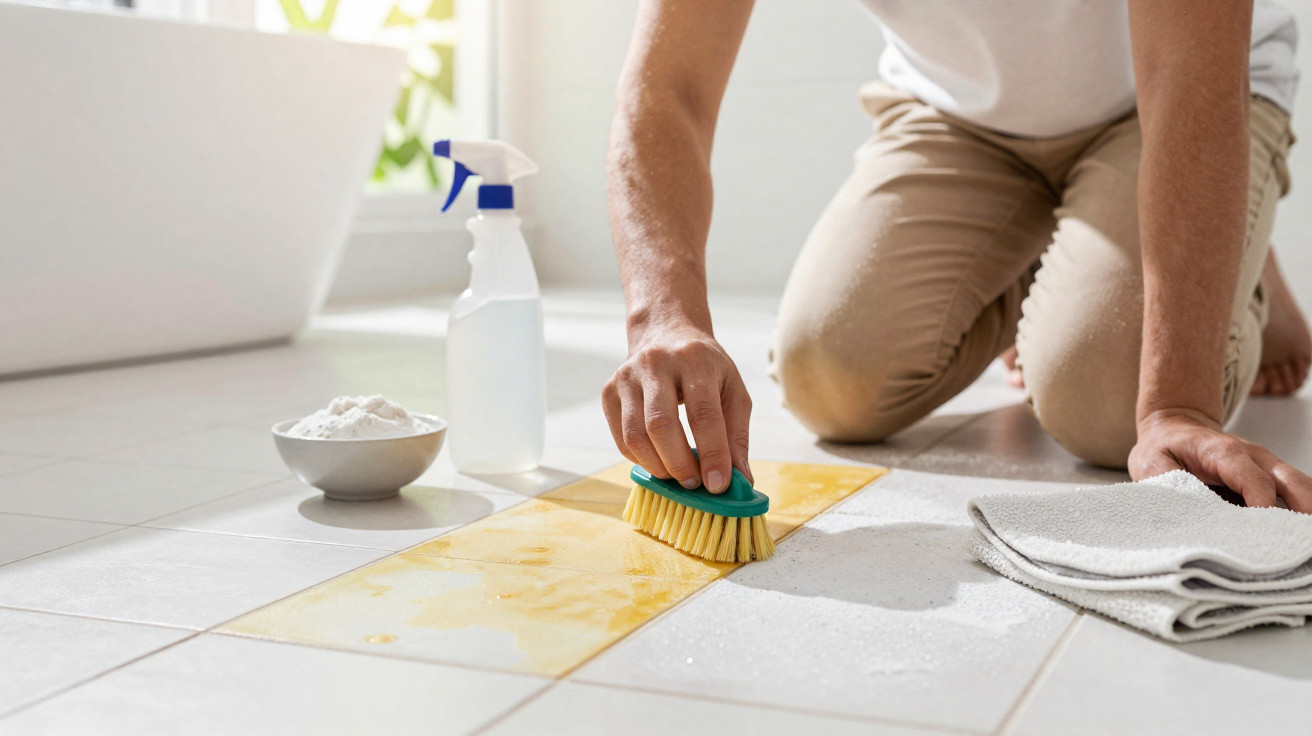
- Spray all affected areas generously: around the tap, along the sink rim, on the drain and on joints.
- Leave it to work for at least 20 minutes, without wiping or rinsing in between.
- Wipe with a damp microfibre cloth. Most limescale residue should now come away without pressure.
- For narrow spots, such as directly around the tap base or beneath the spout, use a soft old toothbrush.
Anyone who genuinely observes the contact time will save themselves most of the physical effort. The acids break down the crystalline structure of the limescale from within before any wiping even begins.
Afterwards, rinse every treated surface thoroughly with clean water. Acid residue should not remain on metal or ceramic for long periods, as it may gradually roughen the surface.
The final step is important: dry everything thoroughly. Dry surfaces develop far fewer new marks. Many people are frustrated by fresh water spots immediately after cleaning, but the simple issue is often that the surface has not been dried.
How to keep your taps low in limescale over time
The mixture is useful not only as an emergency treatment for thick crusts, but also for everyday care. Used regularly, it prevents limescale from becoming properly hardened in the first place.
A routine instead of a major clean
A quick weekly spray, a few minutes of contact time and a wipe are usually all that is needed. This keeps the sink shiny and prevents stubborn rings from forming at all.
It is also worth considering the water quality in your home. In areas with particularly high limescale levels, the following can help:
- smaller table-top filters for drinking water
- water-softening systems in the basement
- filter inserts fitted to individual taps
Such systems reduce the mineral content in tap water. They protect not only sinks and taps, but also washing machines, boilers and dishwashers. Even so, light deposits can never be eliminated entirely, so weekly care still has its place.
Where the mixture can help – and where it cannot
This vinegar and lemon combination is suitable for many kitchen areas:
- stainless-steel sinks
- chrome-plated taps
- ceramic surfaces around the drain
- limescale marks on tile edges near the sink
Care is needed with natural stone such as marble or limestone. Acids attack these materials because they contain lime themselves. In these cases, use specialist acid-free cleaners instead.
With very delicate surfaces too, such as designer taps with special coatings, test the mixture first in an inconspicuous area.
Why this traditional method works so well
The chemistry behind it is very simple: limescale consists mainly of calcium compounds. Acids react with these substances, dissolve them and turn them into water-soluble forms that can be wiped away and rinsed off easily.
Acetic acid and citric acid complement each other in this process. Vinegar penetrates fine cracks and gaps effectively, while lemon loosens many deposits particularly quickly at the surface. Heat intensifies both effects.
The major advantage is that the mixture can be rinsed away completely with water. It leaves behind no harsh fumes, no sticky coating and no aggressive film that could later come into contact with food.
Practical tips for everyday kitchen cleaning
A few small habits that take hardly any time will help keep the sink clean for longer:
- After washing up, give the sink a quick rinse with clean water.
- Wipe large droplets from the tap and sink edge with a cloth.
- Regularly unscrew the aerator on the tap and soak it in the vinegar and lemon mixture.
- Keep the homemade mixture within easy reach beneath the sink instead of hiding it at the back of the cleaning cupboard.
Anyone who gets used to these small steps will need to do less major cleaning. Limescale will still form, but it will no longer build into thick crusts that make the kitchen look neglected.
Ultimately, reaching for expensive specialist products is often simply a habit. The straightforward combination of vinegar, lemon and a little heat reliably removes even stubborn deposits – while bringing a piece of traditional kitchen know-how back into modern households.


Comments
No comments yet. Be the first to comment!
Leave a Comment