
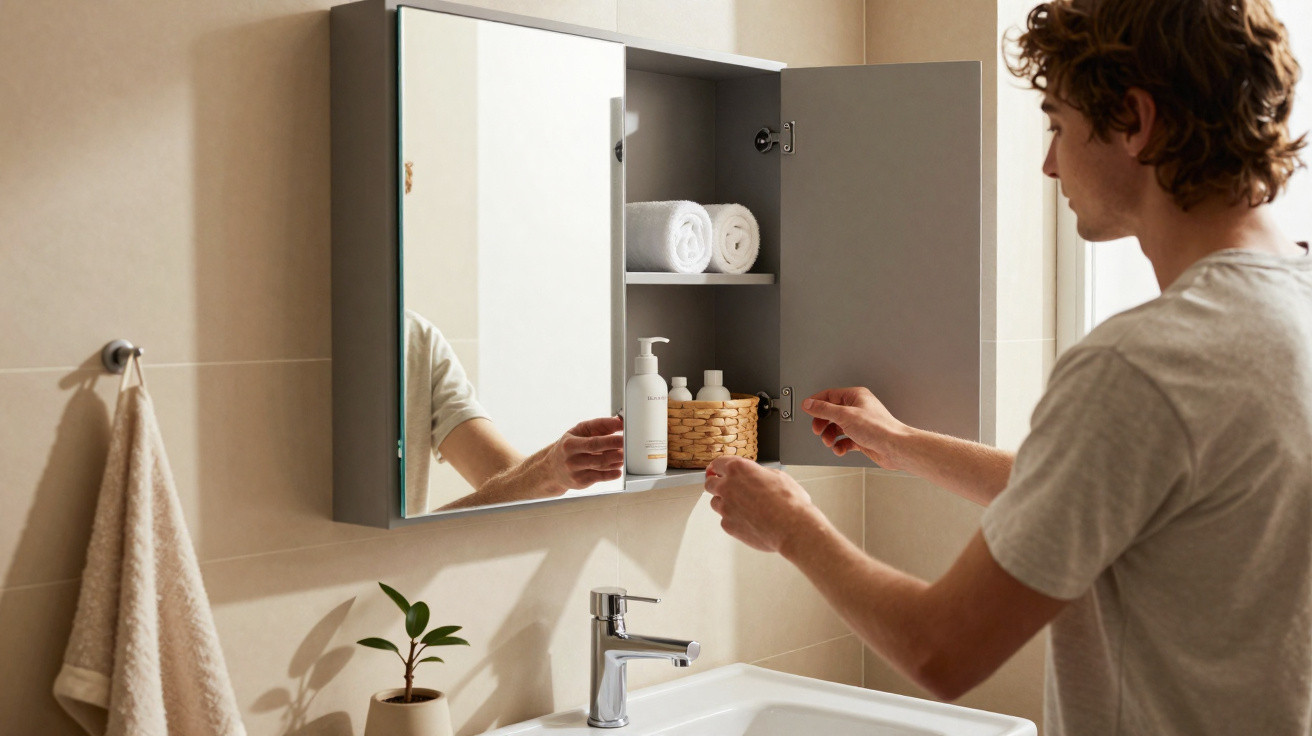
In small bathrooms, every centimetre matters, which is changing the way these spaces are arranged. The traditional cabinet above the sink, long regarded as the standard answer, is increasingly being replaced by subtler, more practical options suited to the layout of today’s compact homes. The priority is clear circulation, effective lighting and a more spacious feel.
Why is the cabinet above the sink losing ground in small bathrooms?
The chief objection to a cabinet above the sink in small bathrooms is its visual effect. Positioned at eye level, it creates an obstruction that diminishes the sense of open space and directly affects how the room feels to use.
Many conventional designs also offer restricted internal capacity, limited depth and poorly arranged shelves. As the number of personal-care products grows, these cabinets can quickly become overcrowded, causing clutter and making stored items difficult to see. They can also obstruct the front lighting over the basin area.
Watch the video on the YouTube channel Home Decoration about 50+ ways to ORGANISE A BATHROOM WITHOUT A CABINET: (Beautiful and Affordable). It presents modern inspiration using shelves and niches to replace bulky traditional cabinets and create a greater sense of space.
What is the most practical, discreet way to organise small bathrooms?
The alternative increasingly taking the place of the traditional cabinet is the recessed or semi-recessed mirror cabinet, often described as a concealed cabinet. The mirror spans almost the full width of the sink and conceals shallow niches or shelves behind it, producing a clean, integrated look.
This approach makes it possible to arrange products by category, separate everyday items from occasional-use products and keep medicines in areas better protected from moisture. Additional pieces can further support this efficient, unobtrusive organisation while making good use of vertical storage.
- Mirror with a shallow cabinet: reduced depth and discreet doors, ideal for smaller bottles.
- High recessed niches: use less-frequented wall areas without affecting circulation.
- Slim trolleys: fit beside the basin unit or toilet, with castors for easy access.
- Internal baskets: keep drawers and shelves organised by grouping related items together.
How can you update a bathroom without major renovation work?
It is not always feasible to knock through walls or replace wall finishes, yet the bathroom can still be modernised through straightforward stages. One of the quickest changes is to remove the old cabinet and fit a larger mirror, potentially combined with a shallow cabinet ready to be wall-mounted.
The side and upper areas around the mirror can also be used for slim shelves or open niches, which are suitable for perfumes, decorative objects and frequently used products. To improve the inside of existing furniture, consider dividers, stackable boxes and baskets to create clearly defined sections.
- Remove the old cabinet: repair the holes and prepare the wall for the new mirror.
- Fit a large illuminated mirror: improves lighting for make-up, shaving and daily care.
- Add a shallow unit: behind or beside the mirror, increasing storage space.
- Use the area beneath the basin unit: with drawer units, baskets or cabinets with doors.
How can these ideas work in bathrooms of different sizes?
Although the emphasis is on small bathrooms, mirror cabinets and discreet storage volumes are also being used in medium and large bathrooms. In bigger spaces, the wide mirror remains the focal point, while storage is spread across tall cabinets, side towers and drawer units beneath the basin.
In compact en suites, for instance, the mirror cabinet holds everyday personal items, while a slim vertical cabinet stores towels and replacement supplies. In cloakrooms, a generous mirror with discreet niches keeps only essentials on display, such as liquid soap, a room fragrance diffuser and spare toilet paper, maintaining a light, tidy and contemporary appearance even within just a few square metres.


Comments
No comments yet. Be the first to comment!
Leave a Comment