
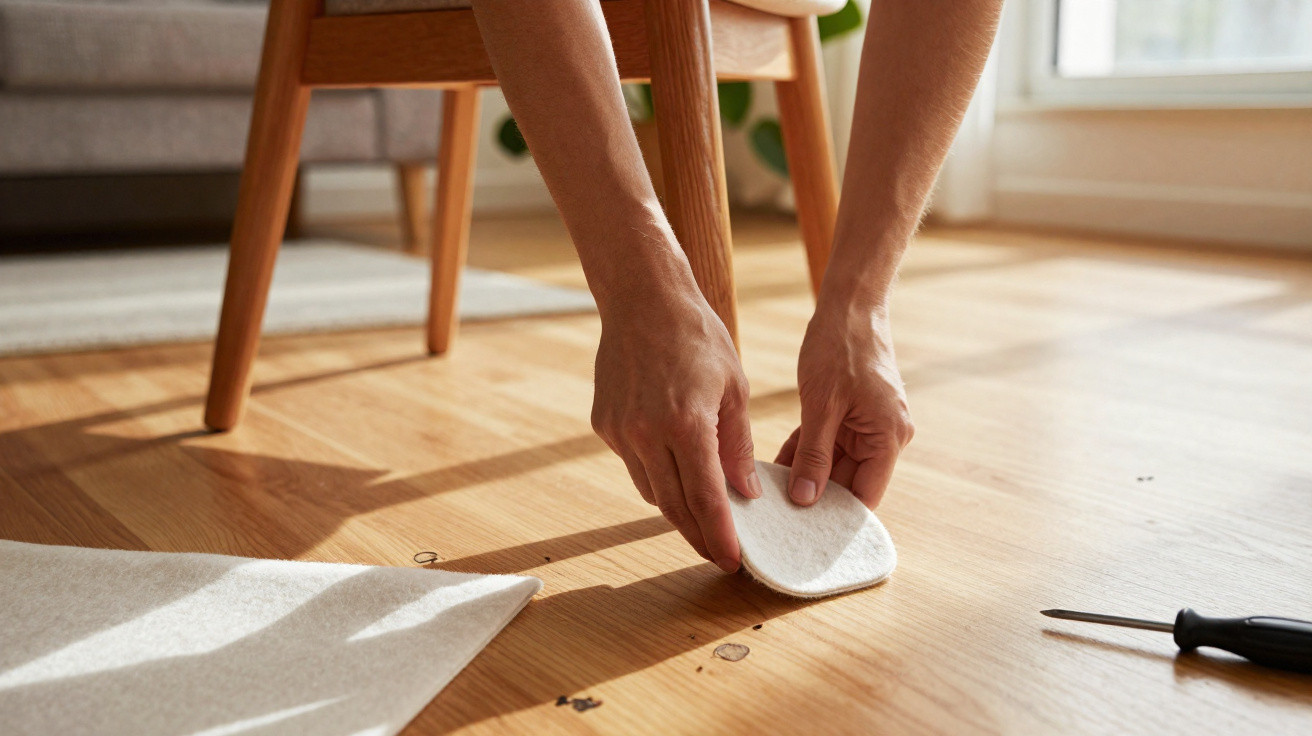
The sharp scrape of a chair dragged across wooden flooring, the small mark beneath a chest of drawers that has barely been moved, or a table corner that suddenly looks less crisp: we all know the moment when a piece of furniture starts showing its age. It is not always dramatic. At first, there may only be a fine scratch, a grey scuff on the floor or a leg that catches slightly. Then everyday movement does the rest, particularly when children, guests or the vacuum cleaner quietly knock the furniture about. The good news is that one tiny DIY job can slow this wear without turning the living room into a workshop. A few well-chosen felt pads can make a real difference. And it takes less time than making a coffee.
The overlooked felt pads that protect far more than your floor
Felt pads are often seen as an accessory for saving wooden floors. That is true, but their purpose goes much further: fitted beneath the legs of a table, sideboard or armchair, they reduce the tiny impacts that weaken wood over the years. Every time the furniture is moved, however slightly, it absorbs fewer vibrations and its legs wear out less quickly. Felt forms a small buffer zone, almost invisible, between the furniture and the floor.
At Claire’s home, an old family china cabinet had gradually begun to lean slightly forwards. It was nothing serious, but the two legs on the window side had been worn down by years of rubbing against rough tiles. She cleaned the undersides, added thick pads and restored the balance with a slim cork shim. Since then, the doors have closed more effectively and the cabinet no longer “moves” when opened. It was a DIY job costing under €10, whereas repairing the leg would have cost considerably more.
The idea is straightforward: furniture that appears stationary is never completely still. We lean on it, shift it a few centimetres to retrieve something that has fallen behind it, or push a chair without giving it a thought. Repeated actions like these focus pressure on the corners of the legs, which are often the most vulnerable areas. It is not the unusual accident that damages furniture, but everyday routine. Felt lessens this friction and prevents varnish, veneer or bare wood from gradually flaking away.
How to fit felt pads so they do not come off after a week
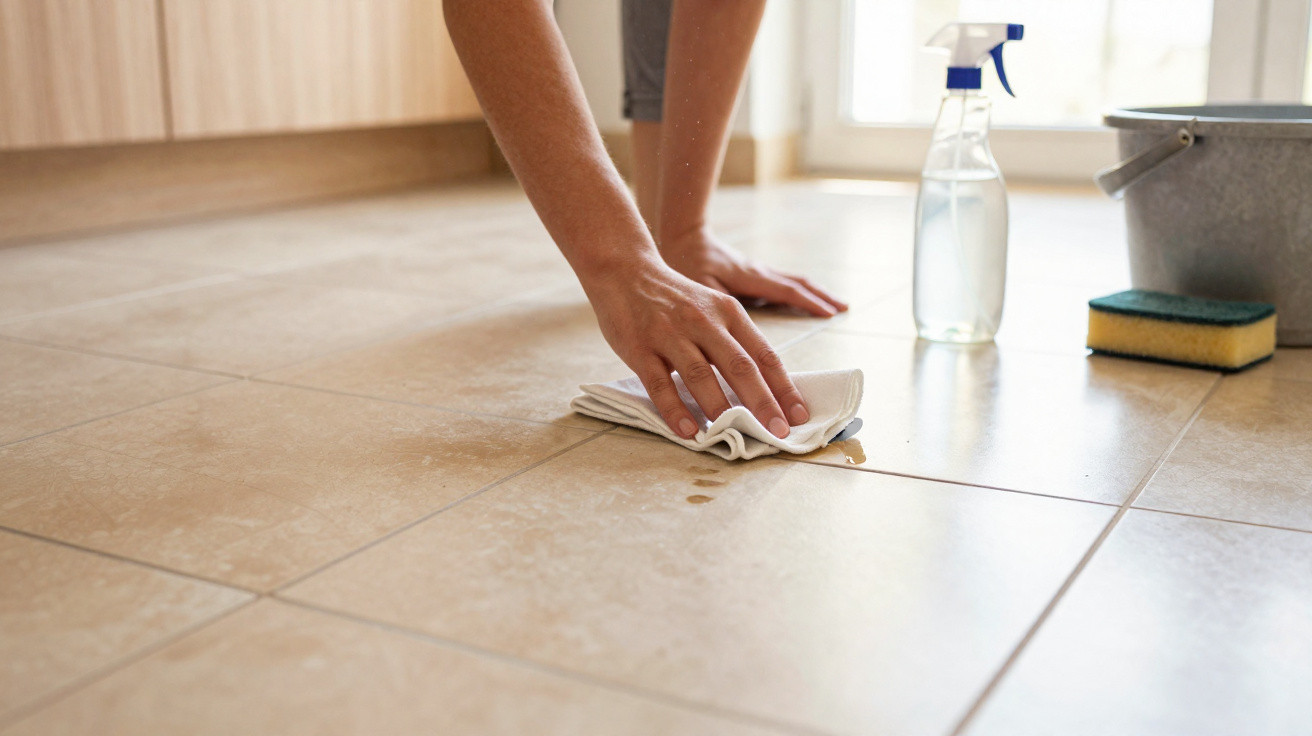
If possible, empty or lighten the furniture first, then carefully tilt it with another person’s help to reach the legs. Wipe each underside with a slightly damp cloth, removing dust, wax residue and old adhesive strips, then allow it to dry for a few minutes. Self-adhesive pads stick much more securely to a clean, dry surface. Select a diameter slightly smaller than the leg itself: it will remain unobtrusive while covering the part that actually rubs.
The most common mistake is buying the first thin pads available and sticking them to a dusty or uneven leg. They compress, slide or peel away, leading people to think “they are no use”. To be honest, no one really does this every day or checks beneath their bookcase every month. Even so, a quick inspection twice a year is usually enough, especially beneath kitchen chairs and furniture moved during cleaning.
When selecting the right material, focus above all on the furniture’s weight and the floor covering. A small occasional table can easily take self-adhesive discs, whereas a heavy wardrobe needs thick pads that are nailed or screwed on and fitted accurately.
“A well-protected piece of furniture does not live less: it simply withstands the life we give it more effectively.”
- Thin felt: ideal for lightweight chairs and laminate flooring.
- Thick felt: recommended beneath sideboards, sofas and solid tables.
- Cork or rubber: useful where the floor is slightly uneven.
- Screw-on pads: more dependable for very heavy furniture.
A subtle step that transforms a room’s appearance over the years
There is something reassuring about this DIY task because it requires neither particular practical skill nor complicated equipment. It extends the life of furniture you care about, including pieces that may not seem valuable on paper: the table bought in a rush for a first flat, the chair collected from a relative, or the small TV unit that has survived three house moves. Giving them the chance to remain stable and clean also avoids replacing items too soon when they still work perfectly well.
Felt pads can even offer a reason to look at your home differently. Once they are fitted beneath the legs, you may notice that a piece of furniture is unsteady, a chair squeaks or a rug holds dampness against a sideboard. These details do not necessarily call for a major renovation. They simply encourage you to care for the things you use without thinking about them. Preserving is often better than repairing, especially when a few minutes can prevent a permanent scratch.
One simple idea is worth remembering: the best time to protect furniture is before the marks become visible. On a Saturday morning, while moving a table or vacuuming, it can naturally become part of the routine. And if someone close to you complains about unexplained scratches on their floor or chairs that catch, this small tip is probably worth passing on.
| Key point | Detail | Added value for the reader |
|---|---|---|
| Felt pads | They cushion friction beneath furniture legs. | Fewer scratches and less wear on both furniture and flooring. |
| Surface preparation | Legs must be clean, dry and as level as possible. | Pads last longer and do not slide. |
| Suitable choice | Felt, cork, rubber or screw-on pads depending on weight. | Truly effective protection, even for heavy furniture. |


Comments
No comments yet. Be the first to comment!
Leave a Comment