
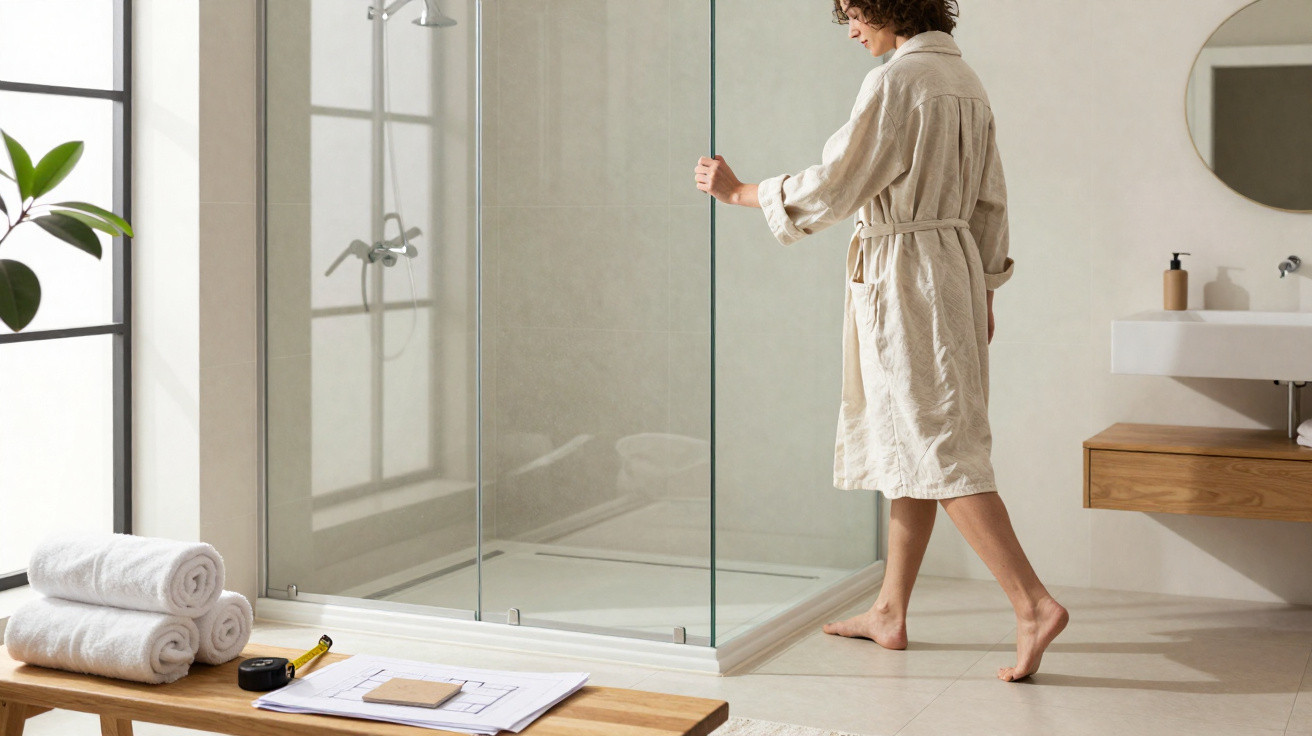
Italian showers are becoming increasingly popular in Brazilian homes because they make bathrooms feel more open, easier to clean and visually seamless. Rather than using an enclosed glass cubicle, this design creates a shower area level with the floor, with a carefully placed drain and fewer profiles where dirt can build up. It works best when the fall, waterproofing and tile selection are properly planned.
What is an Italian shower?
An Italian shower, also known as a walk-in shower, is a bathing area incorporated into the bathroom, usually without a door or tracks. Its floor sits flush with the rest of the room, allowing easier access in and out.
In many layouts, it does not remove the partition altogether. A fixed glass screen, half-height wall or side panel may be used to contain splashes, while avoiding the enclosed-cubicle feel of a conventional shower enclosure.
Why is it replacing the glass shower enclosure?
A traditional glass shower enclosure needs regular cleaning around its tracks, rollers, corners, seals and joins. Soap residue, body oils, limescale and moisture can collect in these places, encouraging staining and mould.
With an Italian shower, upkeep is generally more straightforward:
- There are fewer fittings and tight corners to clean.
- The uninterrupted floor makes it easier to use a squeegee after showering.
- The room can appear larger in smaller bathrooms.
- Step-free access improves movement around the space.
- The design draws attention to bathroom tiles, niches and fittings.
What does the design need to get right?
Water drainage is the key consideration. The floor must be set to the correct fall towards the drain, whether it is linear, concealed or central. Without this, water can spread through the bathroom, turning the feature into an everyday inconvenience.
Waterproofing must not be treated as an afterthought either. Since the shower area is more exposed, any weakness in the grout, where the floor meets the wall, or around the drain can lead to leaks, unpleasant smells and marks in neighbouring rooms.
Does this design suit small bathrooms?
An Italian shower can work extremely well in a small bathroom, provided the showering zone is planned to realistic dimensions. In narrow rooms, a fixed glass screen or half wall can help manage splashes without completely enclosing the space.
Several decisions are particularly important in compact areas:
- Position a linear drain close to the shower wall.
- Choose slip-resistant tiles for the wet floor.
- Fit a shower head with a well-directed spray.
- Avoid placing niches where they will receive direct water without effective sealing.
- Keep the towel rail, cabinet and toilet roll holder outside the splash zone.
When is it worth saying goodbye to the traditional shower enclosure?
An Italian shower is worth considering when a renovation allows the floor, drain and waterproofing to be redone properly. Simply removing the glass in favour of an open area, without correcting the floor fall and sealing, increases the likelihood of puddles and leaks.
This design is gaining ground because it addresses three common frustrations in Brazilian bathrooms: demanding cleaning, a cramped feeling and barriers when entering the shower. When executed well, an Italian shower replaces the glass cubicle with a more integrated, safe and easy-to-maintain area for daily use.





Comments
No comments yet. Be the first to comment!
Leave a Comment