
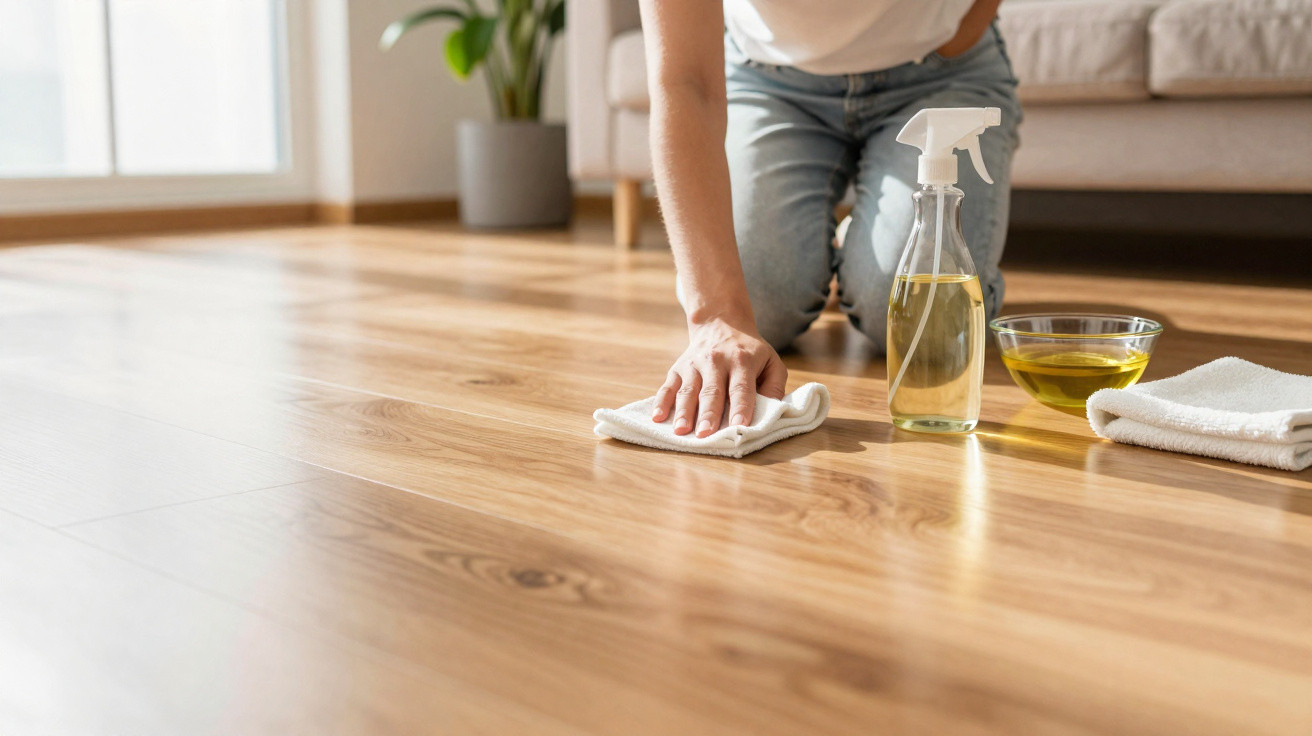
Keeping a wooden floor clean and looking its best is a common concern in many homes. This type of flooring enhances a room, suits a range of interior styles and, when properly maintained, contributes to a sense of order. At the same time, wood is vulnerable to too much moisture, harsh products and dust build-up, all of which can affect its sheen and finish over the years.
Why is regular wooden floor cleaning so important?
Over time, it is natural for wooden flooring to lose its original appearance. Dirt particles brought in on shoes, through open windows and even on pets’ paws create a fine layer on the surface, increasing the likelihood of scratches and stains.
If this layer is not removed correctly, the floor can begin to look dull and lifeless. For this reason, many households look for gentler, more affordable options using a kitchen ingredient already in the cupboard to support everyday cleaning.
How does wooden floor cleaning with a kitchen ingredient work?
Interest in straightforward, low-cost solutions has encouraged the use of mixtures made with everyday products, including white vinegar, vegetable oil and even essential oils. The aim is to lift dirt without damaging the varnish while also bringing out the wood’s natural shine.
In this context, one widely discussed home method combines water, vinegar and small amounts of cooking oil, such as olive oil or another light vegetable oil. Water provides the base, vinegar helps remove residue, and the oil leaves a thin film that improves the surface’s appearance.
How to use vinegar and cooking oil to clean a wooden floor
One of the most frequently mentioned recipes for maintaining wooden floors, wood-block flooring and parquet uses white vinegar and cooking oil. Getting the proportions right can help remove more stubborn dirt while restoring some shine without soaking the floor.
For anyone wishing to try this option, the following is a practical preparation and application guide:
- Room-temperature water, used as the solution’s base;
- White vinegar, in a smaller quantity than the water;
- Cooking oil (such as olive oil or another light vegetable oil), using just a few tablespoons;
- Drops of citrus essential oil (optional), for those who would like a fresher scent.
First, sweep the wooden floor to remove loose dust and larger debris. Then combine the water, vinegar and oil, shaking thoroughly until the liquid is evenly mixed. Ideally, transfer it to a spray bottle so it can be applied in a controlled way.
Spray a moderate amount over a small section of the floor, then wipe it with a well-wrung microfibre cloth or mop, using gentle movements in the direction of the grain. If needed, finish with a second clean, dry cloth to remove any excess and lower the risk of slipping.
What care is needed when using cooking oil on a wooden floor?
Although cooking oil can enhance shine, using too much may leave the floor greasy and slippery, which is particularly important in homes with children, older people or pets. Over time, residue can build up and require more thorough cleaning to remove the oily layer.
It is also essential to consider the floor’s finish, as varnished, laminate and waxed surfaces may react differently to the mixture. Specialists advise testing it on an inconspicuous area and following the manufacturer’s guidance. Daily habits, including frequent dust removal, careful moisture control and fitting protective pads to furniture legs, also help extend the life of the wood.


Comments
No comments yet. Be the first to comment!
Leave a Comment