
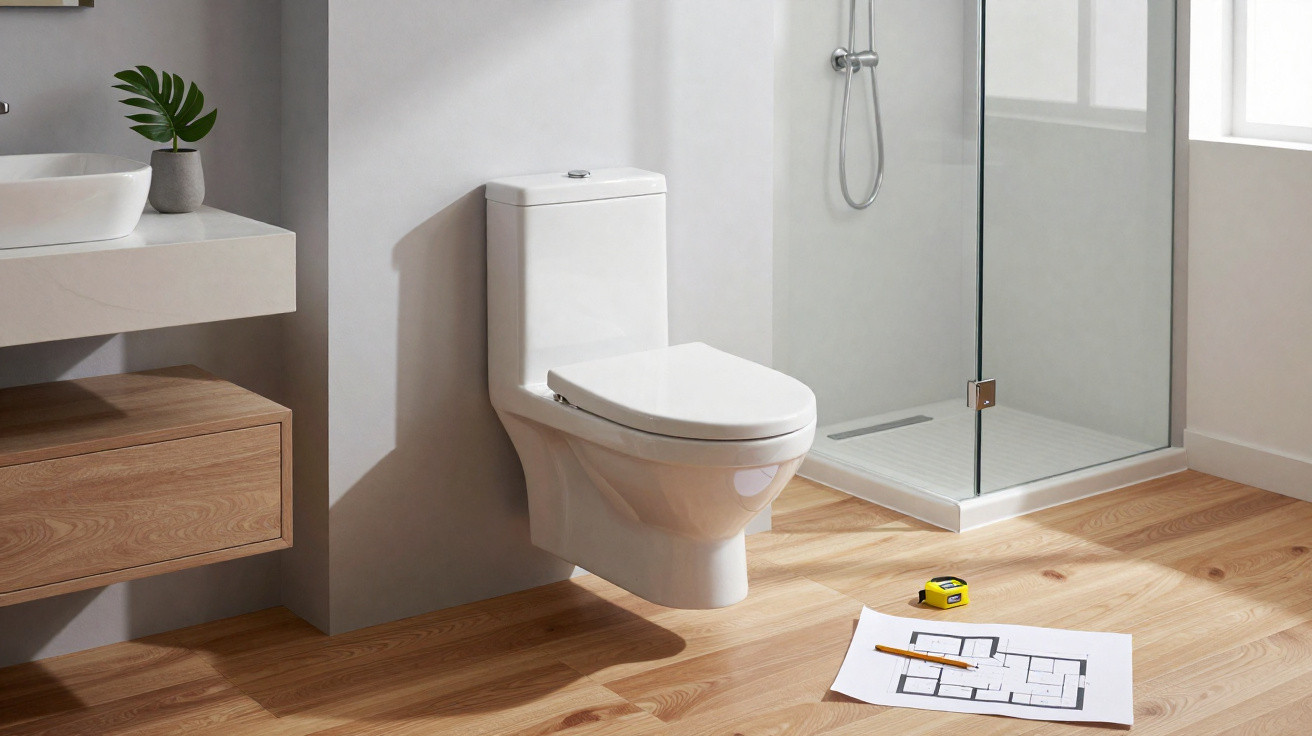
In small bathrooms, every centimetre matters for movement, organisation and a sense of comfort. The close-coupled toilet was long the standard option, yet as properties have become smaller, the limitations of this design have become more apparent. This has created room for more compact, discreet and easy-to-clean alternatives, which can often be fitted without extensive renovation work.
What is replacing the close-coupled toilet?
The main alternative increasingly replacing the close-coupled toilet in small bathrooms is the wall-concealed cistern toilet, also known as a toilet with a concealed flush system or a wall-hung toilet with an internal cistern. With this arrangement, the cistern is hidden within the wall or a technical panel, freeing up the space behind the toilet.
The overall unit is more compact, while the toilet takes up less floor depth, creating a larger circulation area. In wall-hung versions, the unobstructed floor enhances the perceived ceiling height and makes cleaning easier. Discreet flush plates also give the room a neat, seamless appearance, often offering single- or dual-flush settings to save water.
Watch the video on the Arq7 Decorações YouTube channel, which covers the aesthetic and structural benefits of this wall-mounted model that saves valuable space in compact bathrooms.
Why does a wall-concealed cistern toilet take up less space?
By removing the visible cistern, a volume that would usually extend several centimetres beyond the toilet is eliminated, making the installation more “slimline” and practical. This is particularly beneficial in compact homes, where movement needs to remain easy and the bathroom may often be used by more than one person in succession.
The bathroom also has a lighter look: fewer visible forms, continuous flooring and straight lines create a cleaner appearance. With wall-hung models, the skirting area remains clear, reducing places where dirt can collect and making it simpler to mop or wash the floor-an especially valued benefit in guest cloakrooms and heavily used bathrooms.
How can a wall-concealed cistern toilet be fitted without major renovation?
It is not always necessary to strip out the entire bathroom when replacing a close-coupled toilet with a concealed-flush model. The adaptation required depends on the wall structure and the location of the pipework, so a professional assessment is important to determine the most suitable approach and the extent of the work.
In general, the process involves several key stages that help organise the work and anticipate potential issues:
- Inspecting the masonry and existing pipework.
- Selecting the concealed-cistern framework, whether metal or masonry-built.
- Setting the height of the toilet and flush plate.
- Fitting the internal cistern and the water supply and waste connections.
- Closing the wall or panel and applying the final finish.
Where the wall cannot accommodate the concealed installation, a small technical panel can be built behind the toilet using plasterboard or lightweight masonry. This structure can incorporate niches, shelves or shallow cupboards, using the area for storage without adding excessive depth to the room.
Using a wall-concealed cistern toilet in bathrooms of different sizes
A concealed-flush solution is not restricted to the smallest bathrooms. In larger rooms, it helps organise the design visually through continuous surfaces and straightforward maintenance. In compact bathrooms, it is commonly aligned with the basin and shower enclosure; in spacious en suites, it can form part of a technical wall containing the toilet, bidet or bidet spray.
In cloakrooms, a more compact toilet frees up room for slightly larger worktops. In older flats, it is common to alter only the section of wall where the system will be concealed. When planning the replacement, it is worth considering ventilation, access to stop valves and plumbing compatibility, ensuring a bathroom that is more practical, discreet and comfortable for everyday use.






Comments
No comments yet. Be the first to comment!
Leave a Comment