
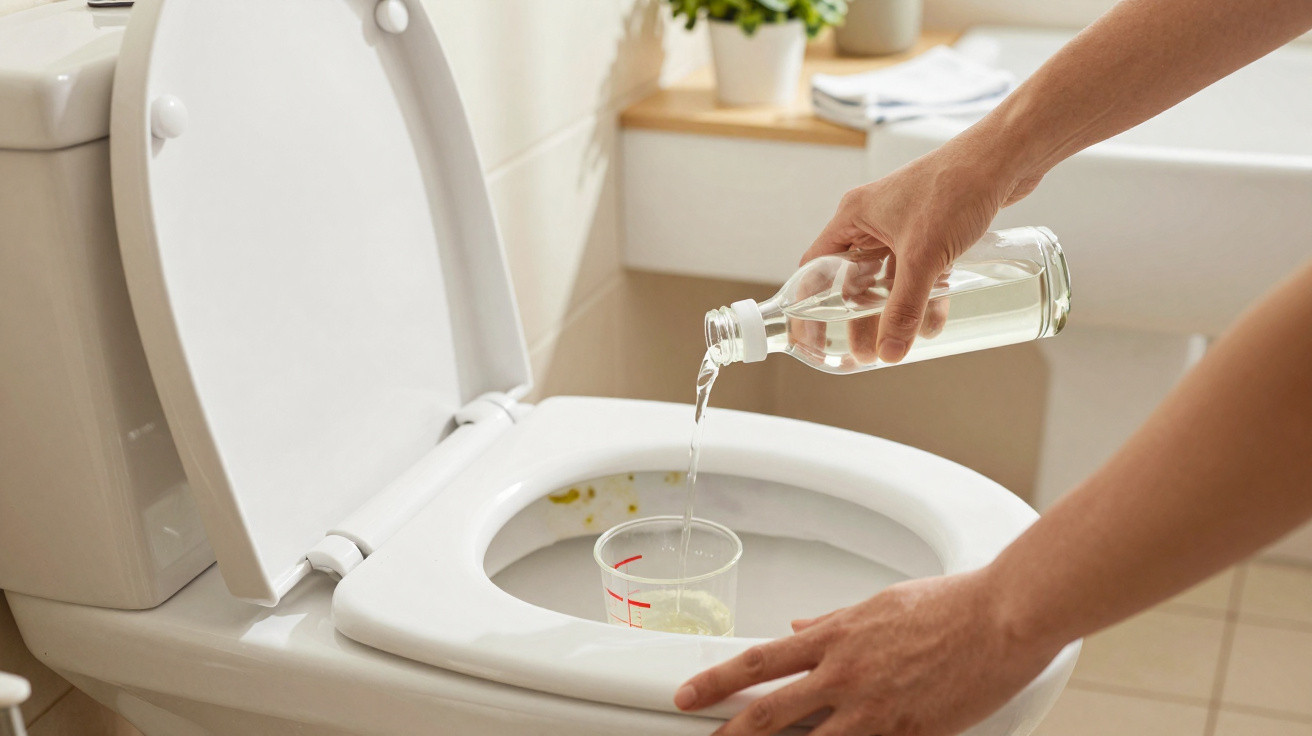
Pouring vinegar into the toilet cistern once a month can help dissolve mineral deposits, reduce internal staining and prevent build-up from affecting the float, inlet valve and flush mechanism. The mild acidity of white vinegar works on limescale, hard-water marks and grime that has collected at the bottom of the tank. The essential precautions are to use a moderate amount, allow it to work for a controlled period and never combine it with bleach or chlorine-based products.
What does vinegar dissolve inside the toilet cistern?
Although fresh water enters the toilet cistern with every flush, mineral scale can still form. In hard-water areas, calcium and magnesium may settle on the base and inner walls, as well as around moving parts.
Over time, this coating can prevent the valve from closing properly, trap dirt and lead to a weak flush or a constant leak. Vinegar helps loosen these deposits before they become stubborn scale that is difficult to remove.
Why does ordinary cleaning not deal with this issue?
Many people clean only the outside of the toilet and the bowl itself, overlooking the cistern. Because the toilet cistern remains covered and damp, with plastic and rubber components constantly exposed to water, it provides ideal conditions for biofilm, stains and mineral build-up.
The issue may be identified by straightforward signs:
- A flush that is weaker than usual.
- Water continuously running into the bowl.
- Brown, white or greenish marks on the bottom of the cistern.
- Irregular movement of the float or valve.
- A stale smell when the cistern lid is lifted.
What is the right amount of vinegar?
For monthly maintenance, add 1 to 2 cups of white vinegar to a full toilet cistern. This is enough to act on light mineral deposits without turning the tank water into an overly strong acidic solution.
If visible scale is present, it is best to turn off the water supply, flush the toilet to lower the water level, then apply vinegar directly to the marked areas using a soft brush. Do not scrub rubber parts forcefully, as they can become misshapen and cause leaks.
How can vinegar be used without damaging internal parts?
Carefully lift off the cistern lid, pour in the vinegar away from the float and allow it to mix with the water. Then leave it for 20 to 30 minutes, flush the toilet and let the cistern refill to rinse everything through.
For safer cleaning, follow this sequence:
- Use white vinegar only, with no colourings or strong fragrances.
- Never combine it with bleach, chlorine or cleaning tablets.
- Avoid leaving concentrated vinegar in prolonged contact with rubber parts.
- Clean the inner walls with a soft brush, never wire wool.
- Flush twice after cleaning to clear away loosened residue.
How often should toilet cistern cleaning be repeated?
Once a month is a suitable schedule for keeping the toilet cistern clean and limiting mineral deposits before they interfere with flushing. In homes with very hard water, recurring stains or heavy bathroom use, the cistern can be inspected every two weeks, although vinegar should still be used sparingly.
The most effective approach combines gentle cleaning, checking the components and thorough rinsing. When the toilet cistern is free of scale, the float moves more smoothly, the valve seals more accurately and the toilet wastes less water through silent leaks.




Comments
No comments yet. Be the first to comment!
Leave a Comment