
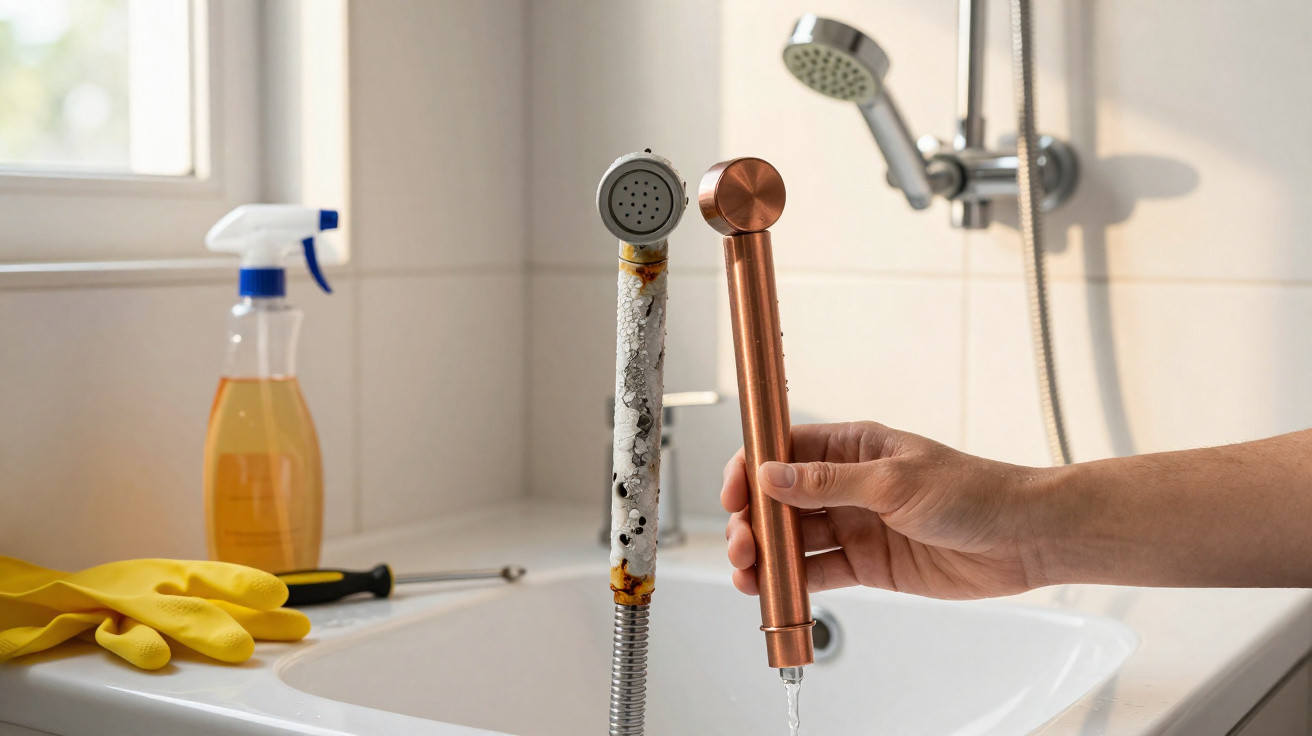
A shower heating element is one of the components most exposed to everyday wear in the bathroom. Although it is out of sight, it must cope with high temperatures, water pressure and, in many areas, a high mineral content in the water. This can lead to limescale deposits, reduced performance and even failure of the component.
Why does the shower heating element build up limescale and become less efficient?
The shower heating element converts electrical energy into heat to warm the water. As water flows across this heated part, dissolved minerals begin to adhere to its metal surface, creating a limescale crust around the resistive wire.
The issue is more pronounced in areas with hard water, which contains high levels of calcium and magnesium. This limescale layer acts as thermal insulation, making the heating element operate at a higher temperature, increasing energy use and raising the likelihood of premature failure or cracks in the metal.
What signs show that the shower heating element is nearing the end of its life?
Before it fails completely, a shower heating element will often show warning signs. Water taking longer to heat up, remaining merely lukewarm at the same settings, and temperature changes during a shower without adjusting the selector switch all suggest that heat transfer has been impaired.
Other significant symptoms may occur at the same time, indicating that it is time to stop using the shower and safely assess whether maintenance or replacement is required.
- Water that is less hot even on the “winter” or “hot” setting.
- Temperature fluctuations without manually changing the switch.
- Unusual noises when the shower is switched on.
- Repeated heating-element failures at short intervals.
- The circuit breaker tripping when the appliance is activated.
How often should the shower heating element be replaced or inspected?
There is no single timescale for every household, but in places with hard water and heavy use, a shower heating element generally lasts between 6 and 12 months. In areas with less mineralised water and moderate use, it may continue working for longer, provided there are no signs of a fault or a burning smell.
Preventive maintenance is a sensible approach: inspect the component once a year, or every six months in areas with substantial limescale. During this check, look for darkening, cracks, distortion and excessive deposits, and record the date to keep track of its replacement history.
How can you maintain, clean and extend the life of the shower heating element?
Regular cleaning helps control limescale build-up and may extend the life of the shower heating element. Always switch off the circuit breaker before handling it, disconnect the shower from the water connection and carefully remove the heating element, following the manufacturer’s instructions to avoid damaging fittings or seals.
A solution of water and white vinegar can be used to loosen light deposits, followed by a soft brush; avoid abrasive paper and corrosive products. If the part is heavily darkened, distorted or broken, replacement is the safer option. In locations with extremely hard water, consider fitting filters or water softeners at the shower inlet, as this reduces limescale formation and the electrical strain on the heating element.
With these straightforward measures, showers can be more comfortable, energy consumption is likely to be lower, and the electric shower may gain several additional months of reliable operation.




Comments
No comments yet. Be the first to comment!
Leave a Comment