
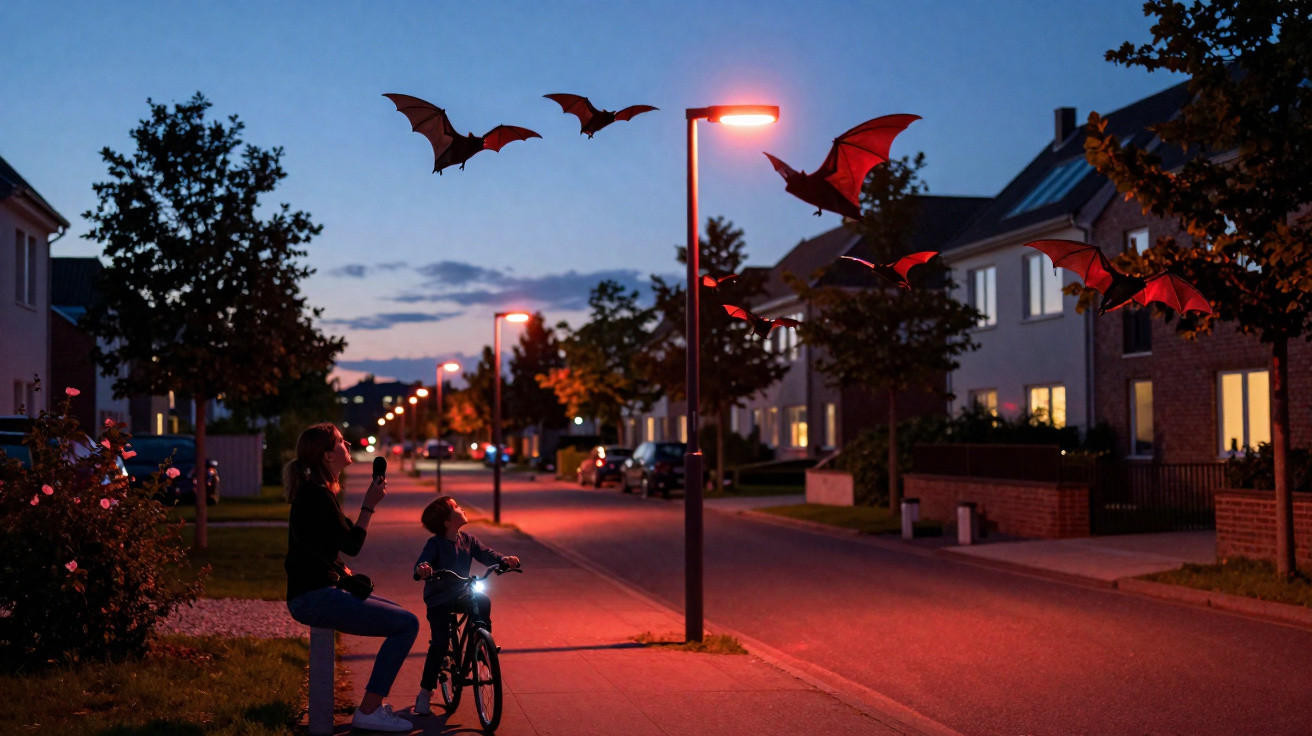
Artificial lighting in cities can form unseen obstacles for nocturnal animals, but an inventive Danish scheme is tackling this ecological issue in a creative way. By replacing conventional lamps with red lighting, the project safeguards local urban bats.
Why has Denmark introduced red streetlights?
Light pollution has a major impact on the behaviour of many flying species, which rely entirely on darkness to travel safely. To address this often-overlooked problem, Gladsaxe Municipality chose to introduce specialised lighting along an important ecological corridor.
The change is designed to protect local wildlife while retaining the level of visibility people need on urban roads. By providing a suitable setting for flying mammals, local officials set out the following essential ecological objectives:
- Animal protection: Ensure that seven native bat species can move freely.
- Reduced disturbance: Limit excessive light spill into residential neighbourhoods.
- Road safety: Keep the road fully usable for motorists and everyday cyclists.
How do white lamps harm bats?
The intense, constant brightness produced by standard white LEDs can become an impassable physical barrier for light-sensitive animals. Many species avoid overly illuminated open areas altogether, as the strong glare makes them more exposed to potential nocturnal predators.
As a result, these animals can be confined to small patches of woodland, unable to travel between resting sites and feeding grounds. With the new technology in place, researchers were able to develop an approach that respects the wildlife’s natural behaviour.
What is the secret behind this lighting design?
The engineering involved more than simply replacing old bulbs; it required the careful redesign of the entire system. The project team installed thirty low-level columns along a section of road known as Frederiksborgvej.
Red light and darkness
Preserving biological patterns
Research by ecological institutes has shown that bats remain just as active under red light as they are in complete darkness.
Unlike green or white lighting, the reddish hue keeps the nighttime environment closer to its natural state.
This strategic layout creates alternating pools of red illumination and dark, safe spaces. The thoughtful arrangement allows bats to fly without being completely exposed, delivering the following technical factors:
- A spacing of approximately 30 metres (100 feet) between the small lighting columns.
- Lighting structures standing at around 0.9 metres (3 feet) high.
- Less insect attraction than under white light.
What will change for the Gladsaxe community?
In addition to protecting local wildlife, the scheme offers direct improvements to the quality of life of nearby residents. The focused direction of the new LEDs reduces the stray glare that commonly reaches the windows of urban homes.
More effective control of the lighting helps provide the human population with healthier, more peaceful nights of sleep. The municipality intends to extend this considered upgrade through a wider programme involving improvements to municipal infrastructure:
- A direct partnership with lighting company Andel Lumen.
- The gradual replacement of around five thousand outdated light fittings.
- Integration with the European Lighting Metropolis Green Mobility programme.
How could this innovation inspire other cities?
The Danish experience clearly shows that wildlife needs and urban development can coexist harmoniously. Adapted lighting provides a practical, affordable model for public authorities across the world.
By scientifically demonstrating that modest changes to urban planning can protect entire ecosystems, the initiative creates opportunities for further sustainable projects. Protecting nature hidden in the night has become an achievable goal through creativity and accessible technology.
References: New road lighting in Gladsaxe designed for bats | Gladsaxe Municipality






Comments
No comments yet. Be the first to comment!
Leave a Comment