
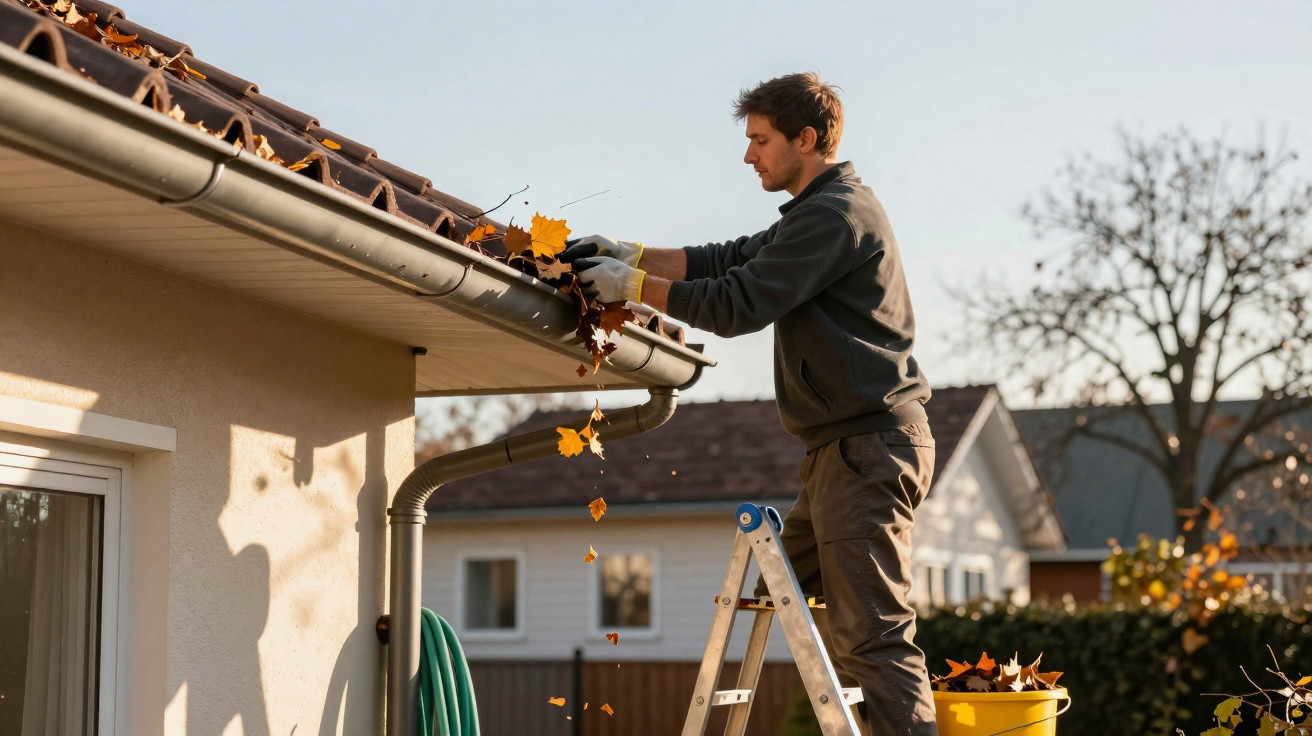
On a wet Sunday in November, heavy rain falls and water suddenly spills over the guttering above the terrace. It runs down the render, splashes the windows and pools at the foot of the wall. Looking up, the cause is often obvious: the gutter is packed with leaves, moss and small debris left there since last autumn. We all know that moment when a seemingly minor detail exposes a bigger issue than it first appears. Taking this simple step before the first cold weather can prevent considerable damage. It is best dealt with before frost becomes part of the problem.
When blocked guttering becomes a genuine risk to the house
At first, clogged guttering may not seem especially serious. However, once showers become frequent, water no longer has a clear route to the downpipe. It then flows over the edge, seeps in around the roof and can eventually run against the walls. Roofers see this every year, often after the first heavy autumn rain, when homeowners notice dark marks beneath the eaves.
A build-up of fallen leaves can be enough to block a gutter outlet, the small section where water enters the downpipe. For a house surrounded by plane trees or oaks, a few windy weeks can fill several metres of gutter channel. Depending on the layout, conventional guttering collects hundreds of litres of water during a single prolonged spell of rain; if the outlet is blocked, that volume inevitably finds another way out.
The risk increases as winter approaches because standing water can freeze. As it expands, ice presses against the metal, PVC or brackets and may distort the guttering enough to pull it partly away. What looked like a thirty-minute chore can then turn into an expensive repair. Clear drainage also helps protect exterior walls, the lower parts of the building and the foundations, particularly on ground where water gathers easily.
Cleaning guttering before winter: the cautious method recommended by roofers
The ideal time is after the main fall of leaves but before prolonged frosts set in. Pick a dry, wind-free day with firm ground and adequate daylight: climbing a ladder in rain or on wet paving can quickly turn routine home maintenance into a dangerous situation. Gather thick gloves, a bucket that can be attached to the ladder, a small gutter scoop or plastic trowel, and a garden hose.
First, lift out the build-up by hand rather than pushing it into the downpipe, as a blockage further down is difficult to reach. Then rinse gently from the end furthest from the downpipe, so that you can check the water is flowing through. Let us be honest: nobody actually does this every day, nor is there any need to. For a typical home, one check in autumn followed by a light inspection in spring is often enough.
Rushing is still the most common mistake. Many people climb too high on a poorly positioned ladder, lean too far to gain a few extra centimetres, or attempt the job alone on uneven ground. It is better to move the ladder several times than to balance precariously just to finish more quickly.
“Clean guttering does not just protect the roof: it stops water from finding an unexpected route into the rest of the house.”
- Check the ladder: it must stand on firm ground and extend slightly above the roof edge.
- Wear sturdy gloves: wet leaves can conceal screws, pieces of metal or insect nests.
- Keep three points of contact and do not climb if you are alone, tired or prone to vertigo.
- Test the downpipe with water, without using a pressure washer on a fragile installation.
Doing it yourself or calling a roofer: height also determines the right choice
For a small single-storey house that can be reached with a correctly positioned ladder, cleaning the guttering can remain a sensible maintenance task for a careful homeowner. When the roof is high, the slope of the ground makes stable footing difficult, or the gutters show signs of distortion, bringing in a roofer is more reassuring. This professional does more than remove leaves: they can spot loose brackets, worn seals, cracks and areas where water is collecting.
Regular maintenance also makes it easier to identify less obvious faults, such as a cracked downpipe hidden behind dense vegetation or a gutter outlet blocked by compacted moss. Roofers sometimes advise fitting a gutter guard or leaf guard, particularly near trees. These accessories limit the accumulation of larger debris, but they do not remove the need for a visual check: no guard remains fully effective after several seasons of wind, pollen and rain.
The real question is not simply “can I do it?”, but “can I do it without taking a risk?”. A fall at home can happen quickly, often just when you think you have nearly finished. Not climbing up may be the most sensible decision when access is poor; requesting a quote for cleaning and inspection can sometimes cost far less than water damage or an avoidable injury.
| Key point | Detail | Benefit for the reader |
|---|---|---|
| Clean before frost | Leaves, moss and small debris hold water. When temperatures fall, this water can freeze, add weight to the guttering and weaken its fixings. | Reduces the risk of overflowing, distortion and unexpected repairs during winter. |
| Check the flow | Once debris has been removed, a moderate rinse confirms that water reaches the downpipe rather than escaping through a joint or crack. | Identifies a hidden blockage before it leaves damp marks on the exterior wall. |
| Put safety first | A stable ladder, dry weather, gloves and someone assisting from the ground genuinely change the conditions of the job. A high or hard-to-reach roof warrants a roofer’s assessment. | Maintains the home without turning a seasonal task into a domestic accident. |
Guttering rarely draws attention while it is doing its job. It sits discreetly at the roof edge until the day water spills down a newly painted wall or finds its way into a garage. Spending a few minutes checking the drainage after strong winds, listening to the sound of water during a shower, or noticing an unusual mark beneath the roof can reveal a great deal about a home’s true condition.
There is also something very practical about this autumn maintenance. Yes, leaves are removed, but above all the house is being prepared for cold weeks, frosty nights and long spells of rain that do not spare neglected details. A sound roof often starts with drainage that can breathe. People around you may already have experienced torn-off guttering, a discreet leak or a completely blocked downpipe: their experience can help you decide when it is the right time to act.






Comments
No comments yet. Be the first to comment!
Leave a Comment