
You scrub the worktop, spray a citrus cleaner and perhaps run the tap, yet the odour creeps back like a determined cat. The source is hidden a few centimetres below the plughole, where water and air maintain an uneasy balance. You do not need a cupboard full of supposed miracle products. Instead, there is one straightforward technique plumbers rely on - the sort of tip you use once and remember for good.
I noticed it again one Saturday morning: a slight egg-like smell drifting up from the kitchen sink. Sunlight was heating the window and coffee was steaming, but something unseen spoiled the scene. Most of us know that feeling: the house looks spotless, yet it does not seem clean because the air tells a different story. I opened the cupboard for the usual products, then paused. A plumber I had met on a job once told me about one small action people usually miss, which can stop the odour returning. The whole job took 90 seconds.
Where drain smells really originate
Plumbers will tell you that a drain does not smell because of “the water”. It smells because the biofilm stuck to the inside of the pipe feeds on everything sent down it. Within the dark pipe beneath the sink, microscopic organisms create a sticky little city. Food debris, soap residue, toothpaste and skin cells all cling to that film. Odours seldom begin in the water; they begin on the pipe walls. Then there is the trap: the U-shaped P-trap designed to keep sewer gas out. If it dries out or is siphoned empty, that barrier fails and the room suffers.
A block of flats in my city repeatedly had “mystery odors” after holiday periods. Residents complained and the maintenance team used sprays, but nothing worked. Eventually, a technician spotted the connection. The smell always appeared in guest bathrooms and utility rooms left unused for several days. Water in the traps had evaporated enough for air to be drawn from the stack. After topping up each drain, he introduced one extra measure: a spoonful of mineral oil floating on the water as a lid. The call-backs stopped. It was not a dramatic alteration, but it lasted - which is what matters in a household solution.
This is the reason. A P-trap holds water to prevent sewer gas entering the room, full stop. When a fitting goes unused, its water seal gradually evaporates. With an S-trap or a badly vented pipe, rapid drainage may also “siphon” the trap dry. At the same time, the film higher up the pipe walls breaks down grease and food, releasing volatile compounds that you can smell. Remove the film, restore the seal and reduce evaporation, and you tackle all three routes. That is the thinking behind this plumber’s trick: it does more than mask odours, as it reinstates the barrier and helps it endure.
The plumber’s trick for smelly drains that works
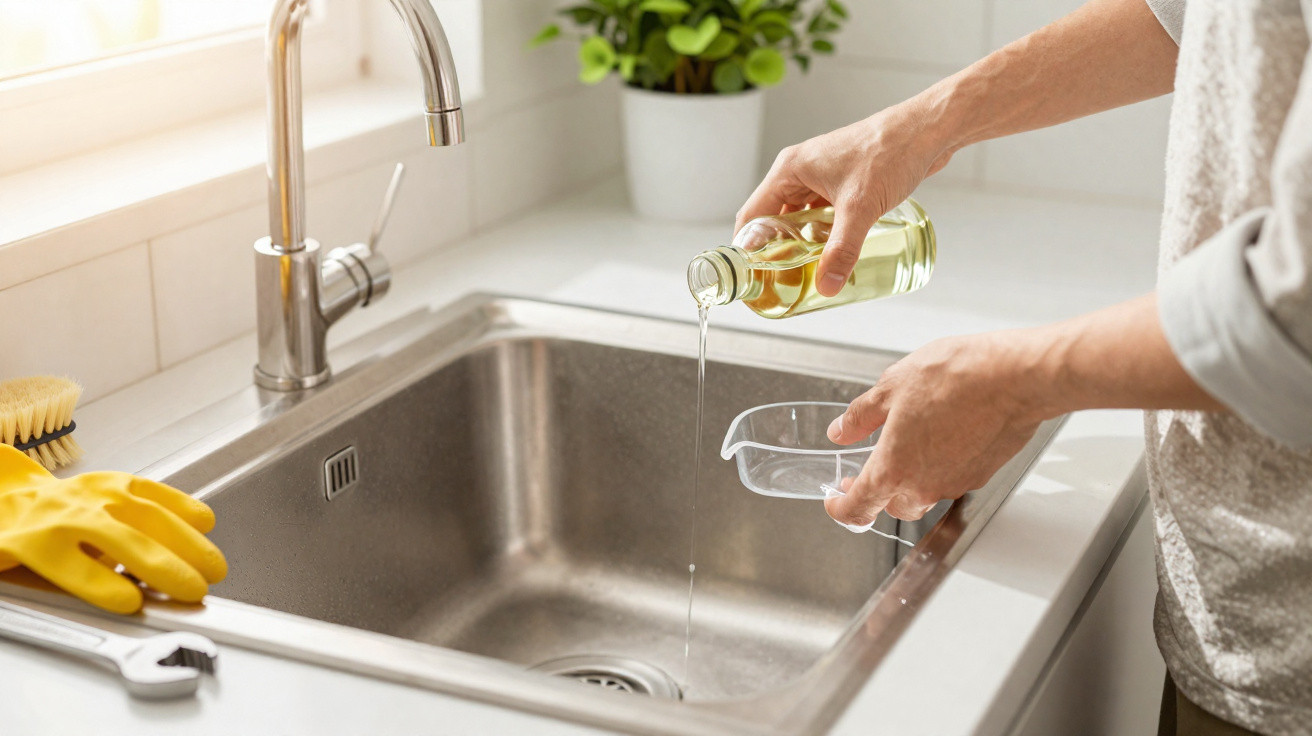
Here is the method, one stage at a time. Boil a kettle, then leave it for 30 seconds so the water is very hot rather than violently boiling. Pour it slowly into the drain to warm the pipe and loosen deposits. Add 120 ml of bicarbonate of soda and leave it for one minute. Next, pour in 240 ml of hot white vinegar, then immediately close the plug or cover the drain with a damp cloth, keeping the fizz against the pipe walls. Leave it for five minutes. Rinse through with another kettle of hot water and a small squirt of washing-up liquid. Finally, run the tap for 10 seconds to refill the P-trap. The key step comes last: pour 5–10 ml of mineral oil into the drain. It sits on top of the water in the trap and slows evaporation.
Do not hurry through the process. Let the fizz work on the residue, and never combine cleaning products you would not mix in a glass. Bleach and vinegar produce a harmful gas when combined. Avoid drain-cleaning crystals in old metal pipes, as they can solidify and cause burns. Also clean the sink overflow opening and the rubber seal beneath the plug, since both can harbour odours. If you have a waste disposal unit, run a handful of ice with 15 ml of coarse salt through it, then rinse well. Realistically, nobody will do this daily. The aim is a small routine that keeps the trap wet and the pipe walls less unpleasant.
Plumbers are not trying to make this sound mysterious; they simply know where the smell is concealed.
“Reset the water seal, clean the biofilm, and give that water a jacket,” a veteran plumber told me. “The mineral oil is the jacket.”
- Quick check: shine a torch into the drain - if slime is visible around the opening, there is likely to be film further down.
- If the smell returns quickly, the trap could be siphoning; a ventilation problem requires a professional.
- For drains used only occasionally, repeat the mineral-oil stage every month.
- In showers, remove the hair catcher and scrub the first 15 cm with an old toothbrush.
- If rotten-egg smells occur near several fittings, call a professional - it may be a gas leak rather than a drain odour.
Keeping the fresh air you have just regained
Odours are often a habit issue disguised as a plumbing issue. Once the trap has been reset and protected, the rest comes down to modest upkeep that works in everyday life. Run water in guest bathrooms on the first day of every month. Rinse the overflow channel with a squeeze bottle. Clean the rubber ring on the sink plug whenever you wipe the tap. These quick, two-minute tasks prevent the film establishing itself and stop the trap drying out. The air in your home ought to feel as clean as the surfaces beneath your hands.
There is also the matter of ventilation. If the drain gulps after water empties, or a sink gurgles while another drain is running, the system is searching for air. This can draw water out of the trap and open the barrier again. A plumber may fit an air admittance valve or clear a blocked roof vent. Most homes will not require this work, but it is often the missing answer in persistent cases. The trick is not magic - it is simply plumbing working as intended. A little oil, some heat and a little patience can stop your kitchen answering back.
Your nose is a more useful sensor than any app: it recognises when a room feels right. Try this technique once and you will notice how quickly the atmosphere changes from stale to comfortable. Pass it on to someone who always burns a candle beside the sink. When that faint whiff rises again, you will have a solution that feels almost unfair. Rather than pursuing the smell, you will be disabling it at its source.
| Key point | Detail | Value for the reader |
|---|---|---|
| Remove the biofilm | Hot water + bicarbonate of soda + hot vinegar, followed by a soapy rinse | Gets rid of the residue that actually creates odours |
| Restore and protect the trap | Refill the P-trap and add 5–10 ml mineral oil | Keeps sewer gas sealed out and reduces evaporation |
| Look out for vent problems | Gurgling or a rapidly returning odour can indicate poor ventilation | Stops you spending time on the wrong solution |
FAQ:
- What causes that rotten smell from a sink? Two main causes are responsible: biofilm on pipe walls that releases odour compounds, and a dry or siphoned P-trap allowing sewer gas inside.
- Is bleach a good idea for smelly drains? It may sanitise, but it does not break down biofilm effectively, and combining it with vinegar or other cleaning products is dangerous. Use the hot-water, bicarbonate-of-soda and vinegar method instead.
- How much mineral oil should I use, and is it safe? Use 5–10 ml for each drain. It floats over the water in the trap and slows evaporation. It is inert, clear and used by plumbers for precisely this purpose.
- What if the odour returns in a day or two? This can point to siphoning or a ventilation fault. Listen for gurgling, look for rapidly draining pipes and contact a professional if the problem repeats after a proper reset.
- Can bicarbonate of soda and vinegar damage pipes? No. They are mild on PVC and metal pipes. Do not pour boiling water into old PVC; use hot water, not screaming. Never mix chemical drain unblockers with anything else.



Comments
No comments yet. Be the first to comment!
Leave a Comment