
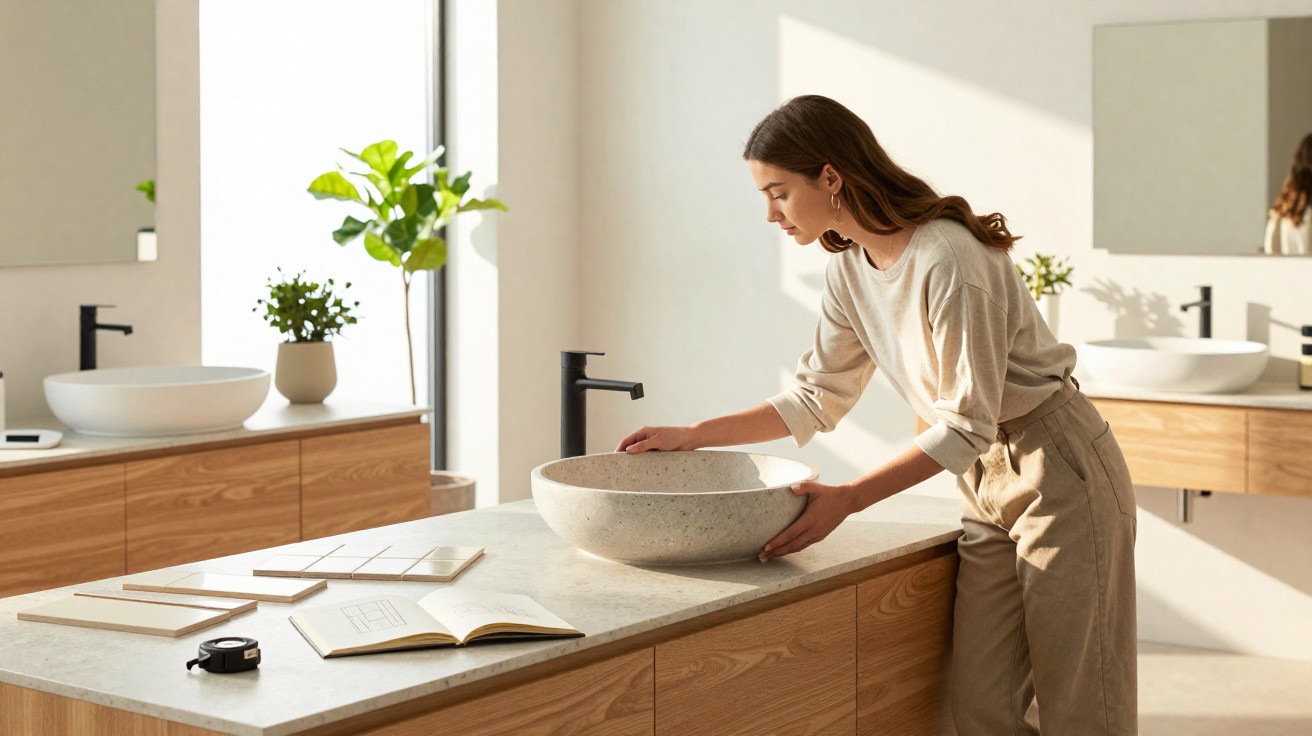
The traditional inset basin is still found in plenty of bathrooms, but it is no longer the only option for anyone seeking a modern space. In 2026, bathroom schemes are favouring basins with greater visual impact, uncluttered worktops and solutions that make everyday routines easier. The aim is to turn the wash area into an attractive bathroom feature without sacrificing practicality.
Why is the inset basin becoming less popular?
The inset basin became widely used because it is understated and easy to coordinate. However, in many bathrooms it can make the worktop look overly ordinary and lacking in character. Depending on the finish, the joint between the basin and worktop may also collect dirt, water marks and soap residue.
New trends address these issues through more refined designs, smoother continuous surfaces and shapes that enhance the vanity unit. Rather than concealing the basin, current bathroom designs make it a key part of the décor.
Countertop basin becomes the bathroom focal point
A countertop basin is one of the strongest alternatives to the inset basin. Positioned on top of the worktop, it works almost like a decorative object. It may be round, oval, square, organically shaped, colourful, white, matt or textured.
This option adds instant character, even to simple bathrooms. To fit one without replacing the entire unit, check that the worktop can carry its weight, alter the waste opening and select either a taller tap or a wall-mounted model. In small bathrooms, smaller rounded basins tend to work best because they take up less visual space.
Integrated basin makes the worktop more sophisticated
An integrated basin, also known as a basin formed within the worktop itself, delivers a seamless and elegant appearance. It can be made from porcelain tiles, marble, granite, quartz, engineered stone or other moisture-resistant materials.
Its main appeal is the impression of a bespoke bathroom. Since the basin and worktop appear to form one piece, the room feels more refined and cleaner. In compact bathrooms, this model is helpful because it reduces visual breaks and can be made to measure, using every centimetre more effectively.
Wall-hung basin is a light option for small spaces
The wall-hung basin is emerging as a modern solution for those who want to free up floor space and give the bathroom a lighter feel. It can be fixed directly to the wall or paired with a floating vanity unit, creating the impression of a larger room.
This style is particularly useful in cloakrooms and compact bathrooms. With the floor left visible, it is easier to clean and avoids the heavy look of a large unit in a small area. Before adapting the space, the wall, plumbing and installation type must be assessed, although a complete bathroom renovation is often unnecessary.
How do you choose the best basin for each bathroom?
The right choice depends on the room's size, daily use and the style you want to achieve. A countertop basin is ideal for anyone wanting quick visual impact. An integrated basin suits those seeking sophistication and a continuous worktop. A wall-hung basin, meanwhile, works best where the priority is a lighter look and easier movement around the room.
The key to modernising without replacing everything is to respect the existing unit and select a model that suits the household routine. A beautiful basin must also be practical: it should offer good depth, avoid splashing water easily and work well with the chosen tap. In 2026, a modern bathroom does not rely on luxury alone, but on smart choices that bring together beauty, comfort and real everyday use.


Comments
No comments yet. Be the first to comment!
Leave a Comment