
The estate agent stopped in the hallway, brushed her hand across the newly painted wall and smiled.
“You upgraded the insulation, right?” she asked, almost offhandedly. The owners gave a slightly embarrassed nod, as if they had confessed to breaking the housing market’s old rules. The appointment took twenty minutes. That evening, an offer arrived by email, higher than anybody had anticipated.
For years, insulation brought to mind scratchy mineral-wool rolls in the loft and unseen wall cavities best ignored. You shut the windows, pulled on another jumper and accepted draughts as something “normal”. Then energy prices surged, buyers began checking energy ratings, and the supposedly “normal” home abruptly seemed dated.
A different approach has emerged: cleaner, more intelligent and more valuable. It bears little resemblance to the insulation people once knew, and that alters the equation entirely.
Moving beyond traditional insulation: what is changing in homes
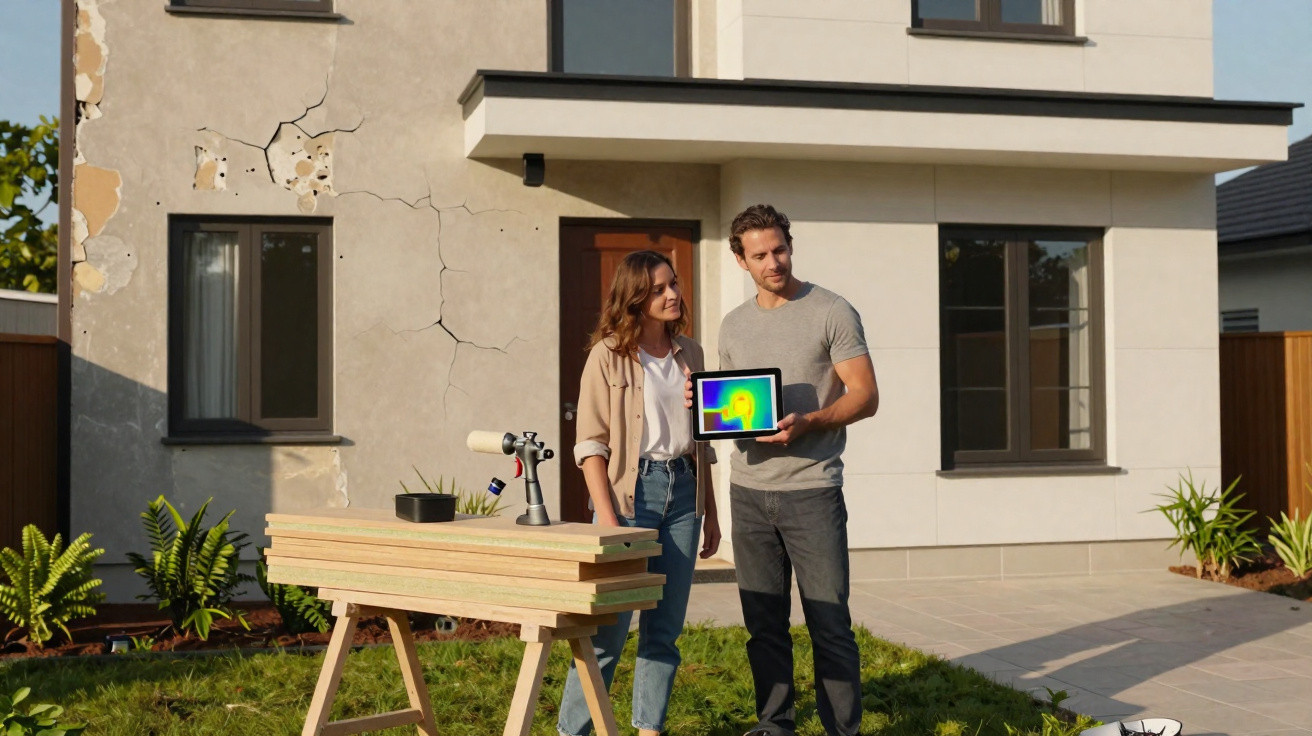
Step into a recently refurbished house today and you notice the difference before spotting its cause. The temperature remains consistent, the air is calm, and the walls no longer give off that slight winter cold. Owners may mention a heat pump or replacement windows, but the understated star is often built into the fabric of the property: high-performance “invisible” insulation such as spray foam, external wall systems or vacuum panels.
This newer generation does more than simply “trap heat”. It changes the way a house performs. Materials take up less room, deliver stronger results and are positioned more strategically. In the view of purchasers and valuers, that can move a property from “nice but old” to efficient and ready for the future. It may sound technical in a specification, but improved comfort is what you notice first in daily life.
One rainy Tuesday in Leeds, a couple in their 40s, tired of paying ever more for gas, contacted an energy assessor. Their semi-detached home was familiar in every respect: slim walls, cold floors and a loft partly covered in worn yellow rolls dating from the 90s. Its energy rating was D, close to E. They installed an external wall insulation system and high-density foam beneath the replacement floor. There was no extension and no ambitious new kitchen; they simply improved the building envelope.
After a year, their bills were down by around 35%. A surveyor revised the EPC to a firm B. Once the property went on the market, the agent led not with “three bedrooms” but with “low running costs and recent insulation upgrade”. During the first weekend, they received two competing offers, both over the asking price. Figures may seem impersonal, but buyers will pay more when they can picture a settled, predictable winter.
The relationship between this type of insulation and resale value is straightforward. Banks, insurers and buyers have moved from asking “Does it look good?” to asking “What will this cost to run?” Conventional insulation focused largely on comfort; today, it is closely connected to financial performance. A stronger energy rating can provide access to green mortgages, bring fewer maintenance shocks and reduce exposure to future regulation.
High-performance options, including external wall insulation, closed-cell spray foam in lofts and aerogel boards, can sharply reduce heat loss without requiring greater thickness. That preserves space, broadens design choices and lowers long-term costs. In the present market, those benefits become real figures in a valuation report. Not in theory, but at the moment someone decides how much your house is worth on paper.
How the new insulation solution works to increase value
The most transformative option at present is a blend of external insulation and targeted spray foam, which can turn a house into a thermal “thermos” without consuming indoor floor space. Rather than packing extra material between internal walls, the exterior is wrapped like a warm coat, while the key leaks in the loft and around junctions are sealed.
In practical terms, rigid insulation boards are attached to the outside walls and then finished with render that can resemble brick, stone or smooth contemporary plaster. In the loft, installers spray foam beneath the roof line to form an uninterrupted barrier. This lowers condensation risk, limits thermal bridging and substantially improves comfort. Rooms warm more quickly and lose heat more slowly. Estate agents like to emphasise these upgrades in listings because visitors can feel the difference as soon as they enter.
Naturally, this approach is effective only when it is selected and fitted with care and realism. Spray foam, for instance, will not suit every property, particularly where the roof is already weak or inadequately ventilated. Some lenders remain cautious about certain foam products identified in surveys, largely because of historical cases of poor installation.
The sensible first step is a thorough energy assessment, rather than accepting a quotation from the first salesperson who appears at your door. Request a design that addresses moisture, ventilation and future access to the roof structure. In everyday terms, this means investing in more than lower bills: you are preparing a home to pass a detailed survey without uncomfortable questions. Let’s be honest: nobody reads every technical report line by line, except on the day one holds up a sale.
An installer I spoke with in Manchester put it in a memorable way:
“People call us for comfort, but what really pays them back is what happens the day they decide to sell. The insulation pays twice – once on your bills, once when you sign the contract.”
This outlook changes the way you handle the work from the outset. The aim is not only to be warmer next winter. You are also viewing the home as a future buyer would: walking down the hallway, looking at the EPC and asking, “What’s been done here, and how recently?” A clear, modern and well-documented answer builds trust. And as trust rises, so does the price.
- Retain every invoice and product data sheet – valuers appreciate evidence.
- Request before-and-after photographs of the walls and loft from the installer.
- Arrange an EPC update as soon as the work is complete; do not wait until the property is listed.
- Give your agent the precise insulation materials and thicknesses used.
The subtle change from concealed cost to marketable asset
A similar scene is now playing out in countless homes. At the kitchen table, a couple has rising energy bills on one side and estate-agent brochures on the other. The earlier plan was uncomplicated: a new kitchen, a refreshed bathroom and perhaps bifold doors. Insulation and energy performance now sit at the centre of that discussion, inconvenient but impossible to ignore.
New-generation insulation solutions reverse the old perception. What once seemed a dull, concealed expense has become a visible asset that helps define the property’s story. Friends may not necessarily remark on the walls after the work is finished. Instead, they say, “It feels so even in here,” or “You don’t get that cold draft near the floor anymore.” Those modest observations begin to shape the home’s new reputation.
More practically, it is like changing the DNA of the property. You are not merely improving it for your own use; you are bringing it in line with what future purchasers will quietly expect: stability, predictability and confidence that the house will not become difficult to afford as energy prices shift. On a busy property portal, a phrase such as “recent external insulation and upgraded thermal envelope” may be the prompt that makes a buyer open your listing rather than the similar property next door.
| Key point | Details | Why it matters to readers |
|---|---|---|
| External wall insulation (EWI) | Rigid insulation boards are fixed to the exterior of existing walls, then completed with render or cladding; this typically adds 80–120 mm to the wall thickness. | It can move a home up one or two EPC bands and give the exterior an immediate modern update, often leading to stronger offers when sold. |
| Targeted spray foam in lofts | Closed-cell foam is applied below the roof line, creating a continuous thermal and air barrier that cuts draughts and heat loss. | It changes a freezing loft into a more stable buffer space, improves comfort in upper-floor rooms and can look impressive in a survey report when correctly installed. |
| Documenting the upgrade | Gather installer certificates, guarantees (10–25 years) and before-and-after photographs, then update the EPC immediately after the project. | Clear records reassure lenders and purchasers, help shorten negotiations and reduce the chance of last-minute price reductions. |
FAQ
Is new-generation insulation really worth it compared with just topping up the loft? For many properties, it is. Adding loft insulation is affordable and worthwhile, but it does not address cold walls, floors or draughts around junctions. Modern measures such as external insulation and spray foam create a far more complete thermal envelope. The effect is often reflected not just in bills, but also in the EPC rating and eventual valuation.
Will external insulation ruin the look of my house? Not when it has been properly designed. Quality systems provide many finishes, from smooth contemporary render to brick slips matching neighbouring homes. Many owners use the work to renew tired façades while preserving the character of the street.
Can spray foam cause problems when I sell? It can if the product is unsuitable or the installation is poor. Some lenders are cautious about older, dense foams that retain moisture around roof timbers. Selecting a reputable installer, an appropriate foam type and retaining full documentation will usually prevent difficulties. Speaking with a surveyor before committing is sensible.
How much value can better insulation really add? No fixed percentage applies, but agents increasingly see greater interest and stronger offers for homes that move from, for example, EPC D to B. Buyers now compare running costs almost as closely as location. A sound insulation upgrade commonly returns value partly through lower bills and partly through a smoother, more profitable sale.
Is it disruptive to live through an external insulation project? There will be external noise, scaffolding and dust, although most activity takes place outside rather than within the rooms. Many families remain in their homes while the work is carried out. The important thing is to agree clear timings, access routes and protection for gardens or driveways before the first scaffold pole is erected.






Comments
No comments yet. Be the first to comment!
Leave a Comment