
A small hardware change in the bathroom can alter the entire room, affecting both its atmosphere and the way it functions.
The unassuming shower curtain rod is seldom noticed, but using it differently can improve storage, privacy and moisture management at the same time.
How a second shower rod subtly improves a basic bathroom
Most bathrooms rely on one slightly unstable rod, intended solely to support a curtain. Introducing a second rod changes this arrangement. Positioned at a similar height, or just in front of the existing rod, it forms a narrow yet surprisingly practical space.
Home organisers and small-space designers have adopted this approach in rented homes, student flats and busy family properties. Much like installing an extra rail in a wardrobe, a second shower rod expands the room’s uses without major alterations to the walls. That is particularly valuable where drilling is restricted or removing tiles is not an option.
A second shower rod does three jobs at once: it protects your towels, clears visual clutter and helps the room dry faster.
These three benefits address familiar bathroom frustrations: towels that remain damp, bottles scattered across every available surface, and steam that leaves the mirror misted up for a long time.
Problem 1: towels do not properly dry
Towels hung from hooks behind a door may appear tidy, but the material gathers in folds, remains wet and may develop a musty smell. In time, this dampness encourages mould on walls and grout, particularly in compact bathrooms with limited ventilation.
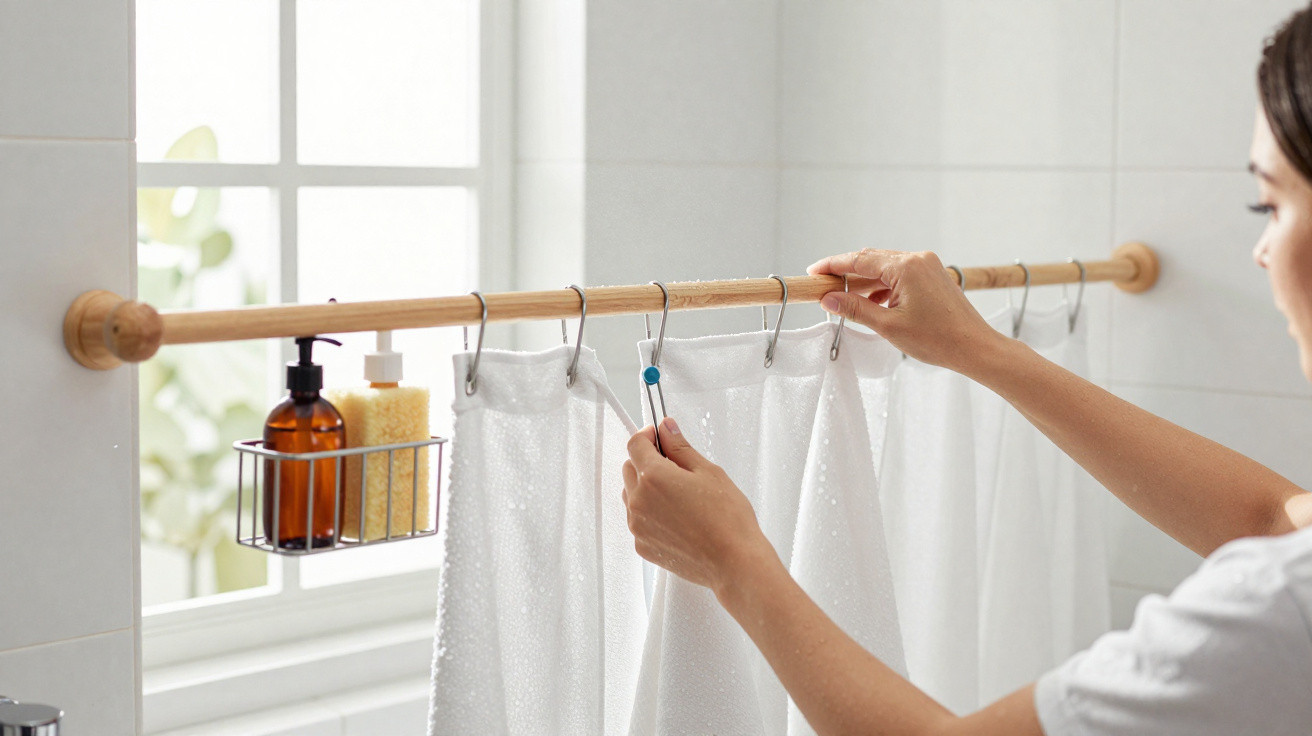
Fitting a second shower rod immediately outside or behind the primary curtain creates a full-width towel-drying rail. Towels can be suspended in one open layer, allowing air to move freely around them.
Why a rod dries towels more effectively than hooks
- The material stays spread out rather than gathering in dense folds.
- Warm air from the shower moves across the towels as the bathroom dries.
- Gravity lets water run down the towel instead of becoming trapped in creases.
- Separate areas can be assigned to face cloths, hand towels and bath sheets.
This is especially useful in homes with several showers each day, housemates or children. Shared bathrooms frequently end up with wet towels piled on radiators or draped over doors. An additional rail within the bath area provides a neat, partly concealed drying space.
When towels dry fully between uses, they last longer, smell fresher and need fewer hot washes.
Positioning tips to improve drying
In most homes, the additional rod sits closer to the outer edge of the bath or shower tray, while the main curtain remains nearer the water. A 10–15 cm gap between the rods is effective for drying towels. It permits airflow while keeping towels clear of direct water spray.
Where a shower has a strong extractor fan, placing towels approximately in its airflow path will make them dry more quickly. In older bathrooms, leaving the curtain partly open and opening a window slightly will help the additional rail work more effectively.
Problem 2: clutter fills every available ledge
Shampoo bottles on the floor, loofahs caught around the tap and razors perched on a slim ledge all quickly create visual mess. For tenants, installing permanent shelves may create issues with landlords or damage tiled surfaces.
A second shower rod provides portable vertical storage. Rather than being reserved for towels, it can hold hooks, suspended baskets and mesh organisers, lifting bathroom items away from the edge of the bath.
Making the shower rod a versatile storage rail
With affordable clip-on hooks or S-hooks, the extra rod can hold:
- Wire baskets containing shampoo, conditioner and body wash.
- Mesh bags for children’s bath toys, allowing them to drip-dry into the bath.
- Hanging caddies for razors, loofahs and exfoliating mitts.
- A small plant in a water-friendly pot to soften the appearance of a tiled wall.
Separating products by household member can also be useful for people with sensitive skin or allergies. Everyone can have an individual basket or colour-marked set of hooks, preventing confusion between medicated shampoos and heavily fragranced products.
By lifting bottles and tools off the floor, you reduce trip hazards and make cleaning the tub or tray far easier.
Selecting the right type of second shower rod
| Type of rod | Best for | Main benefit |
|---|---|---|
| Tension rod | Rented homes, tiled walls | No drilling, simple to remove |
| Curved double rod | Permanent improvements | More elbow room in the shower |
| Slim inner rod | Small bathrooms | Unobtrusive towel and storage rail |
A double curved rod, with two rails integrated into one bracket, is well suited to homeowners intending to remain in the property. For students or short-term tenants, a standard tension rod placed parallel to the existing one is generally an inexpensive solution.
Problem 3: steam and splashes leave the room feeling damp
Bathrooms that never fully dry can feel cold and may harm paintwork, plaster and window frames. Moisture gathers on the curtain, runs onto the floor and remains in corners. When used thoughtfully with the curtain, the second rod can improve air movement around the bath area.
Controlling air and water with two shower rods
One straightforward arrangement places the main waterproof curtain on the inner rod and a lighter fabric curtain or liner on the outer rod. While showering, the waterproof curtain stays inside the bath, while the outside curtain hangs beyond it. This reduces draughts but retains a slim opening through which steam can escape.
Once the shower is finished, pulling the inner curtain completely open on its own rod exposes its damp surface to the air. The outer curtain can remain partly drawn for privacy while the room dries. This minor adjustment stops the curtain sticking to the bath wall, an area where mould commonly begins.
A second rod makes it easier to keep wet surfaces exposed to air instead of trapped behind fabric for hours.
Those living in older properties without mechanical ventilation benefit most from this method. Limiting condensation on cold external walls reduces the likelihood of black mould, which may cause breathing problems in children and adults with asthma.
Smart add-ons that make the second shower rod more useful
After fitting the additional rail, a few accessories can turn a basic bar into a more personalised setup. Many cost less than a bottle of premium shampoo, yet can noticeably improve everyday routines.
Hooks, clips and baskets that handle the hard work
Different households may prefer different accessories:
- Carabiner clips support weighty items, including full caddies and large mesh toy bags.
- Plastic S-hooks move smoothly and will not rust in humid bathrooms.
- Clamp-style clips hold washcloths and flannels open to speed up drying.
- Flat-bottomed wire baskets keep products upright while allowing water to drain away.
For families with young children, placing baskets at varying heights can encourage independence. Low baskets make tear-free shampoo and toys easy to reach, while adult products can be kept higher and out of reach.
Costs, simple installation and minor risks
Cost is central to many bathroom choices. A basic tension rod will generally cost less than a takeaway meal, whereas a sturdier double curved rod may cost slightly more while remaining well below normal renovation costs.
Installation usually requires no tools. Tension rods are tightened by twisting them between two opposing walls. The main concern is tightening too much, which may crack older tiles, or too little, allowing the rod to slide down. Before hanging heavy items, test the rod with a firm downward pull to prevent an unexpected fall.
In homes with very young children or anyone likely to use the rod for support, it is important not to overload it. The additional rod must never be used in place of a grab rail secured into wall studs.
When a second shower rod has the greatest impact
An extra metal rail is not necessary in every bathroom. However, some layouts benefit particularly clearly:
- Windowless bathrooms with no route for moisture to escape.
- Flatshares with little towel space and frequent shower use.
- Student halls where drilling into tiles is prohibited.
- Family homes with numerous bath toys and products.
- Guest bathrooms that receive heavy use over short periods.
In these rooms, the new rod works like a combined extra shelf, radiator and drying rack, all in one line above the bath. The room retains the same footprint, while its usable capacity increases.
Extra ideas: looking beyond towels and shampoo
Once an additional rail becomes familiar, people often find more inventive ways to use it. Some hang sportswear or swimming costumes over the bath to drip-dry, keeping moisture away from hallway radiators and chairs in spare rooms. Others use the outer rod for a lightweight blackout curtain when visitors stay, creating more privacy in small flats where the bathroom opens directly onto a living space.
The same idea can be applied beyond the bathroom. A tension rod inside a utility cupboard can support cleaning sprays or microfibre cloths. In a rented kitchen, a rod installed between two cupboards can hold hooks for mugs or utensils, again without drilling. The bathroom double-rod approach therefore forms part of a broader method for flexible, reversible storage in uncertain housing situations and homes with tight floor plans.


Comments
No comments yet. Be the first to comment!
Leave a Comment