
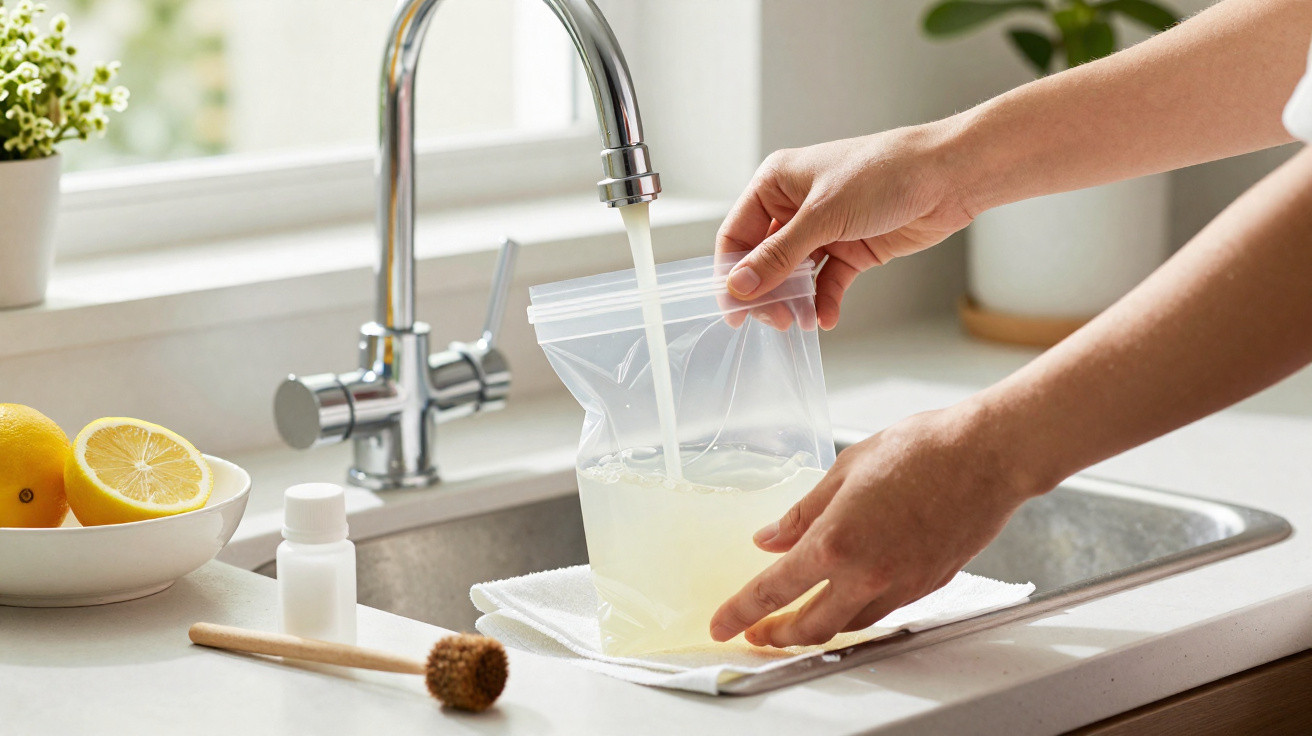
That cloudy crust on a tap is more than an eyesore: it quietly wastes water, takes the shine off metal and disrupts morning routines.
In kitchens and bathrooms, homeowners are moving away from aggressive chemicals and discovering that a straightforward natural soak can remove limescale from taps while being kinder to their hands, fittings and the water system they depend on.
Why limescale keeps returning to taps
Limescale appears when hard water evaporates from metal surfaces. Minerals including calcium and magnesium are left behind, creating a chalky, off-white coating that adheres to chrome, stainless steel and nickel finishes.
Much of southern and eastern UK has hard or very hard water, while many cities in the United States also draw from mineral-rich aquifers. Whenever a tap drips or a shower head leaks, tiny mineral crystals are deposited, accumulate and begin to solidify. In only a few weeks, the light film around a spout can become a stone-like crust.
Limescale does more than spoil the shine. It narrows water passages, weakens pressure and shortens the life of cartridges and aerators.
Shop-bought descalers act quickly, but many contain powerful acids and fragrances that can irritate the skin, lungs and environment. This has encouraged a growing move towards low-toxicity homemade approaches, particularly simple soaks that use time and mild acids to do the job.
The natural soak method: what it is and why it works
A natural soak uses a weak acid-typically kitchen vinegar or lemon juice-to maintain contact with limescale long enough to dissolve it. There is no lengthy scrubbing session, no harsh fumes, and little risk to metal provided you monitor the soaking time.
The science behind a gentle descale
White vinegar contains acetic acid, while fresh lemon contains citric acid. Each reacts with calcium carbonate, the principal component of household limescale, converting it into soluble salts and carbon dioxide. This process needs time, particularly where the scale is thick.
A quick spray reaches only the outer surface, whereas a soak holds acid against the mineral deposits. It softens the crust all the way through, allowing a cloth or old toothbrush to remove it with much less work.
A slow, well-planned soak trades brute force for chemistry, sparing your fixture from scratches and your lungs from harsh fumes.
Step-by-step: how to do a natural soak on a tap
No specialist equipment is required. Most homes already contain everything needed for this method:
- white vinegar or strained lemon juice
- a small bowl or jug
- a strong freezer bag or reusable silicone bag
- elastic bands, twine or a strip of cloth
- a soft cloth or non-scratch sponge
- an old toothbrush or soft nail brush
After gathering the items, use the following method:
- Turn off the water at the tap, then dry the tap so the acid is not immediately weakened.
- Pour enough vinegar or lemon juice into the bag to submerge the limescale once the bag is raised into position.
- Place the bag carefully over the tap spout or tap end, ensuring that all mineral deposits are below the liquid line.
- Fasten the bag with an elastic band or twine, making it secure enough not to slide down under the weight of the liquid.
- Allow the tap to soak. Light deposits often need 30 to 60 minutes, while heavier limescale can require two to three hours.
- Take off the bag and dispose of the used liquid down the drain, flushing it away with plenty of water.
- Brush the loosened limescale gently with the toothbrush, focusing on the underside of the spout and the area around the aerator.
- Rinse well with clean water, then polish dry using a soft cloth.
Should any scale remain, carry out another shorter soak and check again. Particularly heavy deposits can require two or three treatments instead of one excessively long soak.
Protecting different finishes during a soak
Acid does not affect every fitting in the same way. Certain finishes tolerate it well, while others demand extra caution. Checking the label or manufacturer’s website is useful, but these general recommendations suit most households:
| Finish | Natural soak suitability | Practical notes |
|---|---|---|
| Polished chrome | Generally safe | Keep soaking to a maximum of two hours; rinse thoroughly and dry afterwards to avoid water marks. |
| Stainless steel | Good match | Tolerates vinegar well; do not use abrasive pads, which may scratch it. |
| Brushed nickel | Use with caution | First test an inconspicuous area; use a short soak and dilute vinegar 50:50 with water. |
| Oil-rubbed bronze | Usually avoid | Acid may remove the patina; use mild soap, warm water and a soft cloth instead. |
| Gold or brass-plated | High risk | Delicate plating can pit; use manufacturer-approved cleaners and wipe gently. |
When in doubt, shorten the soak, dilute the acid and start with a test patch on the rear of the faucet base.
Going deeper: dealing with hidden limescale
The visible coating on the outside of a tap tells only part of the story. Internally, limescale can obstruct aerators, cartridges and ceramic discs, reducing water flow and causing handles to become stiff.
Cleaning the aerator and internal parts
Screw-on aerators can usually be removed with a firm hand grip or pliers wrapped in a cloth. After removing one, take apart the small pieces over a towel to stop them rolling away. Put the metal parts into a bowl of warm vinegar for 20 to 30 minutes.
Rinse the components before brushing debris from the mesh and plastic inserts. In very hard-water areas, small crystals may be caught in the holes; the toothbrush will dislodge them. Reassemble the aerator and screw it back into place, being careful not to cross-thread it.
In mixer taps, the cartridge regulates both temperature and flow. When limescale makes this cartridge stiff, some people replace the entire tap. However, many manufacturers now provide replacement components, and some plumbers recommend soaking the cartridge overnight in diluted vinegar after removing it from its housing. This work requires close attention to the instructions, as seals and rubber rings may react poorly to extended acid exposure.
How natural soaks compare with chemical descalers
Consumers now encounter an overcrowded range of products, from concentrated bathroom gels to plant-based sprays. Natural soaks occupy the middle ground: they work more slowly than professional acids, are gentler than many branded cleaners, and cost less than either.
A bottle of supermarket vinegar often costs less than a single bathroom cleaner and can descale taps, kettles, shower heads and irons.
Health bodies in both the UK and the US have cautioned for years against mixing cleaning products, particularly bleach and acids, because this can produce gases. When used by itself, vinegar avoids much of that danger. It still calls for sensible precautions: ventilate the room, wear gloves if your skin is sensitive, and never combine it with other cleaners.
Environmentally, weak organic acids biodegrade more readily than many synthetic surfactants and fragrances. Water-treatment plants process them effectively, and normal household quantities do not generally cause problems for plumbing. For septic tanks, plumbers generally prefer mild, occasional vinegar cleaning to heavy chemical flushing that can disturb the bacterial balance.
Stopping limescale before it starts
While a natural soak removes existing deposits, changing a few habits can slow their return. Homes that keep taps free from scale usually follow several small routines consistently instead of attempting one major clean every few months.
Simple habits that make a big difference
- Dry taps and shower controls after use, so droplets cannot evaporate onto the metal.
- Repair slow drips promptly, as continual damp accelerates limescale formation.
- Each week, spray troublesome areas with vinegar diluted in water, leave it for a few minutes, then wipe it away.
- Use a squeegee on shower glass and chrome to remove mineral-rich water.
- Inspect aerators every few months and give them a brief preventative soak.
In places with very hard water, an increasing number of people install small point-of-use filters or compact softeners beneath kitchen sinks. These reduce mineral levels at the source, meaning less scale reaches the tap in the first place. Although they involve an initial cost, they can also lengthen the lifespan of appliances including dishwashers and boilers.
When a natural soak is not enough
Natural approaches can tackle most household deposits, but they have their limits. If chrome has already peeled away or a spout leaks around its base, limescale may have harmed internal seals. Further soaking will not repair the finish at that point. Replacement parts-or, in some cases, a new fitting-are the more sensible option.
There is also a danger in overuse. Leaving strong vinegar overnight on a delicate surface can dull its finish or cause slight etching. People who clean rented properties say they are encountering this more often: a well-intentioned green tip applied too forcefully. Several shorter treatments usually offer a better compromise between effectiveness and long-term wear.
Beyond the tap: wider uses and hidden trade-offs
After learning the natural soak method, homeowners often use it in other places. Shower heads can be detached and soaked in a jug. Metal kettle elements may sit in a shallow vinegar bath to release thick scale. Even garden-hose nozzles can benefit from an hour in warm, diluted acid.
This change can have a cumulative effect. If a row of terraced houses or a US apartment block reduces its use of heavy chemical cleaners, fewer harsh substances enter the sewage system. Limescale also continues to influence energy costs. Even a thin coating inside a hot-water cylinder or electric shower makes the system work harder, increasing carbon emissions. Whether natural or otherwise, regular descaling forms part of a quieter climate story: reducing energy use by keeping small components clean.
For many people, the attraction of a natural soak is not primarily technical. It can be fitted into an evening, costs very little and feels achievable. You fasten a bag around a tired, crusted tap, leave it while you cook or watch the news, and return to find the deposit softened and ready to wipe away. That modest maintenance task often encourages people to reconsider other parts of the home where gentle, low-toxicity habits could take the place of older routines based on bright bottles and powerful promises.


Comments
No comments yet. Be the first to comment!
Leave a Comment